




















By: Aisha Khan (PhD Scholar, NIHCR, QAU Islamabad)
Whenever the historical and political fallout of the 1947 Partition of India is debated, discussions invariably gravitate toward statistics, land allotments, and macroeconomic shifts. Yet, the most intricate and agonizing dimension of this entire upheaval remains completely overlooked: the profound psychological and emotional crisis that can only be defined as the existential void of Muhajir identity. Migration is never merely a matter of crossing geographical borders. It is an abrupt severing of one’s past, cultural roots, and the very voice that defines human existence. Amidst the unfamiliar rhythms of a new homeland and the overwhelming crush of millions, the original, innocent, and apolitical voice of the migrant was quietly stifled, left with no one to truly listen.
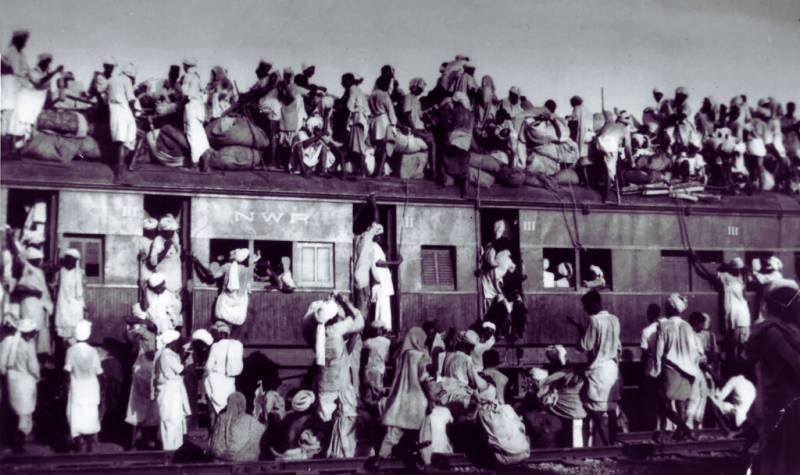
When millions abandoned everything they knew in 1947 to reach the urban landscapes of Sindh particularly Karachi and Hyderabad the initial phase was defined by resilient hope and national reconstruction. However, as the dust of migration settled, a haunting identity crisis began to surface. Arriving from the intimate alleyways of UP, CP, Delhi, and Bihar, these migrants carried an immense wealth of memories, yet they possessed no sustainable ground upon which to plant and share them. They were absorbed into a frantic crowd where every individual was locked in a desperate battle for baseline survival. In this collective noise, the ordinary migrant’s quiet grief—the raw ache of being severed from one’s native soil went entirely unseen.
The ultimate tragedy of this crisis was the gradual weaponization of the Muhajir voice, as it was progressively condensed into rigid political slogans and factional interests. The ordinary, educated, middle-class Muhajir raised on a rich heritage of poetry, literature, and nuanced discourse was systematically silenced by an increasingly aggressive socio-political environment. The relentless bustle of rapidly growing cities, the immediate demands of post-partition survival, and shifting economic dynamics created a landscape where the migrant was physically present among everyone, yet internally lost in a vacuum of absolute anonymity. They could neither fully cut ties with their ancestral past nor forge the kind of deep emotional roots in the new environment required to cultivate a peaceful identity.
This silence and isolation grew progressively deeper with the rise of subsequent generations. Having never laid eyes on the ancestral soil, these youth sought the scent and mystique of an unseen land through the nostalgic eyes of their elders. Consequently, this fractured identity was handed down from one generation to the next, mutating into a form of ambient, multi-generational melancholy.
Looking back today, it becomes clear that the truest tragedy of Partition was not merely a conflict over territory or political rights. Rather, it was a profound psychological exile that transformed millions of human beings into strangers within their own homes. The lost voice of the Muhajir within the crowd still demands that we view history through a humanistic lens, rather than a purely political one. It compels us to understand the enduring human suffering of those who, once uprooted from their native earth, exist everywhere yet belong nowhere.