

















By: Brig Syed Karrar Hussain Retired
(www.thenewslark.com)
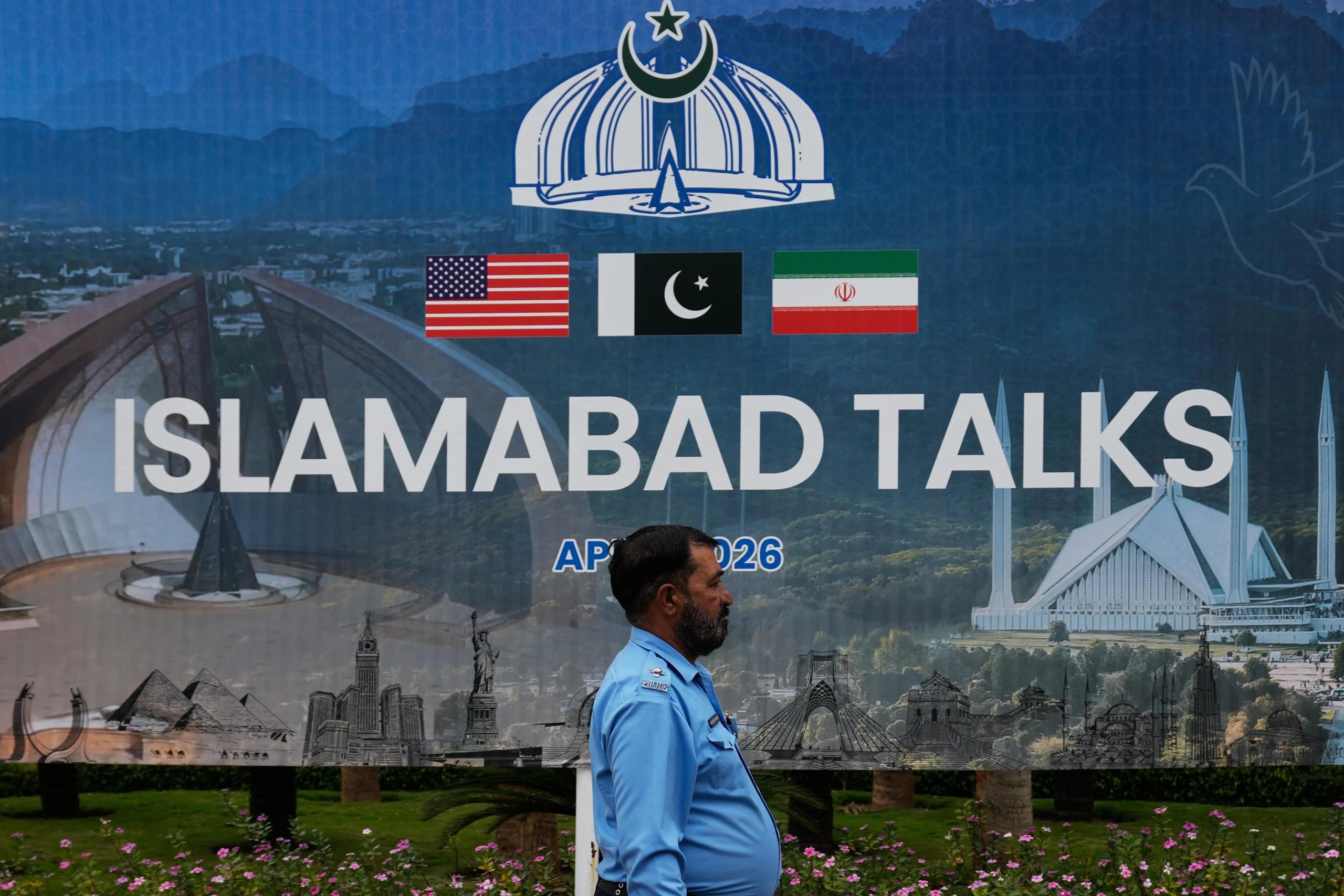
The recent high-level negotiations between the United States and Iran held in Islamabad have ended without agreement, despite 21 hours of intense diplomatic engagement. This failure has raised serious concerns about the future of the fragile ceasefire and the possibility of a wider regional or even global conflict. The talks, mediated by Pakistan, were seen as a historic opportunity—the first direct engagement between the two adversaries in over a decade—but ultimately collapsed due to deep-rooted mistrust and irreconcilable strategic differences.
This article analyzes why the dialogue failed, what each side offered and rejected, the chances of a future agreement, and the global implications if diplomacy continues to fail.
1. Why Have the Iran–US Talks Failed?
The failure of the talks is not a sudden development but the result of long-standing strategic contradictions between the two countries.
At the core lies the issue of Iran’s nuclear program. The United States demanded a clear and verifiable commitment from Iran that it would not pursue nuclear weapons. This was described as a “red line” by American negotiators.
Iran, however, refused to accept such restrictions, insisting on its sovereign right to nuclear enrichment and defense capability.
Additionally, both sides accused each other of “unrealistic” and “excessive” demands, reflecting deep mistrust built over decades of hostility.
Another key factor was the timing and expectations. Iran entered the talks without expecting a final deal, viewing them as preliminary, while the US presented what it called a “final offer.” This mismatch in expectations further contributed to failure.
2. Offers and Demands: What Was Accepted and Rejected
A. United States’ Offers and Demands
The United States presented a structured set of demands, some of which were partially negotiable, while others were non-negotiable:
Key US Demands:
Iran must halt nuclear weapons development completely
Restrictions on missile and military capabilities
Free and secure passage through the Strait of Hormuz
Limitations on Iran’s regional influence
What the US Was Willing to Offer:
Possible sanctions relief (conditional and phased)
Recognition of Iran’s role in regional stability (limited)
Continued negotiations toward normalization
What Was Rejected by Iran:
Total halt to nuclear ambitions
Restrictions on missile program
US refusal to guarantee long-term non-aggression
What Was Not Even Accepted by the US:
Iran’s demand for immediate lifting of sanctions
Claims about unfreezing Iranian assets were denied by Washington
B. Iran’s Offers and Demands
Iran came with a broader and more strategic proposal, often described as a 10-point or multi-clause plan.
Key Iranian Demands:
Complete lifting of US sanctions
Compensation (reparations) for war damages
Right to continue uranium enrichment
No restrictions on missile program
Control or influence over the Strait of Hormuz, including possible transit fees
Assurance of no future US attacks
What Iran Was Willing to Offer:
A permanent ceasefire (not temporary)
Reopening of Hormuz under certain conditions
Regional de-escalation (conditional)
What Was Rejected by the US:
Iranian sovereignty over Hormuz
Unrestricted nuclear and missile programs
Immediate sanctions removal without compliance
C. What Was Mutually Accepted (Limited Areas)
Despite the failure, a few areas showed partial convergence:
Agreement in principle on the need for ceasefire continuation
Recognition of Pakistan’s role as mediator
Willingness to continue dialogue in future
However, these were insufficient to produce a formal agreement.
3. Chances of a Final Ceasefire in the Near Future
The prospects of a comprehensive ceasefire in the near future remain uncertain but not impossible.
Positive Indicators
Both sides did not walk away permanently
Iran signaled willingness for continued engagement
International pressure, especially from regional and global powers, is increasing
Economic pressures (oil disruptions, inflation) are pushing both sides toward compromise
Negative Indicators
Fundamental disagreement on nuclear issue remains unresolved
Iran insists on permanent settlement, while the US prefers phased agreements
Domestic political pressures in both countries discourage compromise
Role of third parties like Israel complicates the situation
Assessment
In the short term (next 1–3 months), chances of a full agreement are low (30–40%), but chances of extending temporary ceasefire are moderate (50–60%).
4. If No Agreement Is Reached: Likely Global Consequences
Failure of diplomacy will have serious regional and global repercussions.
A. Military Escalation
Resumption of war could lead to direct US–Iran confrontation
Expansion of conflict into Lebanon, Iraq, Syria, and the Gulf
Increased role of proxy forces
B. Oil and Economic Crisis
Strait of Hormuz disruption could block 20–30% of global oil supply
Sharp rise in oil prices leading to global inflation
Severe economic impact on developing countries
C. Global Power Involvement
China and Russia may openly support Iran diplomatically or strategically
NATO allies may align with the US
Risk of a new Cold War–style bloc division
D. Nuclear Proliferation
Iran may accelerate nuclear program
Other regional powers (Saudi Arabia, Turkey) may pursue nuclear capability
Collapse of global non-proliferation norms
E. Humanitarian Crisis
Massive displacement in Middle East
Civilian casualties and infrastructure destruction
Refugee crisis affecting Europe and Asia
5. Strategic Conclusion
The failure of the Islamabad talks is not the end of diplomacy but a warning sign of deeper structural conflict.
The core issue is not merely ceasefire terms—it is mutual distrust, conflicting strategic visions, and incompatible security doctrines.
For peace to succeed:
The US must show flexibility on sanctions and security guarantees
Iran must provide credible assurances on nuclear limitations
Regional stakeholders, especially Pakistan, China, and Turkey, must intensify mediation
The United Nations should play a more assertive role
Final Assessment
The situation remains extremely fragile. The world stands at a crossroads:
Diplomacy succeeds → Regional stability restored
Diplomacy fails → A wider and possibly global conflict becomes inevitable
At present, the balance is tilted slightly toward continued tension with intermittent negotiations, rather than immediate full-scale war—but the margin is dangerously thin.