














By Brig Syed Karrar Hussain Shah (Retd)
The recent statements by President Donald Trump regarding linking the Abraham Accord with ongoing negotiations and tensions involving Iran have created serious concerns across the world. Political analysts, diplomats, and ordinary citizens in many Muslim countries believe that combining these two entirely different issues may further complicate the already fragile peace situation in the Middle East.
The Abraham Accord and the Iran-related conflicts are two separate matters that require separate diplomatic approaches. One issue relates to normalization between Arab countries and Israel, while the other concerns regional security, military tensions, sanctions, nuclear issues, and the possibility of a wider war involving Iran and the United States. Mixing both subjects together may create misunderstandings, increase public anger, and damage future peace efforts.
The United States is the most powerful country in the world. Therefore, its leadership carries enormous responsibility. The President of the United States should play the role of a global peacebuilder rather than taking steps that could increase tensions in an already unstable region. The world today desperately needs peace, dialogue, and justice instead of new political pressures or forced diplomatic arrangements.
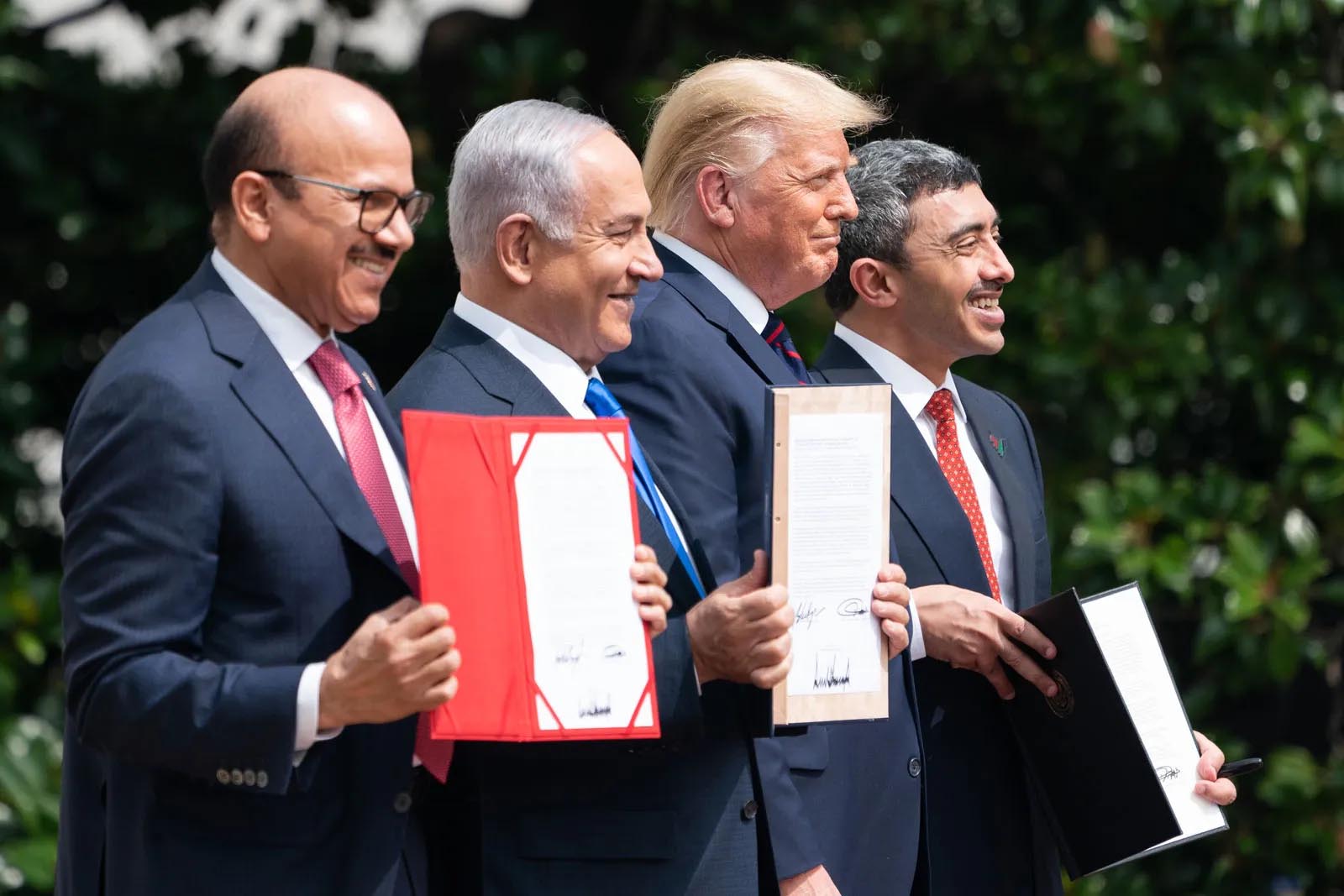
The Abraham Accord was originally introduced as a peace initiative aimed at improving relations between Israel and certain Arab states. Some countries, including the United Arab Emirates and Bahrain, accepted the agreement under their own political calculations and national interests. However, many Muslim countries still have deep reservations because the Palestinian issue remains unresolved.
The Palestinian people have suffered for decades. Thousands of innocent civilians, including women and children, have lost their lives in conflicts and military operations. Homes, hospitals, schools, refugee camps, and civilian infrastructure in Gaza and other Palestinian territories have been destroyed repeatedly. Human rights organizations and international observers have expressed serious concerns regarding humanitarian conditions and civilian casualties.
Under such circumstances, expecting Muslim nations like Saudi Arabia, Pakistan, or Turkey to immediately accept normalization with Israel without addressing Palestinian suffering is politically unrealistic. Even if some governments consider such agreements under international pressure or strategic interests, public opinion in these countries may strongly reject them.
Public sentiment in the Muslim world remains deeply connected with the Palestinian cause. For millions of Muslims, Palestine is not merely a political issue; it is also an emotional, humanitarian, and religious matter. Therefore, any agreement that appears to ignore Palestinian rights is likely to face severe opposition from the public.
Linking the Abraham Accord with Iran-related negotiations may also send the wrong message to the world. Many people may perceive it as an attempt to use regional tensions to pressure countries into political agreements. Such perceptions can damage the credibility of diplomacy and weaken trust in international peace initiatives.
The United States should instead focus on reducing tensions in the Middle East through balanced and fair policies. Washington has the diplomatic influence and political strength to encourage meaningful peace efforts between Israel and Palestine. Rather than pushing countries toward rapid normalization, the American administration should first ensure that justice, security, and human dignity are protected for all parties involved.
A durable peace in the region cannot be achieved through military superiority alone. History has repeatedly shown that lasting peace only becomes possible when the rights and dignity of affected populations are respected. If Palestinian civilians continue to suffer displacement, destruction, and violence, no agreement will gain true acceptance among the masses in the Muslim world.
Therefore, the United States should take practical steps to improve conditions for Palestinians before reopening large-scale discussions regarding expansion of the Abraham Accord. Israel should be encouraged and diplomatically pressured to stop military actions causing civilian suffering, halt policies that increase tensions, and support humanitarian relief and reconstruction efforts in Palestinian territories.
Destroyed homes, hospitals, schools, and public infrastructure in Gaza must be rebuilt with international cooperation. Humanitarian aid should be increased, and safe access must be ensured for medical and relief organizations. Palestinian families who have suffered during years of conflict deserve security, dignity, education, healthcare, and economic opportunities.
If the Palestinian people begin to experience stability, justice, and improved living conditions, the overall atmosphere in the Muslim world may gradually change. Under such circumstances, discussions regarding normalization and regional cooperation could become more acceptable to ordinary citizens. Peace imposed under pressure rarely succeeds, but peace built upon justice and mutual respect has greater chances of survival.
At the same time, Iran-related negotiations should remain independent and focused on reducing military escalation. Any conflict involving Iran and the United States could have devastating consequences for the entire Middle East and the global economy. Oil routes, regional stability, international trade, and global security would all be negatively affected by a wider war.
The international community, including major powers, should encourage diplomacy, dialogue, and conflict prevention. Countries like China, Russia, Türkiye, Saudi Arabia, Pakistan, and European nations can also play constructive roles in reducing tensions and promoting peaceful solutions.
Pakistan, in particular, has consistently supported peace, dialogue, and justice in international affairs. Pakistan believes in the rights of the Palestinian people while also supporting regional stability and diplomatic conflict resolution. The country’s position reflects the emotions and aspirations of millions of Muslims worldwide.
There are several important recommendations that the United States should consider in order to avoid further instability in the Middle East.
First, the American administration should separate the Abraham Accord from Iran-related negotiations and military tensions.
Second, the United States should actively support an immediate and lasting ceasefire in Palestinian territories to prevent further civilian casualties.
Third, Washington should encourage Israel to respect international humanitarian principles and facilitate reconstruction efforts in Gaza.
Fourth, American diplomacy should prioritize justice-based peace instead of pressure-based normalization.
Fifth, international humanitarian organizations should be given full support and safe access to affected Palestinian areas.
Sixth, meaningful dialogue involving Palestinians themselves must be part of any future peace framework.
Finally, world leaders must understand that sustainable peace cannot be achieved by ignoring public opinion. The emotions, concerns, and aspirations of ordinary people matter greatly in international relations.
In conclusion, the Middle East stands at a very sensitive crossroads. The decisions made today by powerful nations may either open doors toward peace or push the region into further instability. President Donald Trump and the United States administration have the opportunity to become genuine architects of peace by adopting balanced, fair, and humanitarian policies.
The world does not need more division, pressure, or conflict. It needs wisdom, justice, compassion, and responsible leadership. Separating the Abraham Accord from Iran-related disputes, protecting Palestinian rights, rebuilding destroyed communities, and promoting fair diplomacy can create a more stable future not only for the Middle East but for the entire world.