



















ISLAMABAD: Prime Minister Muhammad Shehbaz Sharif, Monday, said that the extraordinary increase in business engagements between the private sectors of Pakistan and China heralded a new era in economic partnership between the two countries.
He emphasized that enhanced industrial, agricultural and technological cooperation with China would boost Pakistan’s exports and create new employment opportunities.
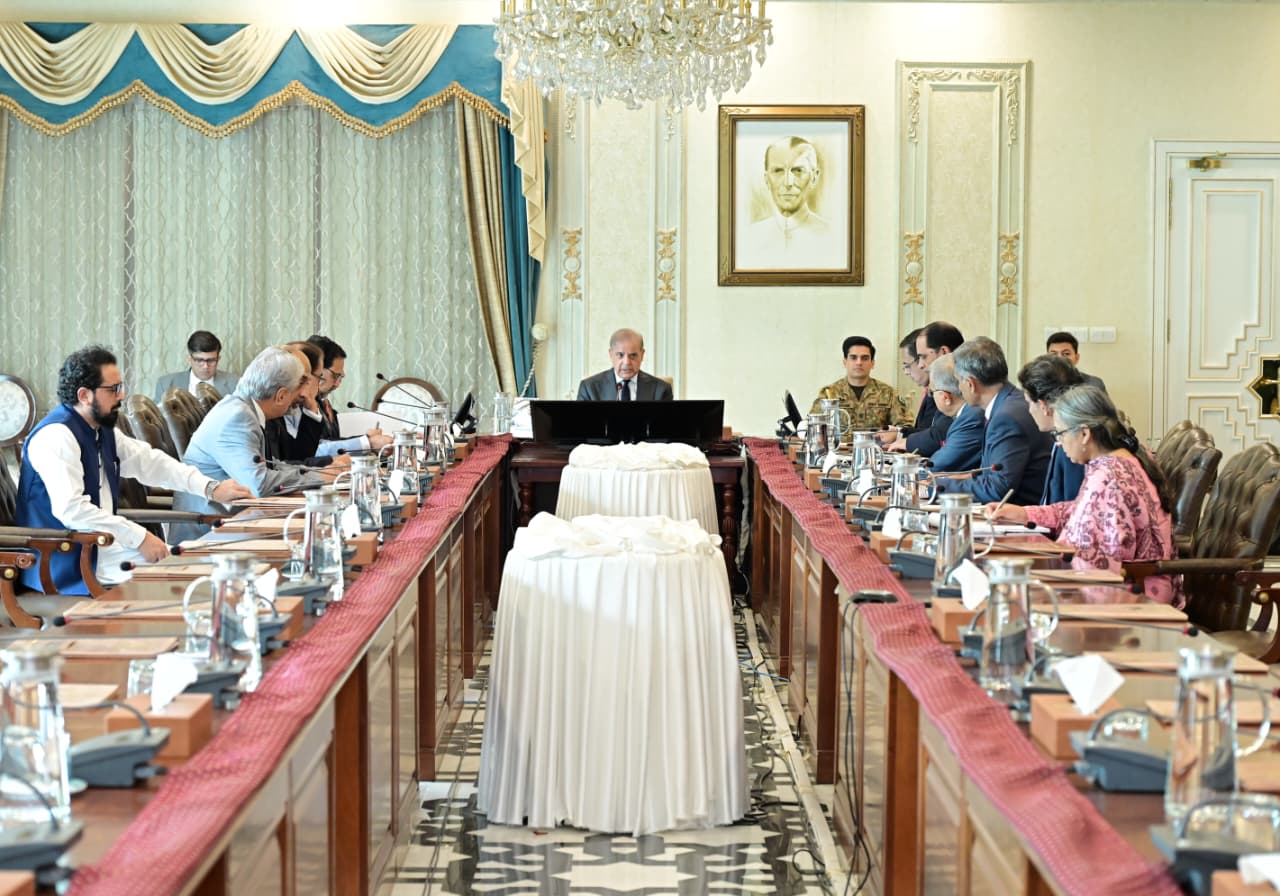
The prime minister chaired a review meeting to assess progress on the agreements and MoUs signed in the Pakistan-China Business-to-Business (B2B) conference held during his recent visit to China, PM Office Media Wing said in a press release.
In the meeting, he directed the relevant authorities to ensure that the Memorandums of Understanding (MoUs) signed during the B2B conference in Hangzhou should be transformed swiftly into formal agreements and joint ventures.
The meeting was attended by Ministers Rana Tanvir Hussain, Ahsan Iqbal, Ahad Khan Cheema and Shaza Fatima Khawaja along with other senior government officials.
The prime minister also decided to personally chair monthly review meetings to monitor progress on the outcomes of the B2B conference.
He further instructed that cooperation between the China Academy of Agricultural Sciences and Pakistan Agricultural Research Council (PARC) must be effectively implemented.
He observed that agricultural research, modern technology, and Pakistan-China joint ventures could bring about a revolutionary transformation in country’s agriculture sector.
During the briefing, participants were informed that a total of 123 Pakistani companies and 436 Chinese companies attended the Pakistan-China B2B conference held in Hangzhou on May 24 in which 207 MoUs worth approximately US$7.54 billion were signed.
Those MoUs were signed in several key sectors, including battery energy storage systems, artificial intelligence (AI), mobile phones and handheld devices.
Significant agreements were also reached in the areas of fertilizers, seeds, modern irrigation equipment, fisheries, and food processing, it was told.
Additionally, MoUs were signed to promote joint investment in advanced industrial sectors, including biotechnology and vaccine manufacturing.