

















Mubasher Mir
(www.thenewslark.com)
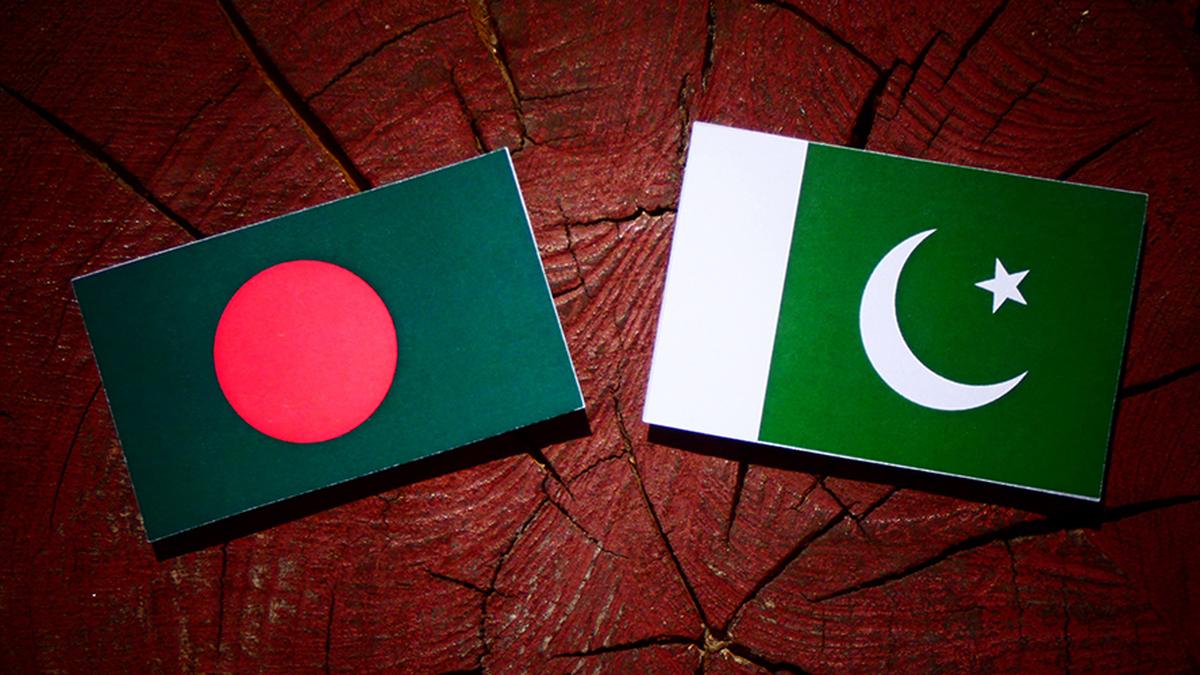
History, when viewed through the lens of time, often reveals emotions that politics tries to suppress. The relationship between Pakistan and Bangladesh—once united as West and East Pakistan—is not merely a tale of separation; it is a story of shared dreams, collective struggle, painful rupture, and, perhaps now, a quiet yet meaningful reconciliation. Beneath the layers of political discord and historical grievances, there remains a subtle but enduring connection—what one might call a “romance” of history, identity, and destiny.
The roots of this relationship stretch back well before 1947, to the historic Partition of Bengal (1905). This event marked a significant turning point for Muslims in the subcontinent. After the failed Indian Rebellion of 1857, Muslims had experienced political marginalization and economic decline. The partition of Bengal, initiated by the British, created a Muslim-majority province in Eastern Bengal, offering a glimpse of political empowerment and administrative inclusion.
However, this move was fiercely opposed by sections of the Hindu elite, who saw it as a threat to their dominance. The reaction to this opposition catalyzed Muslim political consciousness. In 1906, the All-India Muslim League was established in Dhaka—a city that would later become the capital of Bangladesh. This was not a coincidence but a symbolic beginning of a collective Muslim struggle for rights, identity, and ultimately, self-determination.
The early decades of the 20th century witnessed the strengthening of Muslim political unity. Leaders like Muhammad Ali Jinnah and A. K. Fazlul Huq played pivotal roles in shaping this movement. Fazlul Huq, a towering figure from Bengal, presented the historic Lahore Resolution (1940), which laid the foundation for the creation of independent Muslim states in the subcontinent.
The 1946 Indian provincial elections further cemented Muslim political unity, as the Muslim League secured an overwhelming mandate from Muslim-majority areas, including Bengal. This democratic endorsement paved the way for the eventual creation of Pakistan in 1947—a homeland envisioned as a unified state for Muslims, geographically divided but ideologically bound.
Yet, the dream of unity soon encountered the harsh realities of governance, geography, and power dynamics. Despite being numerically larger, East Pakistan often felt politically and economically marginalized. The seeds of discontent began to grow, particularly after the 1954 East Bengal provincial elections, where regional parties defeated the Muslim League, signaling a shift in political sentiment.
The following decades were marked by increasing tensions. Issues of language, representation, and economic disparity deepened the divide. The tragic culmination came in 1971, during the Bangladesh Liberation War, which led to the emergence of Bangladesh as an independent state. This was not just a political separation but an emotional rupture—families divided, identities questioned, and a shared history fractured.
For years, the relationship between Pakistan and Bangladesh remained overshadowed by mistrust and unresolved grievances. Diplomatic ties were often cautious, and public sentiment carried the weight of historical pain. Yet, history has a way of healing, albeit slowly and imperfectly.
Five decades later, a new generation has emerged—one that is less burdened by the memories of 1971 and more open to redefining the future. In Bangladesh, particularly, the youth have demonstrated a growing awareness of their broader historical roots and regional realities. Recent social and political movements indicate a desire for reform, accountability, and global engagement.
Simultaneously, Pakistan has also undergone its own transformations, grappling with internal challenges while seeking to reposition itself in a rapidly changing geopolitical landscape. In this evolving context, the two nations are beginning to rediscover common ground.
Trade relations, though still modest, are showing signs of improvement. Cultural exchanges, academic collaborations, and people-to-people contacts are gradually increasing. More importantly, there is a subtle shift in narrative—one that acknowledges the past but does not remain imprisoned by it.
On international issues, Pakistan and Bangladesh often find themselves aligned. Both countries share concerns about climate change, economic development, and regional stability. As members of the Global South, they face similar challenges and opportunities, creating a natural basis for cooperation.
This renewed engagement is not driven by nostalgia alone but by pragmatic considerations. In a world increasingly defined by regional blocs and economic partnerships, collaboration between Pakistan and Bangladesh holds significant potential. With a combined population of over 400 million, the two countries represent a substantial market and a reservoir of human capital.
Yet, the path forward requires sensitivity and sincerity. Acknowledging historical grievances, promoting mutual respect, and fostering trust are essential steps in this journey. The romance of which we speak is not naïve idealism; it is a mature understanding that shared history can be a foundation for future cooperation rather than a barrier.
The metaphor of “romance” is particularly apt. Like any enduring relationship, the bond between Pakistan and Bangladesh has experienced moments of unity, misunderstanding, separation, and rediscovery. It is complex, layered, and deeply human.
Today, as both nations stand at the crossroads of history and opportunity, there is a palpable sense of cautious optimism. The wounds of the past are not entirely healed, but they are no longer as raw. Dialogue is replacing silence, and engagement is gradually overcoming estrangement.
This does not mean that differences have vanished. Political systems, national priorities, and historical narratives still diverge in many ways. However, the willingness to engage despite these differences is itself a significant step forward.
The younger generations in both countries are playing a crucial role in this transformation. Through digital platforms, academic exchanges, and cultural interactions, they are building connections that transcend political boundaries. They are discovering shared languages, cuisines, music, and values—reminders of a common heritage that predates division.
In many ways, this quiet reconnection is more powerful than formal diplomacy. It reflects a genuine desire to move beyond the past while preserving its lessons. It is here that the “romance” truly lives—not in grand gestures, but in everyday acts of understanding and cooperation.
As we look to the future, the potential for Pakistan-Bangladesh relations is immense. From trade and investment to education and technology, there are numerous avenues for collaboration. More importantly, there is an opportunity to redefine the narrative—to transform a history of separation into a story of reconnection.
The journey will not be easy. It requires patience, vision, and above all, the courage to confront the past without being constrained by it. But if the recent trends are any indication, both nations are moving in the right direction.
The romance, indeed, is still alive. It is no longer the passionate idealism of 1947, nor the tragic heartbreak of 1971. It is something more nuanced—a quiet, resilient bond that has endured the test of time.
In this renewed relationship lies a powerful message: that history, no matter how painful, does not have to dictate the future. That nations, like individuals, can learn, evolve, and rediscover each other.
Pakistan and Bangladesh, once separated by circumstance, now stand with an opportunity to walk together again—not as one state, but as two sovereign nations connected by history, culture, and a shared vision for the future.
And perhaps, in this rediscovery, we find not just political alignment, but a deeper human truth: that some bonds, no matter how strained, are never truly broken.