













Analyst: Brig Syed Karrar Hussain Shah (Retired)
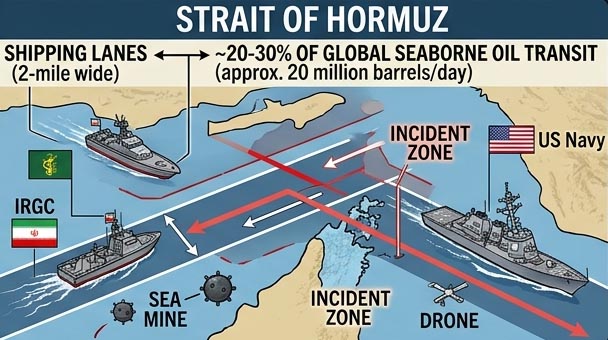
The Middle East has remained under severe tension for the past several months, facing threats of war, possible closure of the Strait of Hormuz, rising oil prices, and increasing global anxiety. The growing confrontation among the United States, Iran, and Israel had pushed the world toward the danger of a major regional conflict. In such sensitive circumstances, Pakistan played a highly balanced, responsible, and proactive diplomatic role. In particular, Pakistan’s Chief of Defence Forces (CDF) Field Marshal Hafiz Syed Asim Munir, Prime Minister Shehbaz Sharif, and the Pakistani diplomatic leadership contributed significantly toward restoring communication between the United States and Iran.
According to international media reports, several proposals, counterproposals, and ceasefire drafts were exchanged between the United States and Iran through Pakistan’s mediation. US President Donald Trump also stated that an agreement with Iran was “mostly finalized,” while the Iranian leadership reportedly sought clarification on certain clauses.
Major Conditions Conveyed by the United States to Iran
The United States reportedly sent the following key proposals and conditions to Iran through Pakistan:
1. Immediate and complete ceasefire.
2. Reopening of the Strait of Hormuz for global maritime trade.
3. Strict monitoring of Iran’s nuclear program.
4. Limiting uranium enrichment activities.
5. Reduction in Iran’s ballistic missile program.
6. Control over activities of Iran-backed armed groups in the region.
7. Assurances to halt attacks on American and allied forces.
8. Permission for inspections by the International Atomic Energy Agency (IAEA).
9. Gradual easing of economic sanctions.
10. Phased restoration of Iran’s frozen assets.
11. Continuation of future negotiations in Islamabad or another neutral venue.
12. Agreement on a joint maritime security framework in the Gulf region.
13. Guarantee of uninterrupted oil transportatio
14. Diplomatic negotiations aimed at reducing regional tensions.
15. A 45-to-60-day transitional ceasefire leading toward a permanent peace agreement.
Iran’s Conditions Conveyed to the United States
In response, Iran communicated its own conditions to the United States through Pakistan. The Iranian leadership emphasized that it would not negotiate from a position of weakness. Iran’s major demands reportedly included:
1. Complete cessation of all US and Israeli military actions.
2. Written guarantees against future attacks on Iran.
3. Removal of economic sanctions.
4. Return of Iran’s frozen assets.
5. Compensation for war damages and support for reconstruction6. Recognition of Iran’s legal role in the Strait of Hormuz.
7. Acceptance of Iran’s right to maintain a peaceful nuclear program.
8. Reduction of American military pressure in the region.
9. Regional negotiations to reduce tensions in Lebanon, Iraq, and Yemen.
10. Immediate ceasefire and end of attacks on all fronts.
Mutually Agreed Points
Although no final agreement has yet been officially announced, media reports suggest that both sides have reached a preliminary understanding on several important issues.
Key Areas of Agreement
The ceasefire will remain in effect.
The Strait of Hormuz will remain open for global trade.
Iran will restore oil exports.
The United States will gradually ease economic sanctions.
Iran will assure that it will not pursue nuclear weapons.
Pakistan will play the role of mediator and guarantor country.
Diplomatic negotiations will continue to reduce regional tensions.
Direct confrontation between Israel and Iran will be avoided.
Cooperation will continue regarding prisoner exchanges and humanitarian assistance.
Possible Framework of a Permanent Peace Agreement
If a permanent agreement between the United States and Iran is finalized, its possible framework may include the following phases:
First Phase: Ceasefire
Complete ceasefire.
End to aerial and naval attacks.
Free movement of commercial shipping through the Strait of Hormuz.
Second Phase: Confidence-Building Measures
Exchange of prisoners.
Provision of humanitarian aid.
Release of some Iranian frozen assets.
Limited easing of sanctions.
Third Phase: Political and Defence Negotiations
International monitoring of Iran’s nuclear program.
Negotiations to reduce the regional arms race.
Support for peace processes in Iraq, Syria, Lebanon, and Yemen.
A joint security framework for Gulf countries.
Fourth Phase: Economic Cooperation
Iran’s return to global markets.
Increase in oil and gas exports.
Revival of international investment.
Development of regional trade corridors.
Pakistan’s Constructive Role
Pakistan adopted a wise and balanced approach during this crisis. On one side, Pakistan maintained its brotherly relations with Iran, while on the other side, it kept diplomatic engagement active with the United States. International media outlets have positively highlighted Pakistan’s mediation efforts.
In particular, the diplomatic initiatives of Field Marshal Hafiz Syed Asim Munir strengthened Pakistan’s positive image at the global level. Reports suggest that he remained in continuous contact with both American and Iranian leadership and played a key role in advancing the ceasefire framework.
Possible Positive Impact on Pakistan’s Economy
If a permanent peace agreement between the United States and Iran is achieved, Pakistan could benefit significantly in several ways.
Economic Benefits
1. Reduction in global oil prices may lower Pakistan’s import bill.
2. Inflationary pressure within Pakistan could decrease.
3. Revival of the Iran-Pakistan gas pipeline project may become possible.
4. Cross-border trade between Pakistan and Iran may expand.
5. Regional trade cooperation between Gwadar and Chabahar could improve.
6. Pakistan may gain greater diplomatic importance as a peace mediator.
7. Increased investment from Gulf countries and China is expected.
8. Regional peace would positively affect CPEC-related projects.
9. Reduced tensions in the Middle East would stabilize employment opportunities for Pakistani workers abroad.
10. Pakistan could emerge as an important global energy corridor.
Conclusion
In conclusion, if a permanent peace agreement between the United States and Iran becomes successful, it would not only improve relations between the two countries but could also open new doors of peace, stability, and economic progress for the entire Middle East and South Asia.
Pakistan has played a responsible, dignified, and active diplomatic role during this sensitive period. Such efforts may further strengthen Pakistan’s importance in future international peace initiatives. If this diplomatic process succeeds, Pakistan could emerge not only as a guarantor of regional peace but also as a responsible and effective diplomatic power on the global stage.