















By Brig Syed Karrar Hussain Retired
The evening sky over Dhaka is painted in shades of red and green—the colors of a flag born through sacrifice, pain, and hope. It is the National Day of Bangladesh, commemorating the historic declaration of independence on 26th March 1971. The air carries echoes of history, whispers of unity once shared, and questions about a future that still seeks reconciliation.
Scene One: The Birth of a Nation
The story begins not in 1971, but in 1947—the year when the subcontinent was divided, and Pakistan emerged as a homeland for Muslims. East Pakistan, now Bangladesh, was geographically separated from West Pakistan by more than a thousand miles of Indian territory, yet bound together by faith, ideology, and aspiration.
However, over time, political disparities, linguistic differences, and economic grievances created deep fissures. The Bengali language movement of 1952 was not just a demand for linguistic recognition—it was a cry for identity and respect. These tensions culminated in the tragic events of 1971, leading to war, immense human suffering, and eventually the emergence of Bangladesh as an independent nation.
National Day, therefore, is not just a celebration—it is a solemn reminder of sacrifice, resilience, and the price of freedom.
Scene Two: Bonds Forged in Uniform
Years later, far from the battlefields of 1971, destiny brought soldiers of both nations together under a different flag—the blue flag of the United Nations.
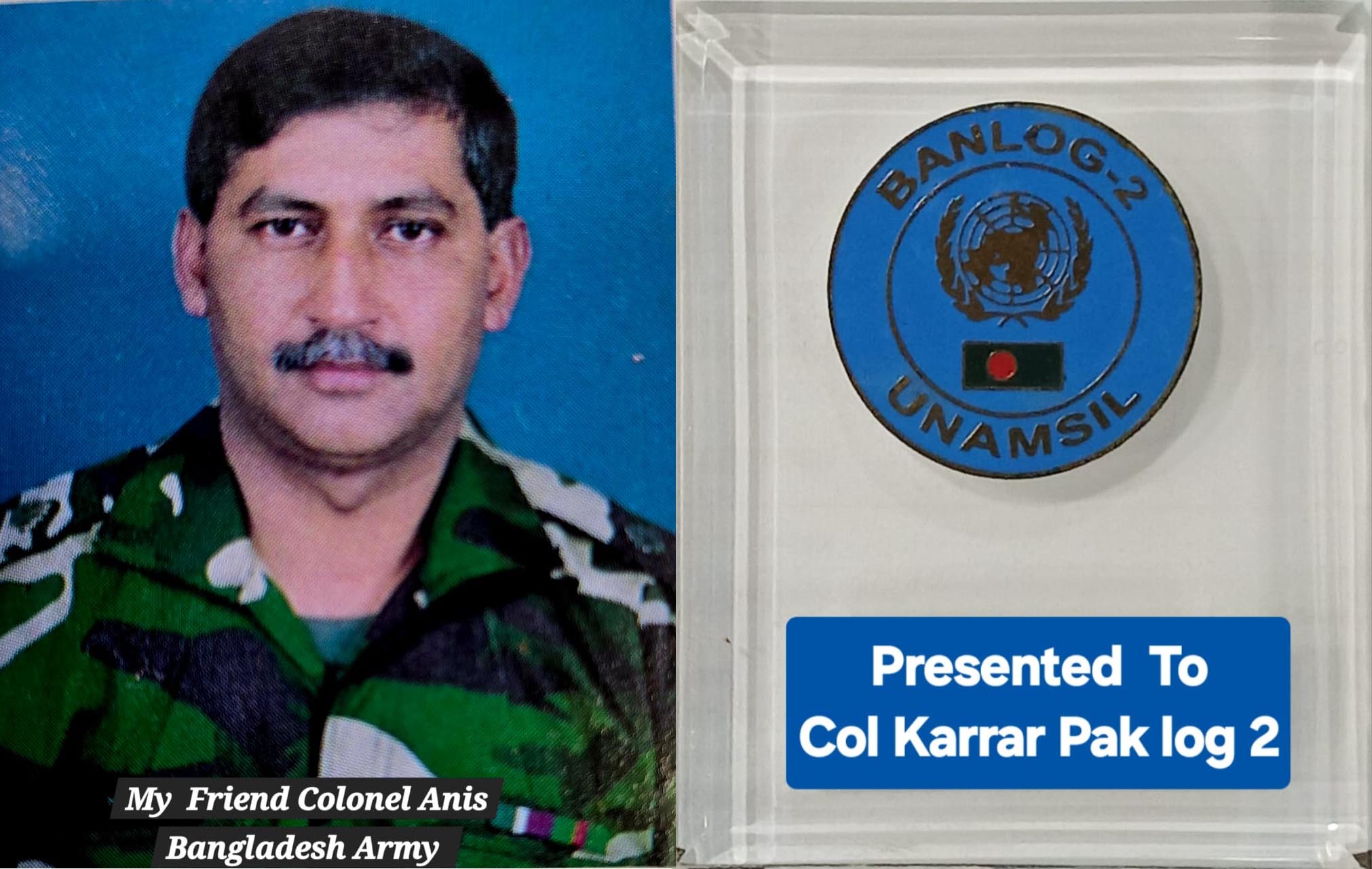
In 1995, at the Command and Staff College in Quetta, I had the privilege of sharing time and professional growth with a Bangladeshi officer, Colonel Anis. He was a man of discipline, intellect, and warmth—qualities that reflected the finest traditions of the Bangladesh Army.
Our discussions were not about the bitterness of the past, but about military strategy, leadership, and shared professional values. There was mutual respect, camaraderie, and a silent understanding that soldiers, regardless of nationality, share a bond deeper than politics.
Later, in Sierra Leone, under the United Nations peacekeeping mission, I again witnessed the professionalism of Bangladeshi troops. Their logistics units worked alongside us with remarkable efficiency and dedication. In difficult terrains and challenging conditions, they proved themselves to be not only competent soldiers but also compassionate human beings.
Those days remain etched in memory—moments when uniforms erased borders, and humanity took precedence over history.
Scene Three: Changing Political Landscapes
The relationship between Pakistan and Bangladesh has seen many phases—warmth, indifference, and at times, strain.
In the early years after independence, diplomatic ties were cautious but functional. However, under the leadership of Sheikh Hasina, relations experienced a period of visible tension. Historical narratives, war crime trials, and political rhetoric often shaped public perception and state policy.
From Pakistan’s perspective, there has always been a desire to move forward, to acknowledge the past while building a future based on mutual respect and cooperation. Yet, unresolved historical sentiments and internal political considerations in Bangladesh have sometimes hindered this process.
Despite these challenges, it is important to recognize that both nations share cultural, religious, and historical roots that cannot be erased.
Scene Four: Strength of Bangladesh Today
Today, Bangladesh stands as a remarkable example of resilience and progress.
Military Strength:
The Bangladesh Armed Forces are highly professional, well-trained, and experienced, particularly in UN peacekeeping missions. Bangladesh is consistently among the top contributors to UN peacekeeping operations, earning global respect for its discipline and effectiveness.
Political System:
Bangladesh operates as a parliamentary democracy, though its political landscape has often been characterized by intense rivalry between major parties. Despite challenges, democratic institutions continue to function, and governance structures have matured over time.
Economic Growth:
Perhaps the most impressive transformation is in the economic domain. Bangladesh has emerged as one of the fastest-growing economies in Asia. Its garment industry is a global powerhouse, contributing significantly to exports. Infrastructure development, human resource investment, and a focus on microfinance have uplifted millions out of poverty.
From being labeled a “basket case” in the early 1970s, Bangladesh has rewritten its destiny through determination and strategic planning.
Scene Five: A Call for Reconciliation
As the narrative unfolds, one question remains—can the past be a bridge instead of a barrier?
The answer lies in sincere efforts from both sides.
Recommendations for Improving Pakistan–Bangladesh Relations
1. Diplomatic Engagement:
Regular high-level visits and dialogues must be encouraged. Silence creates distance, while communication builds trust.
2. Trade and Economic Cooperation:
Both countries can benefit from enhanced trade relations. Pakistan can export textiles, pharmaceuticals, and agricultural products, while Bangladesh can share its expertise in garments and microfinance.
3. Military-to-Military Contacts:
Joint training programs, exchange visits, and participation in multinational exercises can strengthen professional ties—reviving the spirit I witnessed in Quetta and Sierra Leone.
4. Cultural Exchanges:
Art, literature, and media can play a vital role in bridging emotional gaps. مشترکہ ثقافتی میلوں، طلبہ کے تبادلے، اور ادبی روابط سے عوامی سطح پر قربت بڑھے گی۔
5. Addressing Historical Issues with Maturity:
History cannot be changed, but it can be understood with empathy. دونوں ممالک کو چاہیے کہ ماضی کے تلخ ابواب کو سیاسی مقاصد کے بجائے مفاہمت اور سیکھنے کے جذبے کے ساتھ دیکھیں۔
6. Cooperation in International Forums:
As members of the Muslim world and developing nations, both countries can collaborate on global platforms to address issues like climate change, poverty, and peacekeeping.
Final Scene: Hope Beyond History
The story of Bangladesh and Pakistan is not just one of separation—it is also a story of shared dreams, common struggles, and untapped potential.
As I recall my interactions with Bangladeshi officers—their professionalism, warmth, and integrity—I am reminded that nations are ultimately defined by their people, not just their politics.
The drums of National Day celebrations in Dhaka are not just a reminder of independence—they are also a call for reflection. A call to look beyond the past, to rediscover common ground, and to build a future where cooperation replaces confrontation.
History may have written a chapter of separation, but the pen of diplomacy and goodwill can still write a new chapter—one of friendship, respect, and shared progress.
And perhaps, one day, the soldiers who once trained together and served under the same flag of peace will see their nations walk side by side—not as estranged brothers, but as partners in a more stable and harmonious world.