











By Brig Syed Karrar Hussain Retired
Introduction
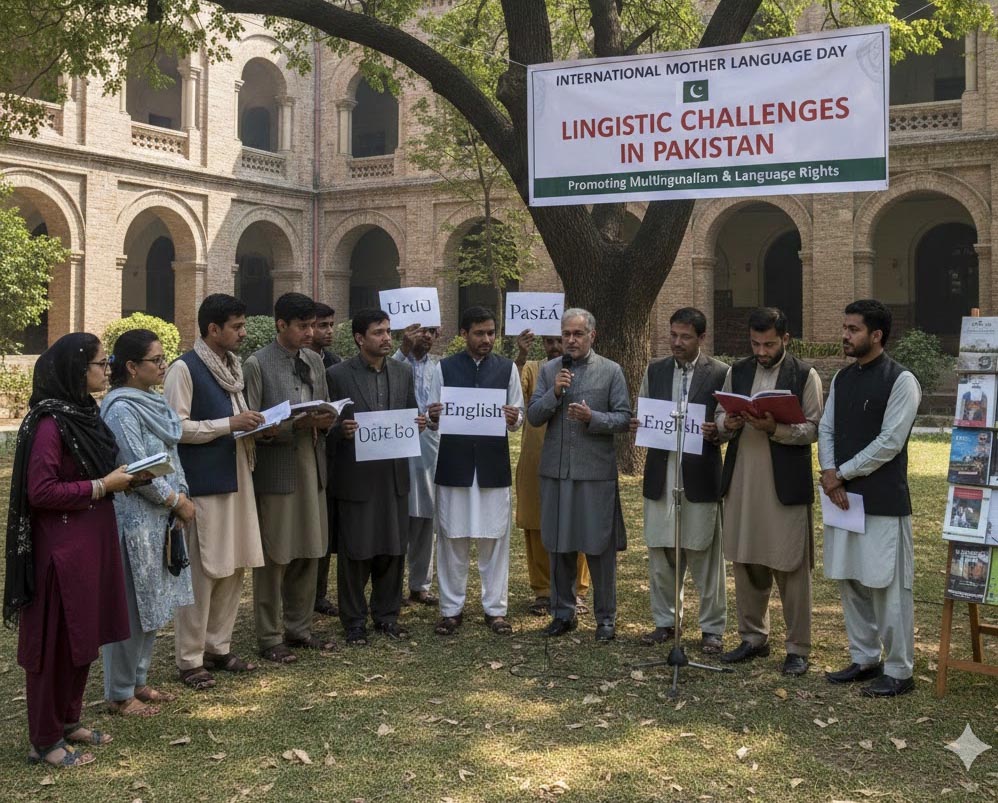
Language is not merely a means of communication; it is the soul of a nation, the guardian of culture, and the foundation of identity. Every word spoken in one’s mother tongue carries centuries of tradition, emotions, and collective memory. International Mother Language Day, observed annually on 21 February, reminds the world of the importance of linguistic diversity, cultural harmony, and respect for all languages. For countries like Pakistan, blessed with rich linguistic diversity yet challenged by language-related tensions, this day holds special significance.
Background of International Mother Language Day
International Mother Language Day was proclaimed by the United Nations Educational, Scientific and Cultural Organization (UNESCO) in 1999 and has been observed worldwide since 2000. The date commemorates the sacrifices of students who were killed on 21 February 1952 in Dhaka while protesting for the recognition of Bengali as a state language of Pakistan. Their movement ultimately led to the recognition of Bengali and became a historic symbol of linguistic rights.
After the creation of Pakistan in 1947, the language question became a sensitive issue. Although Urdu was declared the national language, a large population in the eastern wing spoke Bengali. The movement demanding recognition of Bengali reflected the deep emotional connection people have with their mother tongue. Later, following the independence of Bangladesh in 1971, the events of 1952 became a powerful symbol of linguistic identity.
Recognizing the importance of linguistic diversity globally, UNESCO declared 21 February as International Mother Language Day to promote multilingualism and cultural respect.
Importance of Communication and Language
Language is the primary vehicle of communication. It shapes thought, strengthens relationships, and builds social cohesion. A child’s first education begins in the mother tongue. Research consistently shows that early education in one’s native language enhances comprehension, confidence, and cognitive development.
Communication is not only about exchanging information; it is about transmitting values, culture, history, and faith. Nations that protect their languages protect their heritage. Language connects generations and provides a sense of belonging. When a language declines, traditions, poetry, folklore, and indigenous knowledge also fade.
In the modern era of globalization, English has emerged as a dominant international language. While global languages are important for economic and technological advancement, neglecting local languages creates social inequality and identity crises. Balanced multilingualism—respecting mother tongues while promoting national and international languages—is essential for social harmony.
Linguistic Diversity and Language Issues in Pakistan
Pakistan is a linguistically rich country. Major languages include Punjabi, Sindhi, Pashto, Balochi, Saraiki, Hindko, Brahui, and many regional dialects. Urdu serves as the national language, while English is widely used in official and professional settings.
However, several language-related challenges persist:
1. Educational Divide
English-medium education is often associated with better economic opportunities, while public-sector schools largely teach in Urdu or regional languages. This creates a class divide where language becomes a symbol of social status rather than a tool of learning.
2. Neglect of Regional Languages
Many regional languages lack institutional support. Some are not adequately taught in schools, and literature in local languages receives limited promotion. As urbanization increases, younger generations shift toward Urdu and English, causing gradual erosion of indigenous languages.
3. Political Sensitivities
Language has sometimes been politicized in Pakistan’s history. The tragic separation of East Pakistan demonstrated how deeply language is connected with identity and dignity. Even today, debates over medium of instruction and official language policies generate emotional responses.
4. Cultural Erosion
Modern media and digital platforms predominantly operate in English or Urdu. Smaller languages struggle for representation, resulting in loss of oral traditions and folk heritage.
Despite these challenges, Pakistan also offers positive examples. Sindhi language enjoys constitutional recognition in Sindh; Pashto and Balochi literature have vibrant poetic traditions; Punjabi and Saraiki music continue to influence popular culture. The key challenge is institutional strengthening and balanced policy-making.
Benefits of International Mother Language Day
International Mother Language Day offers several important benefits:
1. Promotion of Linguistic Diversity
The day highlights the importance of preserving all languages, including endangered ones. Linguistic diversity enriches humanity by offering multiple perspectives and cultural expressions.
2. Encouragement of Multilingual Education
UNESCO strongly advocates mother tongue-based multilingual education. Children learn concepts more effectively in their first language before transitioning to additional languages.
3. Cultural Preservation
Observing this day encourages communities to document folklore, publish literature, and celebrate traditional arts in their native languages.
4. Social Inclusion
Respect for all languages reduces feelings of marginalization. When people see their language recognized, they feel valued and included in national development.
5. National Unity
Contrary to fears that multiple languages divide nations, inclusive language policies strengthen unity. Unity is not uniformity; it is harmony within diversity.
6. Global Awareness
The day reminds the world that approximately 40% of the global population does not have access to education in a language they understand. Promoting mother tongue education improves literacy and reduces dropout rates.
Lessons for Pakistan
For Pakistan, International Mother Language Day is both a reminder and an opportunity. It reminds us of the painful lessons of history and offers an opportunity to build a linguistically inclusive future.
Pakistan’s strength lies in its diversity. From the poetry of Bulleh Shah in Punjabi to Shah Abdul Latif Bhittai in Sindhi, from Rahman Baba in Pashto to Atta Shad in Balochi, our regional languages are treasures of wisdom. Preserving them does not weaken Urdu; rather, it enriches national culture.
At the same time, Urdu remains a powerful symbol of national integration, while English connects Pakistan to global markets and knowledge systems. Therefore, a balanced multilingual framework is essential.
Recommendations for Pakistan
To strengthen linguistic harmony and maximize the benefits of International Mother Language Day, the following steps are recommended:
1. Mother Tongue-Based Early Education
Primary education should begin in the child’s mother tongue wherever feasible. Gradual transition to Urdu and English can ensure both conceptual clarity and national integration.
2. Curriculum Reform
Textbooks should include regional literature, poetry, and folklore. Students should develop pride in their linguistic heritage alongside national identity.
3. Teacher Training
Teachers must be trained in multilingual pedagogy. Effective communication in early grades requires linguistic sensitivity.
4. Digital Promotion of Local Languages
Government and private media should promote content in regional languages. Digital dictionaries, translation tools, and online courses can help preserve smaller languages.
5. Research and Documentation
Universities should establish language research centers to document endangered languages and dialects. Grants should be provided for linguistic research and publication.
6. Cultural Festivals
Provincial and national language festivals can promote harmony and mutual respect. Poetry recitals, storytelling sessions, and folk music events should be encouraged.
7. Policy Consistency
Language policies must be consistent and inclusive, avoiding politicization. A national consensus approach can prevent future misunderstandings.
8. Public Awareness Campaigns
Media campaigns on International Mother Language Day can highlight the value of linguistic diversity and discourage discrimination based on accent or language.
Conclusion
International Mother Language Day is more than a ceremonial observance. It is a global call to respect diversity, protect identity, and promote inclusive development. For Pakistan, it carries historical depth and future promise.
Language is power. It shapes thought, builds confidence, and strengthens unity. A nation that honors all its languages honors all its citizens. By embracing multilingual education, preserving regional heritage, and promoting inclusive policies, Pakistan can transform linguistic diversity into a source of strength rather than division.
As we observe 21 February each year, let us remember that every mother tongue is a blessing, every language is a cultural treasure, and every voice deserves respect. In preserving our languages, we preserve our soul.