















Mukhtar Ahmed Butt
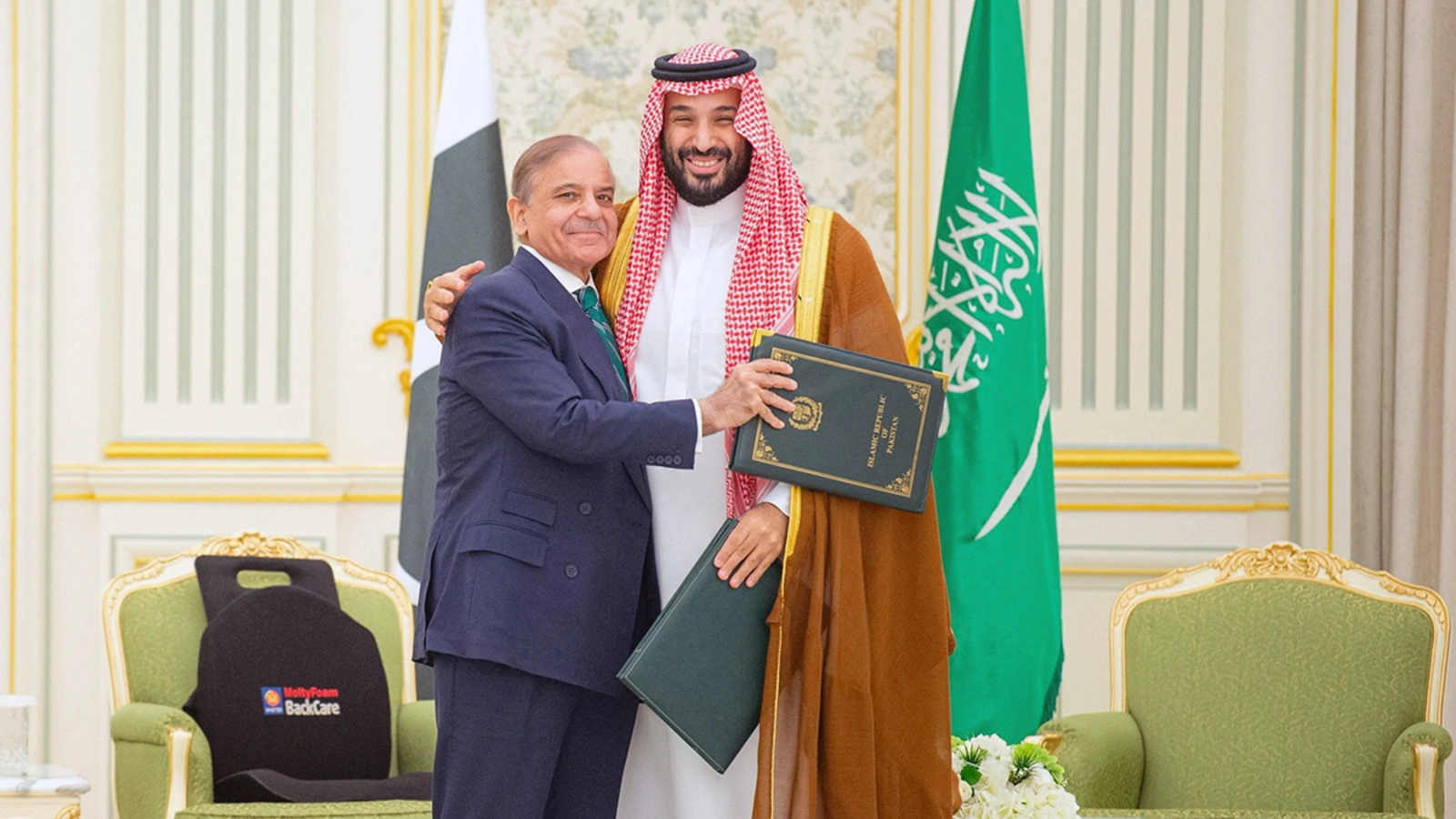
The defence pact signed between Pakistan and Saudi Arabia on 17 September has drawn immediate attention worldwide. While analysts across capitals will churn out competing theories—some serious, some laughably far-fetched—the simple fact remains: this pact formalizes a bond of trust that has existed for decades. Pakistan and Saudi Arabia are not just allies; they are brothers in faith and destiny.For Pakistan, the pact is not an adventurist step but a reaffirmation of our historic role in safeguarding the Muslim world. Our troops have always been present in the Kingdom, providing training, protection, and solidarity.It institutionalizes what has long been a close relationship (training, deployments, arms/cooperation). The text and public statements so far stop short of explicitly saying Pakistan’s nuclear weapons will cover Saudi Arabia. Saudi officials have emphasized conventional cooperation; Pakistan maintains ambiguity about its nuclear doctrine. Independent analysts caution against assuming an explicit nuclear guarantee from Pakistan based solely on the signing. Does this mean a Pakistani” nuclear umbrella for Saudi Arabia”?
What has changed is the global environment: Israel’s relentless aggression in Gaza and unchecked strikes across the region—from Syria to Lebanon, from Iran to even Qatar—have shaken the Middle East to its core. At such a time, Pakistan and Saudi Arabia standing shoulder to shoulder sends a powerful message: aggression against one will not go unanswered. Some speculate whether this means Pakistan is extending its “nuclear umbrella” to Riyadh. In truth, the pact is about deterrence, not escalation. It reassures our brothers that they are not alone. Pakistan, a nuclear power, has the credibility to anchor stability in a turbulent region. The very perception that Riyadh is backed by Islamabad will act as a brake on reckless adventurism by those threatening to redraw maps at gunpoint. The timing is also significant. The recent Qatar summit, though well-intentioned, failed to send a strong, united message to Israel. Where diplomacy faltered, defence cooperation now speaks louder. The pact underlines that Muslim states cannot forever outsource their security to external powers; they must build their own credible shields.For Pakistan, this is also about restoring our rightful place in world politics. Our sacrifices in fighting terrorism, our unmatched professional military, and our principled stance on Palestine make us a natural partner for the Kingdom. Critics at home and abroad will try to sow doubt, but the people of Pakistan should see this pact for what it is: recognition of our enduring relevance in global affairs and our duty to protect not just borders, but the dignity of the Ummah.In a world where might often tramples right, Pakistan and Saudi Arabia have chosen to stand firm together. That is a cause for pride, not apprehension. Let me congratulate Pakistan leadership and rulers of Saudia that its immediate impact has ultimately forced many countries and openly came out against the policies of US and recognized Palestine. Pakistan’s defence pact with Saudi Arabia naturally raises eyebrows in the region, because it has come at a very sensitive time. Pakistan has always had a close, strategic relationship with Saudi Arabia—rooted in religion, economy, and defence. By signing a formal defence pact, Pakistan is institutionalizing what has long been an informal arrangement. It signals reliability to Riyadh and reaffirms Pakistan’s role as a trusted security partner. At the same time, Islamabad has taken care not to present this as an “offensive alliance” but rather as a stabilizing commitment. Washington’s quietness is telling. The US traditionally supports Saudi security and has large defence stakes in the Gulf. It likely sees Pakistan’s role as complementary, not contradictory, since Pakistan provides manpower and training that the US often avoids committing directly.Silence also suggests the US does not view this pact as threatening its own influence, unlike if China or Russia had signed such an agreement. Anything that strengthens Pakistan’s position in the Gulf indirectly aids Chinese energy security and regional balance.Turkey &Qatar may cautiously welcome it, though they’ll watch to ensure Pakistan doesn’t appear to be aligning too closely with Saudi at the expense of wider Muslim unity. Tehran may see this pact as tilting Pakistan closer to the Saudi bloc in the regional rivalry, especially when Israel is intensifying aggression in Gaza and elsewhere. Islamabad will have to work hard diplomatically to reassure Tehran that Pakistan’s role remains defensive, not aimed at Iran. India will be uneasy. A stronger Saudi-Pak defence link complicates New Delhi’s recent outreach to Gulf state. If handled wisely, the pact boosts Pakistan’s strategic relevance and economic prospects (e.g., Saudi investments, remittances, and oil facility support). But if mishandled, it risks dragging Pakistan into Gulf rivalries—something Islamabad has tried to avoid since Yemen.In essence, Pakistan has gained prestige and strategic weight, but must play a very balanced, diplomatic game to avoid alienating Iran, Turkey, or even the wider Muslim world.
The writer is free lance journalist &defence analyst