






















By Brig Syed Karrar Hussain Retired
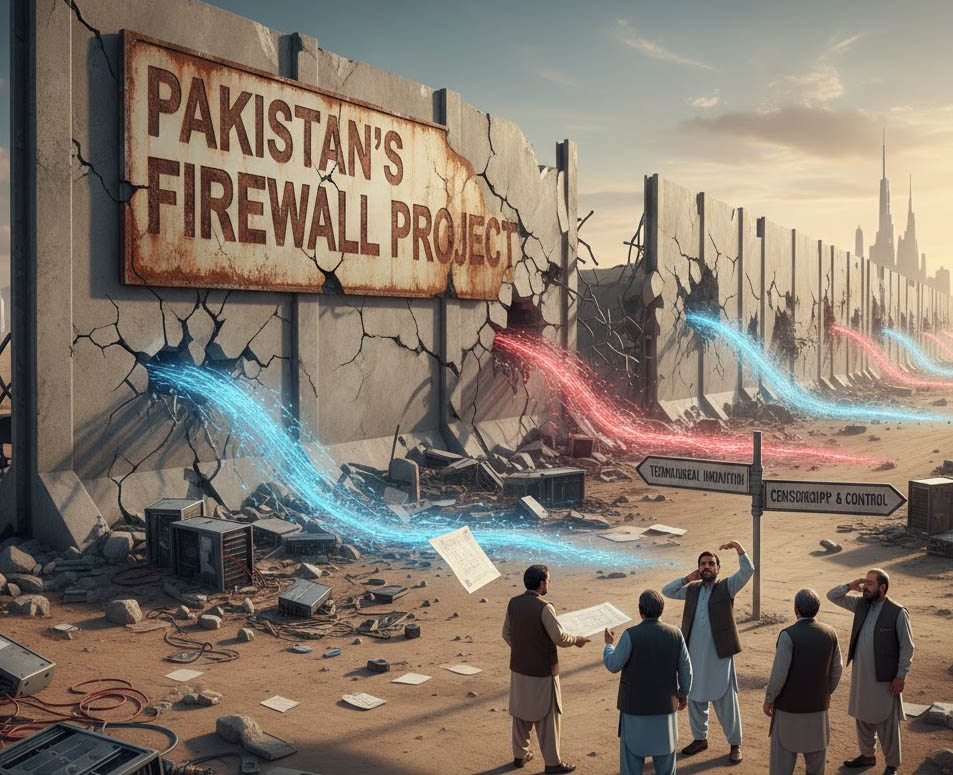
In recent years, Pakistan embarked on an ambitious and controversial digital infrastructure initiative — the installation of a nationwide internet firewall designed to monitor and control social media and online content. Launched amidst rising concerns over harmful online content, cyber threats, and national security challenges, the firewall was intended to strengthen the government’s ability to regulate digital spaces. However, after substantial investment and mounting criticism, authorities now acknowledge that the system failed to deliver its objectives and has become an economic and operational burden. The unfolding story of this project offers important insights into governance, technology policy, and the balance between security and the digital economy.
Why the Firewall Was Installed
The national firewall initiative was first implemented in 2024 with the declared aim of monitoring and regulating online content and social media activity that authorities considered harmful to national stability and public order. Policymakers argued that in an era of rapid digital communication, unfiltered online platforms could be used to spread extremist material, incite violence, or undermine state institutions. The firewall was seen as a technological solution to exert greater oversight without resorting to frequent platform bans.
From the government’s perspective, the firewall was justified as a tool for enhancing cybersecurity, protecting social harmony, and ensuring that online platforms complied with Pakistani laws. Authorities also suggested that a robust firewall could complement existing legal frameworks like the Prevention of Electronic Crimes Act (PECA) and digital content regulations.
However, even at the time of deployment, critics highlighted that internet governance in Pakistan already involved tools such as the longstanding Web Management System used for content filtering, and that the proposed firewall could overlap inefficiently with existing mechanisms. The Pakistan Software Houses Association (P@SHA) warned that such a system could disrupt internet stability and potentially cost the economy hundreds of millions of dollars if not handled with caution and transparency.
Expenses and Technical Commitment
The firewall project quickly became one of the most expensive digital infrastructure initiatives in recent memory. According to multiple reports, the total investment in the system reached approximately Rs. 40 billion — a significant allocation in a country grappling with economic challenges and competing development priorities.
Officials justified the expenditure by framing the firewall as a long-term investment in national digital sovereignty. However, questions about procurement processes, technical planning, and feasibility assessments soon emerged. Industry observers noted that the system had been installed without adequate compatibility checks or integration plans with Pakistan’s existing internet backbone and telecom infrastructure.
This technical oversight meant that instead of operating seamlessly, the firewall introduced significant bottlenecks into the system. Telecom operators and internet users reported widespread slowdowns, interrupted services, and inconsistent connectivity across various networks. These disruptions were particularly problematic for services requiring stable, high-speed internet, such as video conferencing, cloud applications, and real-time data exchange.
High-value sectors such as freelancing and IT exports — which depend on uninterrupted online access — were among the first to feel the impact.
Problems Faced by the Public, IT Sector, and Implementers
The effects of the firewall’s shortcomings were felt widely across Pakistan’s digital ecosystem.
1. Public Users and Everyday Connectivity
For millions of ordinary internet users, the installation marked the beginning of a frustrating experience. Reports circulating among the public described slow page loads, prolonged delays in message delivery, and difficulty in accessing routine services like social media, video streaming, and voice-over-IP calls. In many cases, even with nominal internet speed packages, users found basic applications sluggish or unreliable.
Older users — particularly those less familiar with technology — found these problems especially challenging, as they struggled to adapt or troubleshoot connectivity issues. For them, the internet became a source of frustration rather than utility.
2. IT Companies and Freelancers
Pakistan’s digital services sector — including software houses, digital marketing agencies, call centres, and individual freelancers — relies heavily on consistent, low-latency connectivity to serve global clients. When the firewall’s side effects began to manifest, several stakeholders warned that the disruptions could cost the industry dearly. P@SHA estimated that such internet instability could result in economic losses of up to $300 million or more if problems persisted.
For freelancers working on platforms like Upwork and Fiverr, this translated into lost deadlines, client dissatisfaction, and in some cases, losing contracts. The situation was particularly untenable for young professionals whose income depends entirely on remote work. Collectively, these disruptions threatened Pakistan’s hard-earned gains in IT exports and its reputation as a competitive player in the global digital economy.
3. Telecom Operators and Technical Teams
The teams tasked with implementing and managing the firewall faced relentless pressure as complaints mounted. Telecom operators publicly contested claims about the system’s complete shutdown, clarifying that existing network management systems remained in place and that the firewall infrastructure continued to operate within certain parameters.
Nonetheless, operators had to contend with the technical reality that the firewall was not working optimally and was contributing to inefficiencies. Technical staff also struggled with the political dimension of the project, as public and industry backlash intensified — placing additional strain on already overstretched resources.
Did It Achieve Its Objectives?
Despite the significant financial outlay and political backing, the firewall failed to deliver on its core objectives.
Officials and industry experts now agree that the system did not achieve the intended level of content monitoring or regulation, nor did it provide a stable framework for combating harmful online activity. Instead, the firewall became synonymous with network slowdowns and economic disruption.
The government’s decision — widely reported — to dismantle or distance itself from the controversial project ahead of the high-profile 5G spectrum auction in March 2026 is an implicit acknowledgment of its failure. Authorities hoped that removing the firewall narrative would restore investor confidence in the telecom sector and ensure that next-generation services could be launched without legacy obstacles.
Even opposition parties and civil society figures have criticised the initiative, suggesting that it was driven less by genuine cybersecurity needs and more by political motives — including attempts to manage dissent or control narratives online. These critics argue that the project’s shortcomings exacerbated mistrust between digital stakeholders and the government at a time when collaboration was most needed.
The Way Forward
The failure of the firewall project represents a cautionary tale for digital policymaking in Pakistan. It highlights the dangers of big technological interventions without adequate planning, transparency, and stakeholder engagement. Moving forward, several strategic lessons and policy directions should guide future efforts:
1. Transparent Planning and Feasibility Studies
Before launching major digital infrastructure projects, the government must undertake rigorous feasibility studies that involve technical experts, industry stakeholders, and independent evaluators. These assessments should examine potential risks, costs, and integration challenges to avoid repeating past mistakes.
2. Collaborative Cybersecurity Frameworks
Rather than imposing top-down controls, policymakers should pursue cybersecurity frameworks developed in partnership with the IT industry, civil society, and academia. Such collaboration helps ensure that national security concerns are balanced with economic growth and digital rights.
3. Focus on Digital Growth and Innovation
With the imminent rollout of 5G services and increasing demand for digital services, Pakistan must prioritise stable internet infrastructure that fosters innovation and supports global competitiveness. Stable connectivity is not just an economic necessity but a strategic asset in the digital age.
4. Clear Accountability and Audit Mechanisms
The firewall episode underscores the need for clear accountability in government technology initiatives. Independent audits of expenditure, procurement processes, and operational outcomes can build public trust and ensure responsible use of public funds.
5. Respect for Digital Rights and Freedom of Expression
Any future digital regulatory mechanism must carefully consider principles of freedom of expression and user privacy. Heavy-handed measures risk alienating internet users and undermining confidence in Pakistan’s digital ecosystem.
Conclusion
Pakistan’s attempt to build a comprehensive social media monitoring firewall was ambitious but ultimately unsuccessful. The project’s failure, loss of billions in public funds, and adverse impact on the economy and everyday internet users highlight the complexity of digital governance in the 21st century.
As the country moves toward a more connected future with 5G and beyond, policymakers must learn from this costly episode — prioritising thoughtful planning, collaborative engagement, and a balanced approach that protects both national interests and the digital ecosystem that millions of citizens and businesses depend upon. Only through such lessons can Pakistan harness the true potential of its digital transformation.