
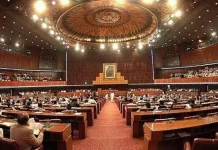

















ISLAMABAD:Chairman Senate Syed Yousaf Raza Gilani on Thursday said that Parliament serves as the bridge between the aspirations of Pakistan’s 240 million citizens and the actions of the government.
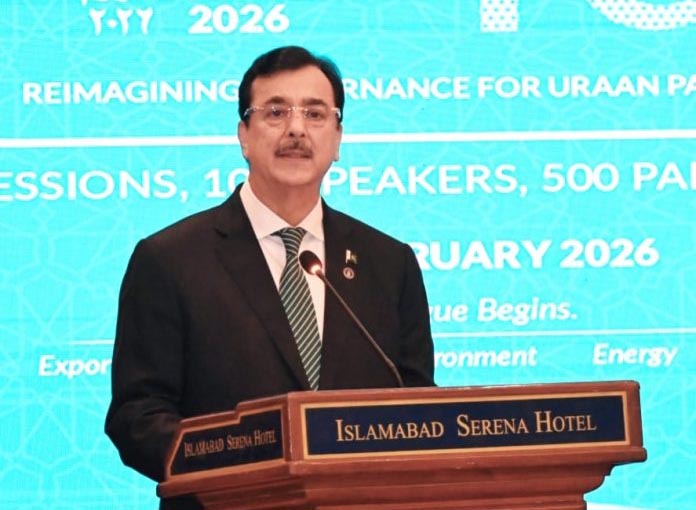
Addressing the concluding session of the Pakistan Governance Forum 2026 as chief guest, he said a strong and effective Parliament is the cornerstone of sustainable governance and democratic resilience in the country.
He congratulated Federal Minister for Planning, Development and Special Initiatives Ahsan Iqbal and his team for successfully organizing what he termed a “premier governance event” that brought together policymakers, experts, and stakeholders to deliberate on reform priorities and transformative initiatives.
Reflecting on his public service as former prime minister, speaker of the National Assembly, and now chairman of the Senate, Gilani emphasized the critical importance of legislative oversight in ensuring effective governance.
He said governance is not merely about policy formulation within the executive branch but also about robust parliamentary scrutiny that guarantees transparency, accountability, and public legitimacy.
“A strong and effective Parliament is the cornerstone of sustainable governance and democratic resilience in Pakistan,” he said, adding that sustainable development outcomes can only be achieved when policies are rooted in legislative ownership.
The chairman underscored the importance of parliamentary instruments such as cut motions, calling attention notices, question hour, debates, and resolutions, describing them as powerful tools for refining governance and enforcing accountability.
He stressed that each debate and question strengthens democratic responsiveness and institutional responsibility.
Highlighting the pivotal role of parliamentary committees, Gilani said much of the substantive oversight work takes place within committee rooms, where policies are examined in depth, budgets are scrutinized, and ministers are held accountable.
He particularly referred to the Senate’s rigorous review of Public Sector Development Programme (PSDP) allocations from December to March, ensuring that development spending aligns with national priorities and public needs.
He added that biannual budget reviews conducted by Senate committees promote fiscal discipline and transparency.
Reaffirming his commitment to strengthening Parliament as an institution of governance, the chairman outlined three key priorities.
First, he emphasized investing in capacity-building initiatives for senators and parliamentary staff to enhance their ability to analyze complex policy and budgetary documents and conduct evidence-based oversight.
Second, he stressed embracing modern technology, particularly artificial intelligence (AI).
He shared that under his stewardship, the Senate of Pakistan is taking a regional lead in developing AI-based applications aimed at enhancing legislative drafting, enabling real-time comparative policy analysis, and improving citizen engagement with the legislative process.
He described this transformation as a step toward building a smarter, more efficient, and responsive Parliament.
Third, he called for strengthening the linkage between parliamentary oversight and executive action. He urged the Planning Commission and all ministries to institutionalize mechanisms for systematically responding to parliamentary committee recommendations, ensuring that identified gaps in development projects are addressed promptly and public resources are utilized effectively.
The chairman stressed that good governance is a shared national responsibility and that a strong Parliament remains the ultimate guarantor of equitable progress and democratic stability. He once again congratulated the Ministry of Planning for organizing the forum and called for collective efforts to build a Pakistan defined by effective governance, inclusive development, and unwavering commitment to its people.