





















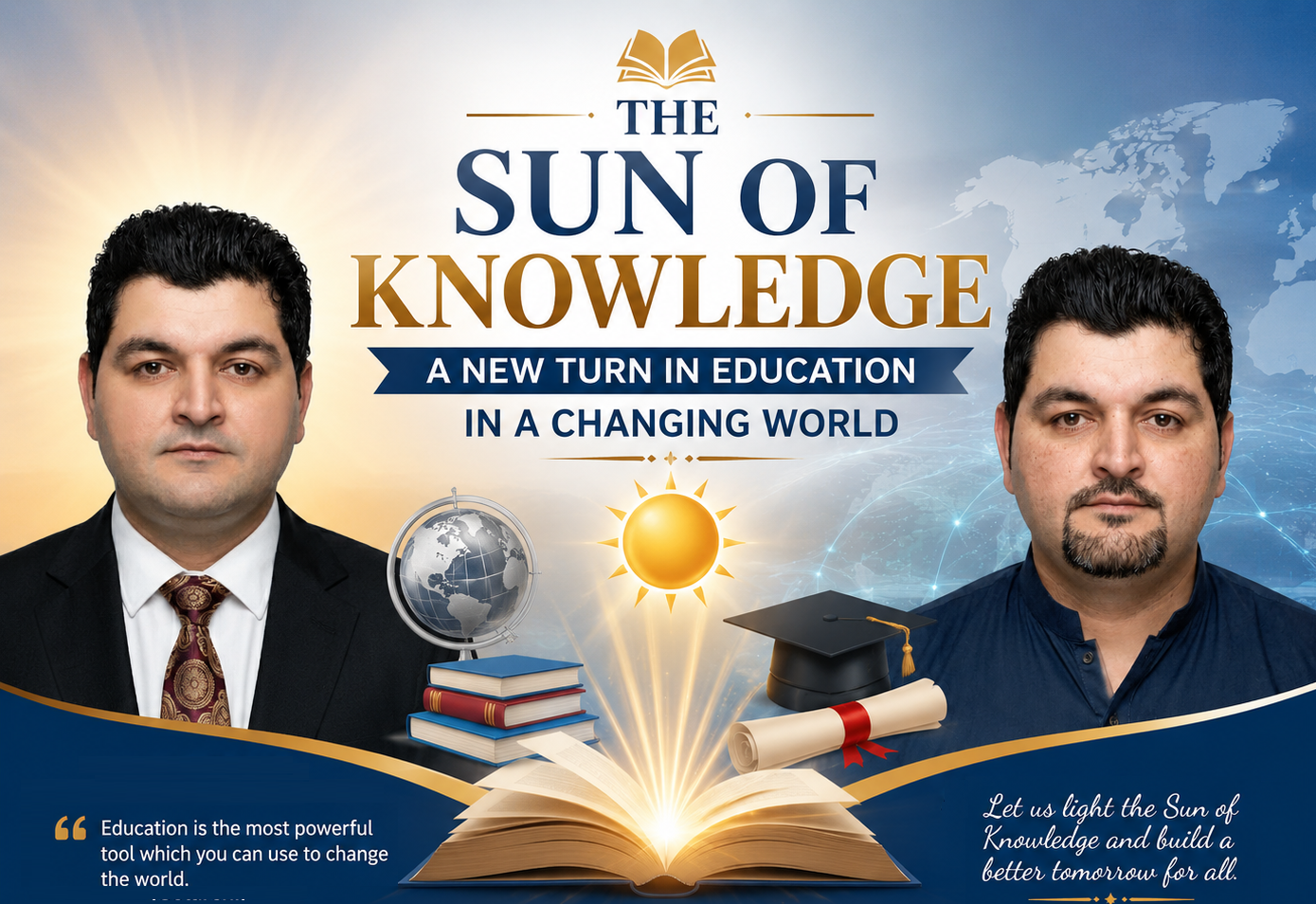
By: Abeer Zeb, Peshawar
Knowledge is the light that has guided humanity out of darkness and onto the path of progress for centuries. Education has changed its form with every era, but perhaps never as rapidly and profoundly as it is changing today. The year 2026 is emerging as a crossroads for the world of education, where new doors of opportunity are opening on one side while a storm of challenges is rising on the other. Educational institutions, teachers, and students around the world are navigating a transformation unlike anything witnessed in recent decades.
Artificial Intelligence: A New Teacher in the Classroom
There was a time when artificial intelligence was merely part of science-fiction stories. Today, it has become a reality in classrooms around the world. Teachers are increasingly using this technology to prepare lessons, assess examinations, and provide individualized guidance to students. Students themselves acknowledge that these new tools help them organize their thoughts, understand complex concepts, and make their learning process more effective.
Yet behind this bright and attractive picture lies a profound question: Will the human spirit of education survive the flood of technology—the spirit that lies at the heart of the relationship between teacher and student? Can the warmth, guidance, character-building, and personal development that one human being can provide to another truly be replicated through lessons delivered by machines? These questions are likely to become among the most important tests for education policymakers in the years ahead.
Budget Constraints, the Weight of Expectations
Financial difficulties have placed educational institutions around the world under severe pressure. Universities are struggling with declining enrolments, limited government support, and rising operating costs. As a result, staff reductions and spending cuts are increasingly becoming a reality. Financial experts have described the coming period as one of the most challenging for higher education, as the growth in revenues fails to keep pace with the rising cost of education.
The situation in schools is no different. Teachers are being asked to achieve better educational outcomes with increasingly limited resources. On one hand, they face the challenge of maintaining students’ attention and interest; on the other, they must cope with a shortage of resources. This dual pressure is having a direct impact on the quality of education.
The Changing Winds of Policy
Government policies are reshaping the face of education. In several countries, significant reductions in educational staff have raised serious concerns among teachers and experts about the future of data protection, research, and student support. At the same time, admission standards are becoming stricter in some institutions, while standardized examination results are once again gaining importance in admission decisions—a trend that had weakened for some time but is now returning with renewed force.
These policy changes are not merely administrative decisions; they directly affect the lives of millions of students and families. When the direction of an institution changes, the direction of countless dreams can change with it.
Not a Degree, but Skills
Another fundamental transformation is becoming increasingly visible within traditional education systems: the rise of skills-based and lifelong learning. Employers, universities, and governments are increasingly moving beyond reliance on conventional degrees and giving greater importance to short-term skill certificates, modern training programmes, and education aligned with industry requirements.
Education experts regard this not as a temporary trend but as a fundamental and lasting transformation. It reflects the reality that in today’s world, the renewal of skills must continue throughout a person’s life rather than being limited to a qualification obtained during the early years of education. “We are born learning, and we leave this world still learning”—this idea is no longer merely a slogan; it is increasingly becoming a central principle of educational policy.
Student Well-Being as a Top Priority
Beyond technology and budgetary challenges, another important issue has emerged: the mental and emotional well-being of students and teachers. It is no longer considered a secondary concern but is increasingly becoming a central priority for educational institutions. Inclusion, engagement, and mental well-being are now being assessed alongside academic performance.
This shift reflects a growing understanding that an exhausted teacher and a discouraged student cannot produce their best results. Education is not simply about completing a curriculum; it is about nurturing healthy, capable, confident, and fulfilled human beings.
The Road Ahead
In 2026, education stands at the intersection of opportunity and pressure. Technology promises more personalized, flexible, and effective learning, but that promise can only be fulfilled if access to it is equitable. The digital divide continues to create a deep gap between well-resourced and under-resourced educational institutions. Until this divide is bridged, the benefits of technology risk remaining concentrated among privileged sections of society.
As educational institutions confront limited budgets, changing policies, and growing expectations, the years ahead will demonstrate how far education systems can advance by embracing innovation without leaving their students and teachers behind. This is not merely the responsibility of educational institutions; it is a collective responsibility of the entire nation to make investment in education a top priority in order to secure and illuminate the future of its children.
Because the true strength of any nation is cultivated within the walls of its schools, colleges, and universities.