
















*Mushtaq Tanwari*
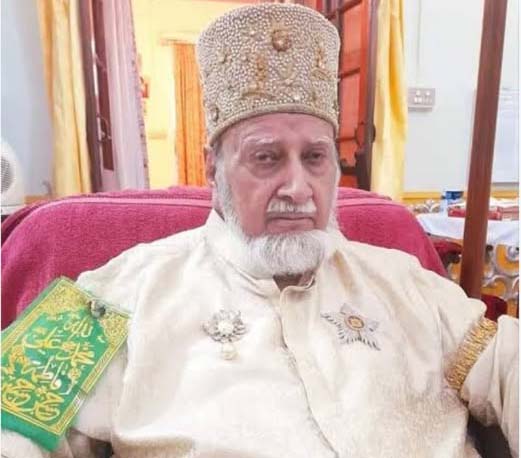
In the history of Sindh, the State of Khairpur represents a remarkable chapter in which governance, culture, education, industry, modernity, and public welfare came together in many different forms. Among the rulers of Khairpur State, Mir Ali Murad Khan II emerges as a personality who, despite assuming power at a very young age, introduced several initiatives that were far ahead of their time. He was the last ruler of Khairpur State, and his reign can also be regarded as a period that laid the foundations of modern Khairpur.
Mir Ali Murad Khan II was born on June 29, 1933. A major part of his life remained closely associated with the political and administrative affairs of Khairpur State. Following the removal of his father, Mir Faiz Muhammad Khan II, he ascended the throne of Khairpur on July 19, 1947, at the age of only fourteen. Ascending the throne at such a young age was undoubtedly a major political and administrative challenge. Yet, the young Mir Ali Murad Khan took a keen interest in the affairs of his state and made decisions that reflected his modern outlook and progressive thinking.
At that time, British India was passing through one of the most crucial turning points in its history. The process of Indian independence and the creation of Pakistan was moving rapidly forward. In such a political environment, the question of the future of Khairpur State also became extremely important.
Mir Ali Murad Khan II acceded his state to Pakistan. He continued to rule Khairpur until 1955, when the princely states were formally integrated into Pakistan. With this development, the autonomous status of Khairpur State came to an end and it became part of Pakistan’s administrative structure.
One of the significant aspects of Mir Ali Murad Khan’s rule was his democratic outlook. In 1949, a system of adult franchise was introduced in his state. Considering the political history of the subcontinent at the time, this was a highly significant step. Giving ordinary people the right to vote reflected an effort to give public opinion importance in the administration of the state. The elections held in Khairpur State are regarded among the early elections of their kind, demonstrating the modern direction of Mir Ali Murad Khan’s political thinking.
Another important aspect of Mir Ali Murad Khan’s personality was his interest in industrial development. He did not restrict himself to traditional forms of governance; instead, he focused on bringing modern machinery from developed countries around the world. He visited Britain and Germany, where he observed modern industrial technology. Drawing on the experience gained from these visits, and with the help of modern machinery, important steps were taken to promote industrial development in Khairpur.
The establishment of the Khairpur Textile Mill was one of the major examples of his industrial vision. At the time, the project held considerable industrial importance. Establishing a large textile factory in a state such as Khairpur was not merely an effort to create employment opportunities; it was also an attempt to strengthen the local economy.
Mir Ali Murad Khan also paid attention to industries connected with agricultural production. Machinery was obtained from Germany to establish a large factory for the re-drying of tobacco. Alongside industrial development, he also focused on the technical and economic empowerment of women. A vocational training institute for women was established in Khairpur, and a woman from Germany was appointed to lead it. This initiative demonstrates that even during that period, the importance of providing women with technical education and preparing them for employment was being recognized.
Mir Ali Murad Khan’s industrial policy was not limited to one or two factories. He established an industrial zone in Khairpur, which helped promote economic activity in the region. His vision was to establish several more industrial zones, but following the accession of Khairpur State to Pakistan and the subsequent abolition of the princely-state system, many of his plans could not be completed. Had these projects progressed according to their original vision, Khairpur might perhaps have emerged even more rapidly as one of Sindh’s major industrial centers.
Another interesting example of Mir Ali Murad Khan’s modern thinking was related to public transportation. For the convenience of his subjects, he purchased modern air-conditioned buses. These buses were equipped with advanced technology for their time. Their doors opened automatically, and they had modern arrangements for passengers to board and disembark. At a time when ordinary public transportation facilities were limited in many parts of Sindh, the introduction of such modern buses was certainly an extraordinary initiative.
These buses were not intended merely for the ruling family or the elite; rather, they reflected an effort to improve transportation facilities for ordinary people. After the accession of Khairpur State to Pakistan, some of these modern buses were sent to Lahore and Rawalpindi. This suggests that some of the modern administrative and transportation experiments introduced in Khairpur were subsequently utilized on a wider scale.
Mir Ali Murad Khan’s principal residence was the historic Faiz Mahal in Khairpur, which still stands as an important symbol of the city’s magnificent history, civilization, and traditions of governance. Faiz Mahal is not merely a building; it is also an important part of the political and cultural heritage of the era of Khairpur State.
A review of the life of Mir Ali Murad Khan II reveals two dimensions of his personality: on the one hand, he was a traditional ruler of a princely state; on the other, he was a modern-minded administrator who thought about industry, education, technical training for women, democratic voting, and modern public transportation.
The end of Khairpur State was an inevitable political development in the course of history. However, many of the development-oriented ideas initiated during Mir Ali Murad Khan’s reign had extraordinary significance for their time. His reign was relatively short, and he was very young when he ascended the throne. Yet the steps he took during that limited period demonstrate that when it comes to modernity and progress, the importance of vision is greater than age.
Mir Ali Murad Khan Talpur was also a devotee of Imam Hussain (peace be upon him) and patronized Muharram mourning traditions in Sukkur, Khairpur, and throughout Sindh. In his later years, Mir Ali Murad Khan remained ill and largely secluded from public life. It was during this period of illness and seclusion that he passed away on Monday, October 5, 2026, at the age of 93, at SIUT Hospital in Sukkur.
With the death of Mir Ali Murad Khan II, another important chapter in the state history of Khairpur came to an end. Yet Faiz Mahal, the industrial institutions, the experience of democratic elections, and his vision of modern development continue to remind us of his era.
History does not remember rulers merely for their thrones, crowns, and power; they are also remembered for the institutions, ideas, and projects for public welfare that they leave behind. In this respect, Mir Ali Murad Khan II was a ruler of Khairpur who, while living within the traditions of his time, dreamed of a modern future.
mushtaqtanwari@gmail.com](mailto:mushtaqtanwari@gmail.com