


















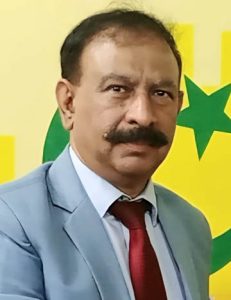
By Brig Syed Karrar Hussain Shah, Retired
There are some places on earth that you visit, admire and eventually leave behind. And then there are places that become a permanent part of your soul. Gilgit-Baltistan is one such extraordinary land. It is not merely a geographical region of Pakistan; it is a magnificent story of freedom, sacrifice, courage, natural beauty and an unforgettable connection between humanity and nature.
As Pakistan celebrates the Independence Day of Gilgit-Baltistan on 1 November, my thoughts travel back to those wonderful years when I was posted in Skardu and had the privilege of experiencing this heavenly region not merely as a military officer but also as a family man and an admirer of nature.
*The Dawn of Freedom: 1 November 1947*
The history of Gilgit-Baltistan’s freedom is a remarkable chapter of courage and determination. Before the partition of British India, Gilgit and its surrounding territories had experienced different periods of local and external rule. In 1935, the British had obtained the Gilgit Agency on lease from the Maharaja of Jammu and Kashmir.
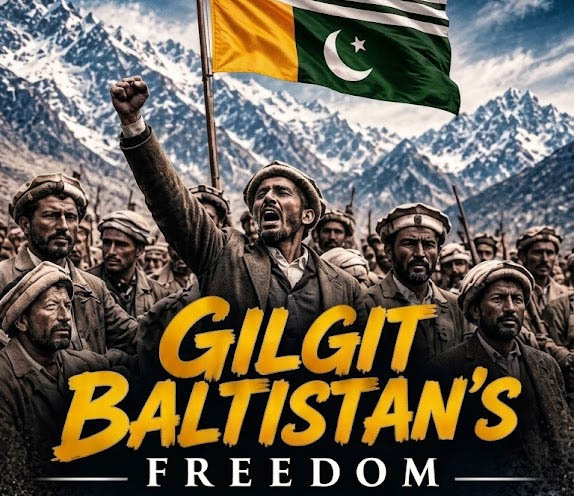
Following the partition of British India in August 1947, political uncertainty and the conflict over Jammu and Kashmir created an extraordinary situation in the region. The people of Gilgit, supported by the Gilgit Scouts and local forces, rose against Dogra rule.
On 1 November 1947, the Dogra governor, Ghansara Singh, surrendered, and a provisional government was established. The people expressed their desire to join Pakistan. Subsequently, on 16 November 1947, the first Pakistani Political Agent, Sardar Muhammad Alam, assumed administrative responsibility in Gilgit.
The liberation movement reflected the aspirations, determination and sacrifices of the local population. It was a historic moment that established an enduring bond between Gilgit-Baltistan and Pakistan.
Every year, 1 November reminds us that freedom is never an ordinary achievement. It is earned through courage, conviction and sacrifice.
*A Strategic Jewel in Pakistan’s Crown*
Gilgit-Baltistan occupies an exceptionally important position in Pakistan’s geography, defence, economy and international connectivity.
It shares borders with China, Afghanistan and the Indian-administered region of Ladakh. The legendary Karakoram Highway (KKH), connecting Pakistan with China through the Khunjerab Pass, is one of the most remarkable engineering achievements of the modern world. It represents much more than a road; it is a symbol of the enduring friendship between Pakistan and China and a vital link for regional trade, tourism and connectivity.
The region also holds enormous strategic significance because of its proximity to the world’s highest mountain ranges and sensitive international borders. Its geographical importance has increased further with the development of the China-Pakistan Economic Corridor (CPEC).
From a national security perspective, Gilgit-Baltistan is an indispensable part of Pakistan’s northern strategic landscape. Its mountains, valleys, glaciers and passes have immense importance for national defence and territorial security.
*Where Heaven Meets the Earth*
Nature has been extraordinarily generous to this region. The mighty Himalayas, Karakoram and Hindu Kush converge in this magnificent part of the world, creating a landscape that is almost impossible to describe in ordinary language.
Gilgit-Baltistan is home to K2, standing at 8,611 metres, the world’s second-highest mountain. It also hosts Nanga Parbat, Broad Peak, Gasherbrum I and Gasherbrum II. These legendary mountains attract mountaineers, explorers, photographers and adventure enthusiasts from every corner of the world.
Its spectacular glaciers, including the Baltoro and Biafo, magnificent lakes, lush valleys, historic forts and alpine meadows make it one of the most extraordinary tourist destinations on the planet.
Hunza, Skardu, Shigar, Khaplu, Deosai, Astore and Fairy Meadows are not simply names on a tourist map. Each destination is a separate painting created by the Almighty.
*My Skardu Memories: A Family Story*
Whenever I think of Gilgit-Baltistan, my memories naturally return to Skardu, where I had the honour of being posted during my military career. My family lived with me there, and those years remain among the most beautiful chapters of my personal life.
My wife, Shamim Akhtar, and our three young sons, Waqar Hussain, Iftikhar Hussain and Ansar Hussain, were my companions in discovering this extraordinary landscape.
On weekends and whenever military responsibilities permitted, we would take family trips to explore the surrounding valleys, lakes and mountains. The children were young, full of excitement and curiosity. Every journey brought a new adventure, and every destination offered a new reason to fall in love with the region.
One place that occupies a particularly special position in my heart is Shangrila Resort.
I can still visualise those beautiful moments when we sat at Shangrila, surrounded by breathtaking mountains. Before us flowed the mighty Indus River, broad and magnificent, while towering snow-covered mountains stood on both sides like nature’s eternal sentinels.
The scenery was so extraordinary that one could easily forget the passage of time.
And then there were the cherries!
Shamim and I would make a playful agreement that we would not touch the cherries with our hands. We would pick them directly with our mouths, and whoever succeeded would win the little competition. It was a simple family game, but those innocent moments created memories that no passage of time can erase.
Our three little boys would enjoy every moment. Their laughter, excitement and happiness added another dimension to the beauty of Shangrila.
Today, whenever I close my eyes and recall those days, I can almost see the same mountains, the flowing Indus, the cherry trees and my family enjoying those precious moments.
Military life often demands sacrifices, long separations and difficult responsibilities. But Skardu gave us something extraordinary: an opportunity to experience the blessings of nature together.
*A Land Worth Discovering by the World*
I sincerely believe that people from every continent should visit Gilgit-Baltistan at least once in their lifetime.
The international community should discover this remarkable paradise, not only through photographs and documentaries but by experiencing its mountains, glaciers, lakes, hospitality and rich cultural traditions.
Imagine standing before K2, watching the sunrise over the Karakoram, travelling along the magnificent Karakoram Highway, enjoying the peaceful waters of Shangrila Lake or exploring the vast meadows of Deosai.
These are experiences that remain with a person forever.
Pakistan must invest further in international tourism, environmentally responsible infrastructure, hospitality training, modern transport facilities and sustainable development. Local communities should receive economic opportunities while the fragile natural environment is protected. Gilgit-Baltistan deserves international recognition as one of the world’s premier destinations for adventure, culture and nature tourism.
*Freedom, Beauty and Our National Responsibility*
On this Independence Day, we must remember that Gilgit-Baltistan is not only a treasure of natural beauty but also a land of brave people whose sacrifices deserve recognition and respect.
Its people have demonstrated remarkable patriotism, resilience and hospitality. Their contribution to Pakistan’s defence, development and national identity must never be forgotten.
As I conclude, my thoughts return once again to those unforgettable days in Skardu. The mountains remain standing, the Indus continues its eternal journey, and the cherry trees blossom with every passing spring. Time moves forward, but some memories never grow old.
Gilgit-Baltistan is a priceless blessing from Almighty Allah. It is a land where the mountains seem to touch the heavens and where the beauty of creation reminds mankind of its Creator.
*Happy Independence Day, Gilgit-Baltistan!*
May Allah Almighty preserve this magnificent land, protect its courageous people, bless Pakistan with peace and prosperity, and allow future generations to inherit this paradise with pride.
Gilgit-Baltistan is not merely a part of Pakistan’s territory; it is a living expression of Pakistan’s soul, strength and natural glory.
A historical and geographical note: The historical account has been framed around the events of 1 and 16 November 1947, distinguishing the local uprising and provisional government from the subsequent assumption of administration by Pakistan. The geographical details are consistent with the Government of Gilgit-Baltistan tourism and environmental departments.