
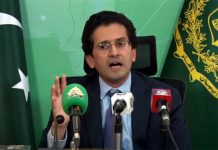

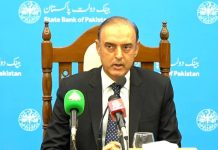












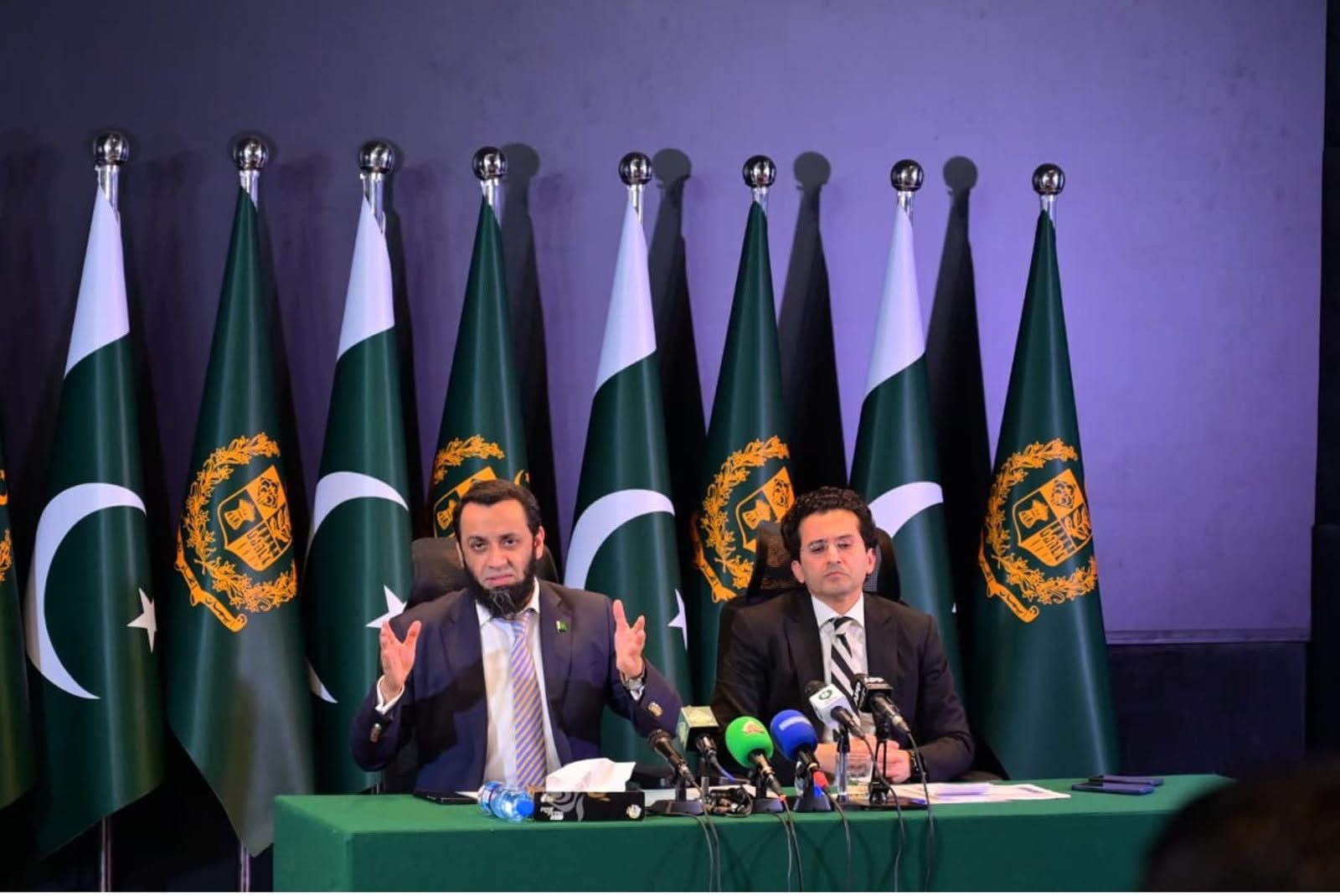
ISLAMABAD: Federal Minister for Information and Broadcasting Attaullah Tarar on Monday said more than 15 million people had so far benefited from the Prime Minister’s Fuel Relief Scheme, with Rs27 billion disbursed to provide subsidised petroleum products to eligible consumers.
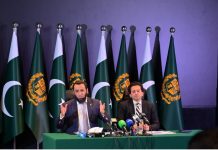
Addressing a press conference here alongside Federal Minister for Petroleum Ali Pervaiz Malik, he said the government, on the directives of Prime Minister Shehbaz Sharif, had prevented an increase of Rs15 per litre in petrol prices, shifting the additional burden to oil refineries instead of passing it on to consumers.
He said the prime minister’s vision from the outset had been to minimise the financial burden on the people, adding that the refineries would bear an estimated monthly burden of Rs15 billion.
The information minister said the international situation, particularly developments in the Strait of Hormuz and Bab el-Mandeb, had put pressure on global economies and energy markets. Pakistan had also been affected by regional developments, but its macroeconomic indicators remained positive, he added.
He said the prime minister had issued clear instructions that the impact of the evolving international situation should not be passed on to the public.
Describing the fuel relief initiative as a major public welfare measure, Tarar said the scheme provided petrol at subsidised rates to motorcycles, Qingqi rickshaws and vehicles with engine capacity of up to 800cc.
He said more than 15 million registrations had been completed under the scheme, while approximately Rs27 billion had so far been disbursed as relief. Payments were also being made to petrol pumps for fuel supplied at subsidised rates, he added.
The minister said the initiative had been made possible through coordinated efforts by the Ministry of Information Technology, Ministry of Petroleum, Oil and Gas Regulatory Authority (OGRA) and State Bank of Pakistan.
He said the scheme had been successfully launched across the country and would continue to facilitate eligible consumers.
Responding to questions, Tarar said there was no shortage of essential commodities in the country, adding that cargo arrivals and supply chains had been maintained even under challenging circumstances to meet national requirements.
He urged the public to avoid speculation and refrain from believing unverified reports and rumours.
Commenting on the development situation in Khyber Pakhtunkhwa, the minister said the province had been neglected during PTI’s 13-and-a-half-year rule, particularly in infrastructure development and public welfare.
He said the provincial government had failed to undertake significant projects involving roads, bridges, hospitals, colleges and universities, while the youth had also been deprived of laptop distribution initiatives.
Referring to his recent visit to Kohat, Tarar said the motorway and Kohat Tunnel had been constructed during the PML-N government, questioning why subsequent provincial governments had failed to establish projects such as a Safe City system, a kidney and liver transplant centre and new universities.
He said laptops could also have been distributed among young people to facilitate their education and professional development.
The minister said Islamabad and Punjab were bearing a substantial burden, while alleging that PTI had attempted to undermine Pakistan’s economy by writing letters to the International Monetary Fund (IMF) to push the country out of its programme.
He said the performance of successive governments could be assessed through key economic indicators, including foreign exchange reserves, debt repayments, macroeconomic performance and economic stability.
Tarar said the incumbent government had introduced comprehensive reforms to stabilise the economy and put it on a path of sustainable development.
He said Pakistan came first and political parties and their leaders came afterwards, adding that there could be no justification for placing any political leader above the country.
Highlighting the government’s tax reforms, he said the PML-N government had initiated structural reforms in the Federal Board of Revenue (FBR), while technology-based monitoring of manufacturing processes had enabled the collection of additional revenue.
He said an additional Rs60 billion in taxes had been collected from the sugar industry alone.
He added that technology had also been introduced in the cement, tobacco and beverages sectors to monitor production and establish traceability mechanisms, while structural reforms had been undertaken within the FBR.
The minister said reforms had also been introduced in the ports and shipping sectors, including a fee appraisal system at ports.
He said the government had taken several reform measures despite challenging economic circumstances, describing its achievements in stabilising the economy as significant.
Criticising the previous government, Tarar said those who had come to power with the slogan of change had left the country facing serious economic challenges.
He questioned the previous government’s economic achievements, saying its leadership had demonstrated a lack of understanding of the exchange-rate mechanism.
He said that the previous government had attempted to derail efforts towards economic stability and had encouraged a civil disobedience movement, urging people to burn electricity bills and withhold payments.
The information minister further noted that the PTI government had allowed millions of non-customs-paid (NCP) vehicles to operate in Khyber Pakhtunkhwa.
Referring again to his Kohat visit, he said he had not seen even a single registered motorcycle there, questioning whether vehicle registration and revenue collection were not the responsibility of the provincial government.
He said the revenue generated through proper registration could have been utilised for public welfare.
Tarar said the previous rulers had misled the people through slogans without delivering tangible results, and challenged them to identify notable achievements of their economic team.
Commenting on the OGRA chairman, he said the authority was being regulated effectively and the results of sound policies were becoming visible. He added that the chairman had previously been part of the prime minister’s team and would continue to serve with it.