
















By Dr. Syed Mehboob
Economic and Political Analyst
http//:www.thenewslark.com
Pakistan Oman are two brothers, close friends, have mutual trust, they also have on same page regarding many regional and international issues. Both countries are peace initiators, promoters of dialogue and negotiations; both countries are against violence, extremism and terrorism. Both countries shook hands to have deeper and greater cooperation for enhancement of defence and economic ties.
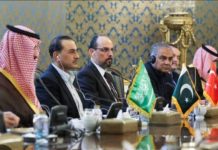
October 13 and 14 were important dates for both Pakistan and Oman when Oman’s Foreign Minister, His Excellency Sayyid Badr bin Hammad bin Mahood Albusaidi, visited Islamabad, Pakistan. He co-chaired the eighth session of the Pakistan-Oman Joint Ministerial Commission ( JMC) alongside Pakistan’s Deputy Prime Minister and Minister of Foreign Affairs, Senator Muhammad Ishaq Dar.
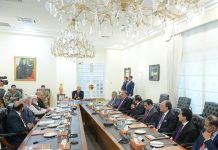
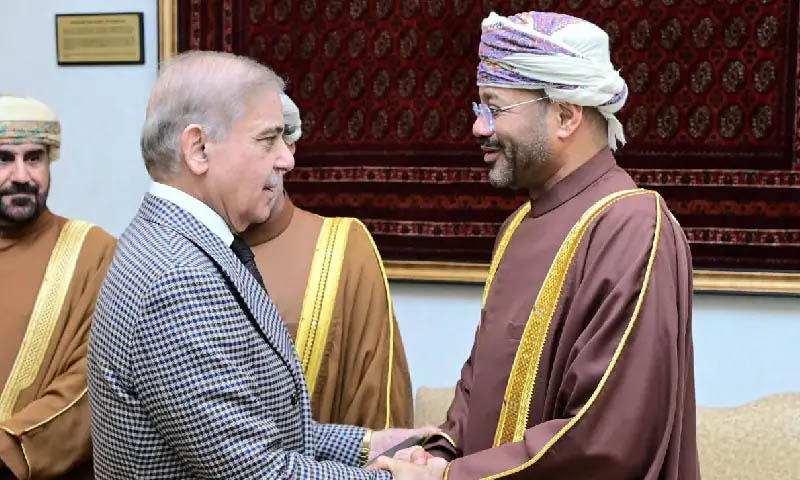
His Excellency Sayyid Badr bin Hammad bin Mahood Albusaidi paid a courtesy call on Pakistan’s Prime Minister, Muhammad Shehbaz Sharif, to discuss fraternal ties and regional peace. It is a matter of great pleasure and satisfaction for the people of both brotherly countries that both nations signed five agreements and memorandums of understanding (MoUs), alongside a protocol recording the session’s proceedings.
The talks focused on expanding trade, investment, energy, maritime connectivity, information technology, and workforce mobility. The discussions also addressed regional security, including developments in the Middle East and cooperation through diplomatic dialogue.
Signed an agreement to facilitate official travel and visa exemptions for eligible passport holders (diplomatic and official exchanges). Concluded MoUs to enhance cooperation in telecommunications, information technology, and digital infrastructure. Established frameworks for media cooperation and the exchange of news and information between both nations. Both sides signed an agreement covering historical documentation and archives management.
Finalized and signed the official minutes and protocol of the 8th Session of the Joint Ministerial Commission, co-chaired by Omani Foreign Minister Sayyid Badr and Pakistan’s Deputy Prime Minister and Foreign Minister Senator Ishaq Dar.
Both sides committed to expanding collaboration across trade, investment, maritime and logistics connectivity, energy, agriculture, industry, and human resource development. Foreign Minister Albusaidi met with Prime Minister Shehbaz Sharif, where they reviewed regional stability, with Albusaidi praising Pakistan’s diplomatic efforts for de-escalation and peaceful conflict resolution in the Middle East.
Two-day visit comes as Pakistan steps up diplomatic efforts to ease Middle East tensions. Pakistan joined Saudi Arabia, Egypt and Türkiye in condemning Houthi attacks on the Kingdom. The visit comes as Pakistan seeks to help ease the Middle East conflict through diplomatic efforts while facing growing economic and security concerns over disruptions to Gulf energy supplies and attacks on Saudi Arabia, a key regional ally.
Oman, which shares control of the strategically important Strait of Hormuz with Iran through their respective territorial waters, has traditionally played a mediating role in regional disputes, including between Tehran and Washington.
Albusaidi, who visited Pakistan at the invitation of Deputy Prime Minister and Foreign Minister Ishaq Dar, was received by Pakistani foreign ministry officials upon arrival in Islamabad.Pakistan and Oman maintain longstanding diplomatic, economic and people-to-people ties, including cooperation in trade and employment, with Oman hosting a sizable Pakistani expatriate community.
The Strait of Hormuz, which connects the Arabian Gulf with the Gulf of Oman and the Arabian Sea, is one of the world’s most important energy shipping routes. Disruptions to traffic through the waterway have affected global oil supplies and pushed up energy costs, particularly for import-dependent economies such as Pakistan.The visit also followed a series of attacks by Yemen’s Iran-aligned Houthi militia against Saudi airports and other civilian facilities, raising concerns over the widening regional impact of the US-Iran conflict.
Pakistan has also sought to promote diplomatic engagement to contain the wider conflict, while reaffirming its security commitments to Saudi Arabia under bilateral and trilateral defense arrangements.
Pakistan and Oman maintain longstanding relations supported by shared religious, cultural and historical connections. Both countries have pursued closer economic and diplomatic engagement through official visits, bilateral discussions and institutional mechanisms such as the Joint Ministerial Commission.
The latest visit allowed both governments to explore mutually beneficial initiatives, particularly in trade, investment, energy, and other areas of common interest. The meetings contributed to discussions on regional and international issues, as Pakistan and Oman continue efforts to strengthen their diplomatic partnership.
Their geographical proximity across the Arabian Sea has further strengthened economic and maritime links, while Oman’s Pakistani community plays an important role in fostering bilateral relations.
Both countries continue to explore opportunities to expand economic cooperation, enhance regional connectivity, and promote peace and stability in the region.
Pakistan and Oman reaffirmed their commitment to further strengthen bilateral cooperation across a broad spectrum of fields, including trade, investment, connectivity, logistics, energy, food security, tourism, and technology.
Addressing a joint press stakeout following the meeting, the two leaders told the media that a key outcome of the session was the strengthening of the institutional framework through the establishment and operationalization of several joint working groups on trade and investment, agriculture, oil and gas, and labour and human resource development, with a view to ensuring regular engagement.
They welcomed closer engagement between the business communities of both countries and encouraged greater investment in special economic zones and free zones, besides agreeing to hold a business-to-business investment forum in Pakistan in the very near future.
The two leaders announced that later in the day, both countries would sign the protocol of the 8th session of the JMC, along with an agreement on mutual visa exemption for holders of diplomatic and official passports.
Acknowledging the valuable contribution of the Pakistani community in Oman, both sides reaffirmed their commitment to strengthen cooperation in labour mobility, vocational training, and human resource development, as well as to create new opportunities for skilled Pakistani professionals and workers.
The two leaders exchanged views on the evolving situation in the Gulf, underscoring the importance of restraint, de-escalation, dialogue, and diplomacy. They highlighted the need to ensure the safety and freedom of navigation through the Strait of Hormuz and Bab-el-Mandeb, given their critical importance to regional and global food and energy security.
The deputy prime minister reiterated that Pakistan remained committed to contributing constructively to diplomatic efforts aimed at promoting peace and stability in the region. As both sides discussed the recent Houthi attacks on Saudi Arabia, he conveyed Pakistan’s strongest condemnation of the attacks.(Continue)