


















Mubasher Mir
As Pakistan enters the 80th independence, the meaning of August 14 is changing for a new generation.
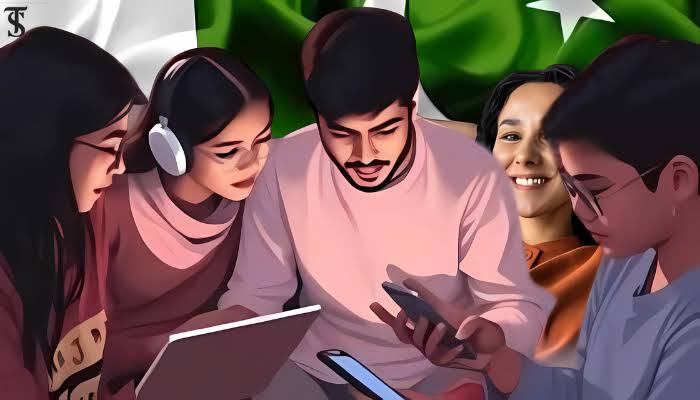
For the generation that witnessed 1947, independence was an extraordinary achievement. For subsequent generations, it became a responsibility to preserve the country, strengthen its institutions and build its economy. But for Generation Z—the young Pakistanis who have grown up in the age of smartphones, social media, artificial intelligence and instant global communication—independence means something more immediate and personal.
For Gen Z, freedom is not simply a historical event. It is increasingly associated with the freedom to learn, work, innovate, express ideas, build businesses, compete globally and live with dignity.
That makes Pakistan’s young generation both its greatest opportunity and one of its greatest challenges.
Pakistan has one of the world’s youngest populations. United Nations data indicate that around 67 percent of Pakistan’s population is under the age of 30, while millions of young people enter the labour market every year. Yet a substantial proportion of young Pakistanis remain outside education, employment or training. The United Nations has estimated that around 28.4 percent of Pakistani youth fall into this category.
These figures should not be viewed merely as demographic statistics. They represent Pakistan’s future workforce, consumers, entrepreneurs, innovators and leaders.
The question is whether the country is prepared to convert this enormous youth population into productive human capital .
One of the defining characteristics of Pakistani Gen Z is ambition.
This generation does not necessarily want to follow the traditional path of education, degree, government job, pension and retirement. Many want to become entrepreneurs, software developers, content creators, researchers, designers, engineers, doctors, investors and global freelancers.
They have seen young people from developing countries build technology companies, launch global brands and work for international corporations without leaving their homes.
They therefore ask a difficult but legitimate question:
Why should Pakistani talent remain limited by Pakistan’s traditional economic structures?
This does not mean that Gen Z is anti-Pakistan.
On the contrary, many young Pakistanis want to succeed while remaining connected to their country. But they want a Pakistan that gives them reasons to stay.
They want opportunity rather than dependency.
They want merit rather than connections.
They want skills rather than certificates.
They want entrepreneurship rather than waiting endlessly for government employment.
And they want institutions that move at the speed of the world in which they live.
This is where Pakistan’s traditional systems are facing their greatest test.
The Generation Gap Is Becoming a Development Gap
The problem is not simply that Gen Z thinks differently from previous generations.
The deeper problem is that the economic and educational systems often operate according to assumptions belonging to another era.
A university may still be teaching a curriculum designed around occupations that are disappearing, while a young Pakistani is learning artificial intelligence, digital marketing, coding or graphic design through the internet.
A company may advertise a job requiring several years of experience for a position that a fresh graduate should have been trained to perform.
A government programme may distribute certificates while employers are looking for demonstrable skills.
This mismatch must end.
Artificial intelligence is already changing the nature of work globally. The World Economic Forum’s Future of Jobs research has repeatedly highlighted the rapid transformation of employment, with technological skills, analytical thinking, creativity and adaptability becoming increasingly important.
Pakistan cannot protect its young people from technological change.
It must prepare them for it.
The government needs to move from a traditional youth policy to a comprehensive youth economic strategy.
The first priority should be education reform.
Universities and technical institutions must be connected to the actual requirements of the economy. Curriculum development should involve industry, technology companies, exporters, researchers and employers.
Pakistan needs much stronger training in:
– Artificial intelligence
– Cybersecurity
– Software development
– Robotics
– Cloud computing
– Data science
– Renewable energy
– Biotechnology
– Fintech
– Advanced manufacturing
– Digital commerce
– Animation and gaming
– Modern agriculture
But technology alone will not solve the problem.
Young people also need communication, critical thinking, leadership, financial literacy and problem-solving skills.
The second priority should be entrepreneurship.
Pakistan cannot create enough government jobs for every young person entering the labour market. Nor should it try.
Instead, the state should create an environment in which a young person can establish a small business without navigating a maze of licences, taxes, regulations and bureaucratic procedures.
A young entrepreneur should be able to register a company, open a bank account, access digital payments, obtain financing and enter the tax system through a genuinely simple digital platform.
The government should also expand access to venture capital, credit guarantees, startup financing and business incubation.
A young person should not need a powerful connection to turn an idea into a company.
Digital Pakistan Must Become a Digital Economy
Pakistan has made considerable progress in digital connectivity and freelancing, but the country must go beyond the idea of giving young people laptops or short-term training.
A laptop is useful only when it is connected to:
high-speed internet, reliable electricity, quality training, international payment systems and global markets.
Pakistan should therefore treat digital exports as a strategic economic sector.
The country has a large English-speaking and increasingly digitally skilled population. If even a fraction of its youth becomes internationally competitive in software, AI, design, consulting, digital services and online commerce, Pakistan can create a major new source of foreign exchange.
The objective should not simply be to produce freelancers.
It should be to produce technology companies, global service providers and Pakistani digital brands.
Corporate Pakistan Has a Major Responsibility
The private sector cannot stand on the sidelines.
Corporate Pakistan often talks about the “talent gap”, but companies must also accept responsibility for developing talent.
The first requirement is a dramatic expansion of meaningful internships and apprenticeships.
An internship should not mean sitting in an office for three months and receiving a certificate.
It should mean learning how an organisation actually works.
Companies should establish structured graduate programmes through which young people receive practical training, mentoring and exposure to real projects.
The corporate sector should also rethink corporate social responsibility.
CSR spending should move beyond ceremonies, donations and publicity events.
Imagine if major Pakistani companies collectively established thousands of technology scholarships, vocational laboratories, entrepreneurship centres, research grants and innovation programmes.
That would be a far more powerful investment in Pakistan’s future.
Corporate Pakistan should also promote genuine meritocracy.
If young people believe that jobs depend primarily on family connections, political influence or personal networks, their confidence in the system will collapse.
The best talent should have a realistic chance of reaching the top.
The responsibility, however, does not belong only to the government and corporate sector.
Gen Z must also understand that freedom without responsibility can become destructive.
Social media has given young people unprecedented power to influence public opinion. But influence must be accompanied by responsibility.
Fake news, misinformation, online harassment, hate speech and unverified allegations can damage individuals and institutions within minutes.
Being viral is not the same as being successful.
Posting criticism is easy.
Building an alternative is difficult.
Complaining about unemployment is understandable.
Creating a business that employs ten people is transformative.
The new generation therefore needs not only confidence but discipline.
It needs the courage to question authority—but also the patience to acquire knowledge.
It needs political awareness—but also economic literacy.
It needs dreams—but also skills.
For an older generation, independence meant freedom from colonial rule.
For Gen Z, independence increasingly means freedom from economic helplessness.
It means being able to build a career without leaving the country.
It means having access to quality education regardless of family background.
It means being able to start a business without depending on political connections.
It means competing with a professional in Singapore, Dubai, London or Toronto on the basis of skill rather than geography.
It means living in a society where law, merit and opportunity are more powerful than influence.
That is not a rejection of Pakistan.
It is a demand for a better Pakistan.
Pakistan is entering its 80th independence
with an enormous demographic opportunity.
The country can either treat its young population as a burden requiring jobs, subsidies and political management—or recognise it as an extraordinary national asset.
The choice will determine the character of Pakistan in the coming decades.
The government must create the ecosystem.
Universities must create knowledge.
The corporate sector must create opportunities.
Financial institutions must provide capital.
Civil society must encourage responsibility.
And Gen Z must bring ambition, skills, creativity and hard work.
The objective should be much bigger than reducing unemployment.
Pakistan should aim to create a generation of job creators, innovators, researchers, exporters and global professionals.
On August 14, Pakistan will once again raise its green and white flag.
Millions of young people will celebrate with music, social media campaigns, rallies and national songs.
There is nothing wrong with celebration.
But the eighth decade of independence should also force the country to ask a deeper question:
What kind of Pakistan are we building for the generation that will inherit it?
Gen Z does not want to be told repeatedly that it is “the future of Pakistan”.
It wants to participate in the Pakistan of today.
It wants responsibility, opportunity and a genuine stake in national development.
The message of this Independence Day should therefore not merely be:
“You are the future.”
It should be:
“You are the present—and we will give you the opportunity to build the future.”
Pakistan’s greatest national resource is not its geography, its minerals or even its strategic location.
It is its people.
And among those people, the energy, intelligence and ambition of Gen Z may prove to be the country’s most decisive advantage.
The real celebration of independence will begin when a Pakistani young person no longer asks, “Where can I find an opportunity?”
But instead asks:
“What opportunity can I create—for myself, for others and for Pakistan?”
That is the Independence Day challenge for the eighth decade.
And that is the promise Pakistan must make to its Gen Z.