













-ByAbdulRafay
AbdulRafayisawriter,researcher,journalist,andsocialcriticwithadeeppassionforhistory,politics,and societal issues. His work challenges conventional narratives, offering thought-provoking insights into cultural and political complexities. Through his writing, he sparks meaningful dialogue and encourages deeper understanding of the world’s evolving dynamics. (Email: abdulrafay1580@gmail.com)
It was supposed to be the final curtain call for the Iranian regime. For months, the world watched as the United States and Israel pounded Iranian proxies, imposed a suffocating naval blockade, and spoke openly of regime change inTehran.The Strait of Hormuz, the jugular of global oil, was mined and closed.The rhetoric fromWashington was apocalyptic: Iran would besmashed,itsnuclearambitionscrushed,itsmilitaryobliterated.Then,inaquietSwissresort on the shores of Lake Lucerne, history took a turn that no one saw coming.What unfolded in Burgenstock was not the capitulation of a beleaguered nation, but the strategic humiliation of asuperpowermediated,ironically,byacountrythathadbeenwrittenoffasaperipheralplayer:Pakistan.
ThestagewassetintheSwisstownofBurgenstock,chosennotforitsneutralityalone,butfor its symbolic distance from the primary antagonists. The “Islamabad Memorandum of Understanding” (MoU), signed electronically days earlier by President Donald Trump and Iranianleadership,hadestablishedaframework.Pakistan,alongsideQatar,hadbeenthrustinto the role of chief mediator, a position that initially seemed curious to many observers.Yet, as the transcript of the proceedings reveals in stunning detail, Pakistan’s diplomatic heft proved indispensable.The first round of high-level talks, which commenced on June 21, were led by US Vice President JD Vance and Iran’s Parliament Speaker Mohammad Bagher Qalibaf and ForeignMinisterAbbasAraghchi.Buttherealaction,asthenarrativeunfolds,washappening in the corridors and backchannels, choreographed by Pakistani officials who had established unparalleled trust with both Tehran and Washington.
The choice of Switzerland over Islamabad for the second round of talks was itself a telling diplomatic maneuver. While the first round had been hosted in the Pakistani capital, the decision to move to Burgenstock was driven by a perception problem: Pakistan, according to diplomatic sources, was viewed as “too close to Iran”.As the video analysis notes, critics had accusedPakistanofprovidinga”backstop”toTehran.Toavoidanyappearanceofbias,and to
keep all parties in a comfortable loop, Switzerland was selected. Yet, even in this neutral setting, Pakistan’s centrality was undeniable. Prime Minister Shehbaz Sharif, dressed in his characteristicsix-buttonBritishblazer,andPakistan’sArmyChief,FieldMarshalAsimMunir, were not mere observers. They were the fulcrum upon which the negotiations balanced.
TheinformalwarmthbetweenVanceandthePakistanidelegationwasstriking.Vance,known for his blunt rhetoric, was captured on video greeting Field Marshal Munir with a casual”What’s up, man,” and later remarking that he had two very important people in his life: an Indian(hiswife)andaPakistani(FieldMarshalMunir).Headdedthatintheprecedingmonths, he had spoken more with the Pakistani field marshal than any other individual in the world. This was not mere pleasantry; it was a public acknowledgment of Pakistan’s singular access and influence.Vance’s appreciation was effusive: “We love Pakistan,” he told reporters.This was the language of a man who knew he was in debt to his mediators.
The negotiations were far from smooth. The fragile process was nearly derailed by a familiar spoiler: Israeli bombardment ofLebanon. Just as thetalks wereset to begin, Israel launched a wave of strikes that reportedly killed 87 people in a single day. The timing was catastrophic. Iran, outraged, announced it would not be a party to the negotiations while the bombing continued.TehranthreatenedtoreclosetheStraitofHormuzandwalkedoutofthepreliminary discussions. The White House, scrambling, issued a statement citing “unresolved logistical issues” as the reason for a delay. Pundits declared the talks dead.A”spectacle,” they called it.
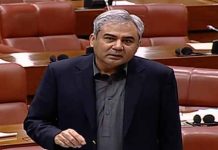
EnterPakistan.Inamomentofhigh-stakesdiplomacythatbordersonthecinematic,Pakistan’s pointman,MohsinNaqvi,flewtoTehran.HemetwithForeignMinisterAraghchiandSpeaker Qalibaf. His message was simple: trust us. Re-enter the negotiation phase. Within hours, the Iranian delegation was back at the table. The announcement came not from Washington or Tehran,butfromPakistan’sMinistryofForeignAffairs:technicaltalkswouldresumeonJune 21 in Switzerland. Pakistan had single-handedly convinced Iran to reverse course, pulling the world back from the brink of a wider war that could have closed the Strait of Hormuz indefinitely and sent oil prices skyrocketing.
Thecoreoftheanalysisrevolvesaroundthefourteen-pointagreementthatemergedfromthese talks. The video’s narrator makes a bold, data-driven claim: of the fourteen points, thirteen were Iranian demands. Only one was anAmerican concession. If true, this represents one of the most lopsided diplomatic outcomes in modern history—a reversal of fortune that would make any student of geopolitics pause.
Point one was immediate: a ceasefire in Lebanon. Point two: non-interference in Iran’s domestic affairs and respect for its sovereignty. Point three established a 60-day window for finalnegotiationsonthenuclearissue,atimelinethatcouldbeextended.Pointfourdemanded theendoftheUSnavalblockadeofIranwithin30days.PointfiverequiredIrantoclearmines fromtheStraitofHormuzwithin30days,ensuringsafepassageforcommercialshipstoll-free for 60 days. Point six was perhaps the most staggering: a $300 billion reconstruction and development planfor Iran, funded by US regional partners.Thenarratornotesthebitterirony for Gulf states: they were bombed, their security guarantees from the US proved hollow, and now they were being asked to pay the bill for Iran’s reconstruction.
Points seven through fourteen continue this trend. They call for the complete removal of UN and US sanctions, a commitment from Iran not to develop nuclear weapons (a stance Tehran has maintained since the 1990s), the issuance of waivers for Iranian crude oil sales, the unfreezing of Iranian assets abroad, and the establishment of a joint committee to implement the agreement. The final point stipulates that the final agreement must be endorsed by a UN Security Council resolution.
The narrator’s conclusion is scathing: America entered the war with the objective of regime change, the complete collapse of the Iranian regime, control over its oil resources, and thedestructionofitsmilitary.Whatitgotwasa14-pointagreementwhereitconcededon13points.”Perhaps,” the narrator intones, “you didn’t see such a bad agreement in Vietnam.You didn’t see it inAfghanistan. You didn’t see it anywhere”.
Beyond the numbers, the talks exposed a profound rift between the United States and Israel. ThetranscriptrevealsthatDonaldTrump,neveronefordiplomaticsubtlety,reportedlywarned Israeli Prime Minister Benjamin Netanyahu: “You better be careful, you will be on your own verysoon”.Vance,in his publicremarks,deliveredanevensharperrebuke,essentially telling Israel that not every security problem is solved by mass civilian casualties. The US Vice President was quoted as saying that without American support, “there would be no Israel,” implying that the Netanyahu government should temper its objections to the deal.
Thispublicdressing-downofIsraelbytheUSadministrationsignifiesamonumentalshift.The war,whichwasostensiblyfoughttobringIsraelandtheUSclosertogetherina”holyalliance” against Iran, has instead produced a purely transactional and adversarial relationship between Washington andTelAviv.Asurvey cited in the analysis claims that 92% of the Israeli public feelsthatIranwonthewar.Whetherthatnumberisaccurateornot,theperceptionofdefeatis
arealitythatwillhauntIsraelipoliticsforyears.ThenarrativeofaninvincibleIsraelimilitary, backed by the full might of the United States, has been punctured by a diplomatic settlement that rewards Tehran for its resilience.
Whilethedealprovidesshort-termrelieffortheGulfstatesbyreopeningtheStraitofHormuz and stabilizing oil markets, it creates a long-term strategic nightmare. The infusion of $300 billion into the Iranian economy, coupled with the lifting of sanctions, could allowTehran to recover all its losses from the past forty years within a single decade. This prospect terrifies SaudiArabia and the UAE. The transcript notes that SaudiArabia is now pushing for a joint Gulf defense network, while the UAE, initially aggressive in its posture towards Iran, has realizeditissittinginthe”losingcamp”.TheGulfstateswerebombedbyIranianproxies,their securityguaranteesfromtheUSprovedunreliable,andnowtheyareexpectedtopayforIran’s reconstruction. It is a scenario that could not be worse for the Gulf monarchies.
ForPakistan,thisdiplomaticcoupisastrategicgame-changer.Thecountryhaslongsoughtto balanceitsrelationshipswiththeUnitedStates,China,andtheGulfstateswhilemaintaininga modicumofinfluenceoveritswesternneighbor,Iran.Bysuccessfullymediatingbetweentwo arch-enemies, Pakistan has demonstrated that it is not merely a frontline state in the war on terror, but a vital player in global peacebuilding. The analysis suggests that this success has placedPakistan”wayahead”ofitsrival,India,intermsofdiplomaticcapital.Indianjournalists andanalysts,accordingtothetranscript,arealreadyexpressingconcernthatthisdevelopment will disturb the Modi government. Pakistan has achieved, in a matter of months, a level of geopolitical relevance that it had not enjoyed in decades. It has not lost its leverage over the US or Iran; rather, it has proven that it is indispensable to both.
Asthetechnicalphaseofthenegotiationsbegins,theworldwatcheswithbatedbreath.The60-daywindowforafinalagreementonnuclearissues,ballisticmissiles,andfrozenassetsistight. ThepresenceofIAEADirectorGeneralRafaelGrossiatthetalksindicatesthatthenuclearfile is central to the discussions. Iran has agreed to allow international inspectors back into its facilities, but the devil will be in the details. Will Iran agree to meaningful limits on its enrichment capacity? Will the US actually follow through on lifting all sanctions?
The analysis suggests that a “frozen war” could emerge, a ceasefire without a resolution. Hostilitiescouldsimmerbeneaththesurface,andifthenuclearissueisnotresolved,theworld could slip back into an uncertain and dangerous phase. However, one thing is clear: the dynamicsoftheMiddleEasthavefundamentallychanged.TheUnitedStateshaspaidaheavy
price to extricate itself from a quagmire it created. It has lost 35 to 40 military personnel, diminisheditspostureasamajorpower,fractureditsalliancewithIsrael,andhandedIrana
$300 billion victory package. As the narrator concludes, “They have humbled a massive superpower of the world”.
TheimagesfromBurgenstock,ofVancewaitinganxiouslyforthePakistanidelegationtorelay messages from Tehran, of Iranians refusing to shake hands with American officials, of a Pakistaniprimeministersigningahistoricdocument,willbeetchedintheannalsofdiplomatic history.Itwasamomentwhenthetableturned,whenthechessboardwasflipped,andwhena nation that was supposed to be destroyed emerged stronger, more unified, and more powerful thanbefore.Thewarisnotnecessarilyover,butthebattleforthenarrativehasbeendecisively won by the Islamic Republic of Iran, with a little help from its friends in Islamabad.