















-ByAbdulRafay
AbdulRafayisawriter,researcher,journalist,andsocialcriticwithadeeppassionforhistory,politics,and societal issues. His work challenges conventional narratives, offering thought-provoking insights into cultural and political complexities. Through his writing, he sparks meaningful dialogue and encourages deeper understanding of the world’s evolving dynamics. (Email: abdulrafay1580@gmail.com)
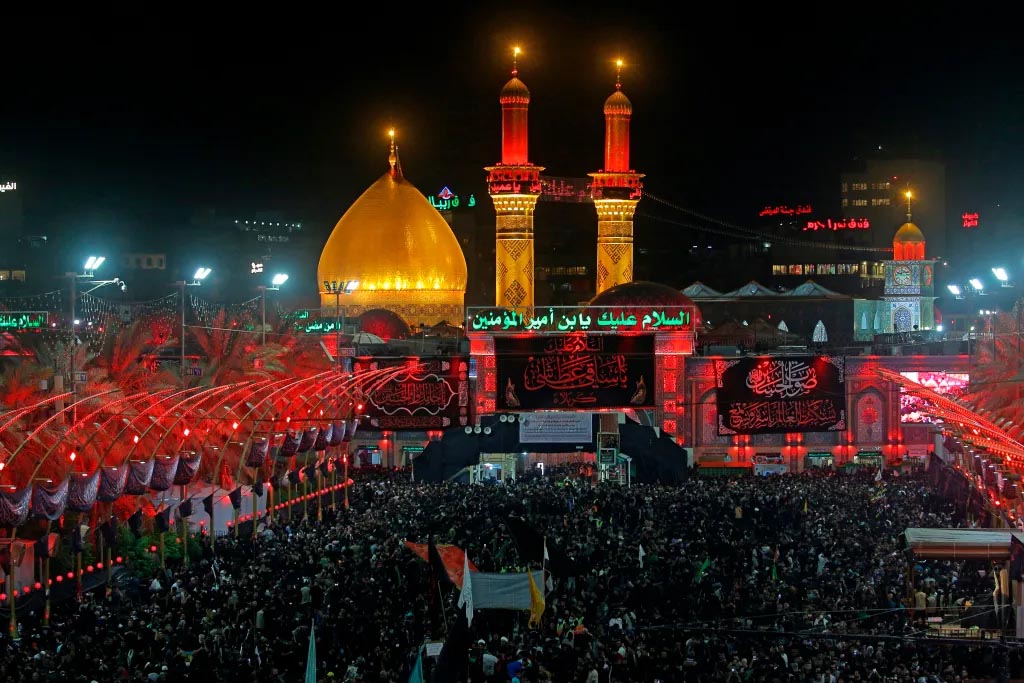
As the first light of dawn breaks over the minarets of Islamabad and the ancient alleys of Lahore, millions of Pakistanis will step into the streets. They will come not as politicians or diplomats,notassoldiersorstatesmen,butasmourners.Theywillbeattheirchestsinrhythmic unison,theirvoicesrisinginacollectivelamentthathasechoedacrossfourteencenturies.The 10th of MuharramAshura has arrived.And in a year when Pakistan has played midwife to a historicpeacebetweentheUnitedStatesandIran,whenIranianPresidentMasoudPezeshkian has made his second visit to Islamabad during these very days of mourning, the resonance of Karbala feels more immediate, more urgent, more political than ever.
ForShiaMuslimsworldwide,AshuraistheanniversaryofthemostprofoundtragedyinIslamic history. It was on this day, in the year 680 AD, 61 years after the Prophet Muhammad’s migration to Medina, that Imam Hussain, the beloved grandson of the Prophet, was brutally massacred along with 72 of his family members and companions on the scorched plains of Karbala, in modern-day Iraq. The army of the Umayyad caliph, Yazid I, had surrounded Hussain’ssmallbandoffollowers,cuttingofftheiraccesstowaterandofferingthemasimple choice: pledge allegiance to a tyrant, or die. Hussain chose death. He chose principle over power. He chose honour over humiliation.
Thatchoicetostandagainsttyrannyevenwhenstandingmeantcertainannihilationhasbecome thedefiningmoralcompassofShiaIslam.ForShiaMuslims,Ashuraisnotmerelyahistorical event; it is a living, breathing summons to resistance. It is the day when the battle between TruthandFalsehoodwasdrawninstark,unforgivinglines.”Theprimarygoalofmourningfor Imam Hussein,” as one prominent Pakistani cleric put it, “is to keep the message ofAshura alive,toelucidatetheobjectivesof hisuprising,andtointroducepureIslamicteachings”.Itis amessagethathastranscendedthedustygeographyofKarbalatoinspiretheoppressedacross the globe.
In Pakistan, home to one of the world’s largest Shia populations, Ashura is observed with a depth of devotion that transforms the entire country. This year, the Central Ruet-e-Hilal Committee confirmed that the first day of Muharram 1448 AH began on June 17, making AshurafallonFriday,June26.Thefederalgovernment,alongwiththegovernmentsofPunjab andSindh,havedeclaredpublicholidaysonthe9thand10thofMuharram,June25and26,to allow the nation to observe the solemn occasion.
ButinPakistan,mourningisneverwithoutapprehension.ThesolemnityofAshuraprocessions has, in past years, been tragically marred by sectarian violence and acts of terror. Extremist militants have targeted Shia congregations with devastating regularity, turning places of worshipintositesofmassacre.Thisyear,thegovernmenthasleftnothingtochance.InPunjab alone, more than 124,000 police personnel have been deployed for Muharram security duties, supported by the Pakistan Army and Rangers. Khyber Pakhtunkhwa has declared over 400 Imambargahs as sensitive and will partially suspend mobile phone services in selected areas. InIslamabad,authoritieswilldeploydronesandenforceafour-layersecuritycordontomonitor processions and religious gatherings. Restrictions on pillion riding, drone operations, and the display of weapons will be enforced across the country. In Karachi alone, traffic police have issued a special plan for the 8th, 9th, and 10th of Muharram, with road closures and alternate routes to manage the massive crowds.
More than 45,000 police personnel have already been on duty since the 6th of Muharram. In Lahore alone, 56 mourning processions and 425 majalis (mourning congregations) were organized under comprehensive security measures, with over 23,000 community volunteers assistingthepolice.InPeshawar,theinnercityhasbeensealed,with614Imambargahs,8,862 Majalis, and 907 processions undersecurity cover. Itis a staggeringmobilization, atestament to both the scale of devotion and the depth of the threat.
IfPakistanmournswiththeweightofitsownsecuritychallenges,Iranmournswiththeweight ofarevolutionary ideology forged in thefires of Karbala. FortheIslamic Republic,Ashurais not merely a religious observance; it is the foundational narrative of the state itself. The revolutionof1979drewitsmoralauthorityfromthesamewellspringofresistancethatHussain embodied on the plains of Karbala.The Iranian leadership has long cast its conflicts, whether with Iraq, with Israel, or with the United States, as extensions of that primordial struggle between the oppressed and the oppressor.
This year, the mourning carries an even sharper edge. Millions of Iranians and Shia Muslims acrosstheregionaremarkingTasuaandAshurawithmourningrituals,poetryrecitations,and pilgrimagestoKarbala.Theritualsoflatmiya,therhythmicchestbeatingthatpunctuatesShia mourning, have taken on a particularly charged quality, shaping what observers have called Iran’s”wartimenarrative”.InTehran,inQom,inMashhad,themessageisthesame:Hussain’s defianceofacorruptempirewasnotforpower,butforprinciple.Andthatprinciple,resistance against tyranny, refusal to bow to injustice, remains as relevant today as it was fourteen centuries ago.
For Iran, the timing of this year’s Ashura is laden with symbolism. Just days before the mourning began, Iranian President Masoud Pezeshkian arrived in Islamabad for his second official visit. The visit, which took place during the holy month of Muharram, was seen as a powerful gesture of solidarity between the two nations. The two sides reviewed the full spectrum of bilateral relations, exploring new avenues to deepen cooperation across trade, energy, and border security. It was, in many ways, a diplomatic embodiment of the shared cultural and religious bonds that haveconnected Pakistan and Iran since the birth of Pakistan.
The friendship between Pakistan and Iran is not merely a matter of geopolitical convenience. It is rooted in deep, intra-cultural and religious connections that have been nurtured over decades. Religious remembrances such asAshura, and cultural celebrations like Nowruz, are celebratedandrespectedinbothsocieties.Pakistanimournershavebeenknowntoholdrallies expressing support for Iran’s Supreme Leader, demonstrating the profound emotional and spiritual ties that bind the two nations.
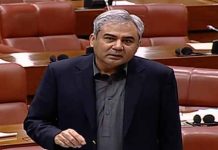
This year, those ties have been put to a remarkable test. In the lead-up to Ashura, Pakistan played a constructive role in promoting dialogue between Iran and the United States. Prime MinisterShehbazShariflinkedthetimingofthenewIslamicyearwithprogressininternational diplomacy, calling it “a moment of hope and reflection”. When the US-Iran peace talks hit a snag,PakistansentInteriorMinisterMohsinNaqvitoTehrantopersuadetheIranianstoresume negotiations.Hismission:toconvinceTehranthatpostponingthetalksuntilafterAshuracould weaken diplomatic momentum. Pakistan’s message was clear:Ashura is a time of mourning, but it is also a time of reflection and reflection can lead to reconciliation.
As the sun sets onAshura and the mourners return to their homes, the question that lingers is notmerelyaboutthepast,butaboutthefuture.WhatdoesHussain’ssacrificemeanforaworld ravagedbywar,bytyranny,byinjustice?WhatdoesitmeanforaPakistanthathasjusthelped broker peace between two bitter enemies? What does it mean for an Iran that has weathered sanctions and threats, that has seen its Supreme Leader killed by an Israeli air strike, and that has emerged, like the phoenix from the ashes of Karbala, unbowed?
The answer, perhaps, lies in the timelessness of Hussain’s message. As one Kashmiri Shia scholar put it, “Today, oppressed people across the world, regardless of race, religion, or nationality,looktotheuprisingofImamHussainasasymbolofresistanceagainsttyrannyand injustice”. Hussain’s choice, to stand for what is just, no matter the cost, is not a sectarian message. It is a human message. It is a message that transcends the boundaries of Shia and Sunni, of Pakistani and Iranian, of East and West.
In Pakistan, where sectarian violence has too often tainted the solemnity of Ashura, that messageisacalltounity.InIran,wheretheregimehasbuiltitslegitimacyonthenarrativeof resistance, that message is a call to defiance. And in the broader Muslim world, where the woundsofdivisionrun deep,that messageisacalltoremembrance,areminderthatthebattle betweenTruthandFalsehoodisnotconfinedtothegeographyofKarbala,butstretchesacross the expanse of history.
Tomorrow,asmillionsofPakistanistaketothestreets,theywillnotbethinkingofdiplomacy or geopolitics. They will be thinking of Hussain. They will be thinking of a man who, surrounded by enemies and abandoned by friends, chose to stand alone for what he believed in.Theywillbethinkingofasacrificethat,fourteencenturieslater,stillhasthepowertomove hearts and shape nations. And in that collective act of mourning, they will be affirming somethingprofound:thatthespiritofKarbalaisnotdead.Itlives.Itbreathes.Anditwillnever surrender.