













Dr. Syed Mehboob
Senior Research Editor
The News Lark,
Political and Economic Analyst
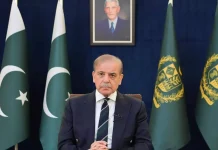
February 17, 2026, was a historic day for the people of Bangladesh when Mr. Tarique Rahman was sworn in as the Prime Minister of Bangladesh. He is dedicated, committed, energetic, and a visionary leader. He has a firm belief in democracy and democratic values. A great majority of Bangladeshi people voted in favor of the Bangladesh Nationalist Party(BNP). Nobody can imagine the sentiments of His Excellency Mr. Tarique Rahman, who was in exile for 17 years, away from his beloved country, away from his people. He returned to his roots, joined with his people to celebrate this moment, and to start a new era of Bangladesh. An era that promised the Bangladeshi people their basic rights. How happy were the people of Bangladesh? It can not be described in words.
The February 2026 elections were a test for the people of Bangladesh, and they fully expressed their will and put their weight behind the Bangladesh Nationalist Party (BNP), electing Mr. Tarique Rehman as their Prime Minister. Mr. Tarique Rahman is the son of former Prime Minister Khaleda Zia and BNP founder General Zia ur Rehman. His mother took great pains for the people of Bangladesh. She was the first female Prime Minister of Bangladesh and second among the Muslim world after Mohtarma Benazir Bhutto Shaheed of Pakistan, who was the first Muslim female Prime Minister of the world. Mr. Tarique’s victory follows the ouster of long-serving former Prime Minister Sheikh Hasina in August 2024 following mass protests. The political alliance led by Rahman’s party won 212 seats in the Jatiya Sangsad, Bangladesh’s parliament, while its main competitor, Jamaat e Islami, secured 77 seats. He chose twenty-five ministers in his new cabinet. People of Bangladesh have pinned a great hope on the BNP Prime Minister and his cabinet. Tarique Rahman recently became the Chairman of the BNP following the death of his mother, Khaleda Zia. Mr. Rahman promised people to restore peace, law, and order in the country at any cost. He cleared his view that he will not tolerate any kind of chaos. Foreign dignitaries from India, Nepal, Pakistan, and Sri Lanka, among other countries in the region, were present at the swearing-in ceremony.Shafiqur Rahman of Bangladesh’s largest Islamist party, Jamaat-e-Islami, is now the Leader of the Opposition.
Tarique Rahman first became active within the BNP in 2001, when he was in his mid-30s.It was the start of his mother’s second period as prime minister. Her first run from 1991 to 1996. His father, Ziaur Rahman, a military ruler turned president, had been killed in a military coup in 1981. He was a leading figure in Bangladesh’s struggle for independence and founded the BNP in 1978.
In 2002, Rahman took his first significant steps in his parents’ footprints when it was announced that he had been promoted to a senior position within the party.
Despite living abroad, Rahman continued to shape BNP strategy and policies and had been the party’s acting chairman since his mother was sentenced to prison in 2018.He finally returned to Bangladesh on 25 December 2025. Five days later, his mother died.On 9 January 2026, he officially became the BNP’s leader. Analysts say that his rise to leadership in the BNP was inevitable.
Tarique Rahman (born November 20, 1965. Rahman formally entered politics through a local branch of the BNP in 1988. The BNP led the government from 1991 through 1996, with Khaleda Zia, Rahman’s mother, serving as prime minister. In 1994, Rahman married Zubaida Rahman, a physician from another prominent political family.
The BNP lost power to the Awami League in 1996 but returned to government from 2001 to 2006. During this period, Rahman became increasingly influential within the party and was appointed senior joint secretary general of the BNP.
Rahman remained in the United Kingdom from 2008 to 2025. During this period, he continued to direct BNP activities from abroad, becoming senior vice chair in 2009 and acting chair in 2018. He also registered a private consulting company in the United Kingdom.
Following the 2024 student-led protests that toppled Sheikh Hasina’s government, an interim administration headed by Muhammad Yunus took office and announced plans for new elections. Following the change of administration, Rahman’s major convictions were progressively overturned by the courts of Bangladesh, including those related to the 2004 grenade attack and several corruption cases. Rahman met with Yunus in London in 2025, and he returned to Bangladesh in December of that year in preparation for the 2026 general election.
Tarique belongs to a notable Bengali family of Muslim Mandals hailing from Bagbari in Gabtali, Bogura District. Tarique Rahman started his education at BAF Shaheen College, Dhaka. He studied for a short time at St. Joseph Higher Secondary School. Then he completed his secondary education from Dhaka Residential Model College and HSC fromAdamjee Cantonment College. In the 1985–86 academic year, he was first admitted to the Department of Law at the University of Dhaka and then changed departments and enrolled in the Department of International Relations.Rahman started his political career as a primary member of the local Upazila branch of the BNP inGabtali, Bugura, in 1988. Tarique Rahman was active in BNP campaign activities during the 1991 national election in constituencies where his mother, Khaleda Zia, was a candidate, which took place during Bangladesh’s transition from military rule to an elected government.
Following the BNP’s victory in the 1991 national election, Rahman continued to be involved in party activities in Bogura. During the 1996 national election, he did not contest any parliamentary seat and instead participated in campaign coordination activities for constituencies in which his mother, Khaleda Zia, was a candidate.
Between 1996 and 2001, during the tenure of the Awami League government, Rahman was involved in opposition political activities. In the 2001 national election, the Bangladesh Nationalist Party won a two-thirds majority.
Following the release of Khaleda Zia, Rahman was also released from prison on 11 September 2008 after around 18 months in detention under the military-backed caretaker government. He subsequently left for London to receive medical treatment at Wellington Hospital. On 8 December 2009, Tarique Rahman was elected Senior Vice Chairman of the BNP at its 5th National Council held in Dhaka; he was previously the party’s Senior Joint Secretary General.A recorded speech by him was broadcast at the council, in which he referred to his arrest and treatment during detention under the military-backed caretaker government that assumed power in January 2007. In the speech, Rahman alleged that he had been subjected to torture and claimed that there had been a conspiracy to kill him under what he described as the guise of a judicial process. He also spoke about his physical condition, stating that he required additional time to complete medical treatment.
BNP chairperson Khaleda Zia later stated that her son would re-enter active politics following his return from abroad after completing medical treatment. While addressing several public meetings during a visit to Bougra, she alleged that the then government was attempting to harass him to prevent his return to Bangladesh. Referring to his detention and subsequent medical condition, she said that multiple cases had been filed against him as part of what she described as broader conspiracies, and that doctors had indicated his recovery would take additional time.( Continued )