

















By Brig Syed Karrar Hussain Retired
The ongoing confrontation between the Islamic Republic of Iran and the United States represents one of the most critical geopolitical flash points in the contemporary world. While full-scale war remains undesirable for both sides, the possibility of a ceasefire agreement depends on multiple strategic, political, and economic factors. The situation is complex, involving regional players, global powers, and ideological divides. However, history shows that even the most intense conflicts can move toward de-escalation when mutual interests outweigh continued confrontation.
War Stamina of Iran and the United States
A key determinant in the likelihood of a ceasefire is the war stamina of both nations—military capability, economic resilience, and public endurance.
Iran’s War Stamina
Iran has historically demonstrated a strong capacity for prolonged resistance. The Iran-Iraq War (1980–1988), it sustained an eight-year conflict despite severe economic and military constraints. Today, Iran’s strengths include:
A highly motivated population driven by nationalism and ideological commitment
A strong network of regional allies and proxy forces (often referred to as the “Axis of Resistance”)
Advanced missile and asymmetric warfare capabilities
However, Iran faces serious challenges:
Economic strain due to prolonged sanctions
Inflation and domestic dissatisfaction
Limited conventional military power compared to the United States
Despite these weaknesses, Iran’s strategy is not based on direct confrontation but asymmetric warfare, allowing it to prolong conflict without engaging in full-scale war.
United States’ War Stamina
The United States possesses unmatched conventional military strength, advanced technology, and global logistical capabilities. However, its war stamina is influenced by:
War fatigue among the American public after Iraq and Afghanistan
Economic considerations and global commitments
Political divisions within the country
While the U.S. can sustain military operations for extended periods. It prefers limited engagements rather than prolonged wars, especially in the Middle East.
Conclusion on War Stamina
Both countries have the capacity to continue conflict, but neither benefits from a prolonged war. This mutual realization increases the probability of seeking a ceasefire.
Demands of Both Countries
Iran’s Likely Demands
Iran’s primary demands in any ceasefire or agreement would include:
Removal or easing of economic sanctions
Recognition of its right to peaceful nuclear technology
Non-interference in its regional influence
Security guarantees against regime-change efforts
Iran views sanctions as economic warfare and considers their removal essential for any meaningful agreement.
United States’ Likely Demands
The United States, on the other hand, would focus on:
Limiting Iran’s nuclear enrichment program
Reducing Iran’s support for regional militant groups
Ensuring security of allies in the Middle East
Freedom of navigation in strategic waterways like the Strait of Hormuz
Core Disagreement
The main obstacle remains trust deficit. Iran demands respect for sovereignty, while the U.S. seeks to curb Iran’s regional influence. Bridging this gap is essential for any ceasefire.
Role of Pakistan in a Ceasefire Agreement
Pakistan can play a constructive and balancing role due to its unique position in the Muslim world and its relations with global powers.
Key Strengths of Pakistan
Strong diplomatic ties with both Iran and the United States
Strategic relations with China and improving ties with Gulf countries
Experience in peacekeeping and mediation
Potential Contributions
Acting as a neutral mediator to facilitate dialogue
Hosting backchannel negotiations
Using its influence in the Muslim world to promote unity
Supporting regional stability initiatives
Pakistan’s leadership has historically emphasized peaceful resolution of conflicts, and it can act as a bridge between opposing sides.
Negative Role That Could Be Played by Israel
Israel plays a crucial and controversial role in the Iran-U.S. dynamic.
Israel’s Strategic Concerns
Iran’s nuclear ambitions are seen as an existential threat
Iran’s support for groups like Hezbollah increases regional insecurity
Potential Negative Impact
Israel may oppose any agreement that does not fully dismantle Iran’s nuclear program
It could undertake unilateral military actions that escalate tensions
Lobbying efforts may push the U.S. toward a harder stance
Such actions could undermine diplomatic efforts and delay or derail ceasefire negotiations.
Recommendations for Peace
Achieving a ceasefire requires coordinated efforts from multiple global and regional actors.
1. Actions by the United States
Show flexibility in easing sanctions as a goodwill gesture
Re-engage in diplomatic agreements similar to the JCPOA
Avoid military escalation and adopt confidence-building measures
2. Actions by Iran
Increase transparency in its nuclear program
Reduce aggressive rhetoric and regional tensions
Engage in direct or indirect dialogue with the United States
3. Actions by Israel
Avoid unilateral military actions
Support diplomatic solutions rather than confrontation
Work with allies to ensure regional stability
4. Role of China
China can:
Act as a mediator due to its strong ties with Iran
Promote economic incentives for peace
Encourage multilateral negotiations
5. Role of Russia
Russia can:
Support diplomatic initiatives through international platforms
Balance U.S. influence in negotiations
Prevent escalation through strategic dialogue
6. Role of Pakistan
Pakistan should:
Promote unity within the Muslim world
Offer mediation platforms
Encourage peaceful conflict resolution through diplomacy
7. Role of Turkey
Turkey can:
Serve as a mediator between East and West
Use its NATO membership and Muslim identity for bridging gaps
Promote regional dialogue initiatives
8. Role of the United Nations
United Nations must:
Facilitate negotiations and peace talks
Ensure compliance with international law
Deploy diplomatic pressure to prevent escalation
Conclusion
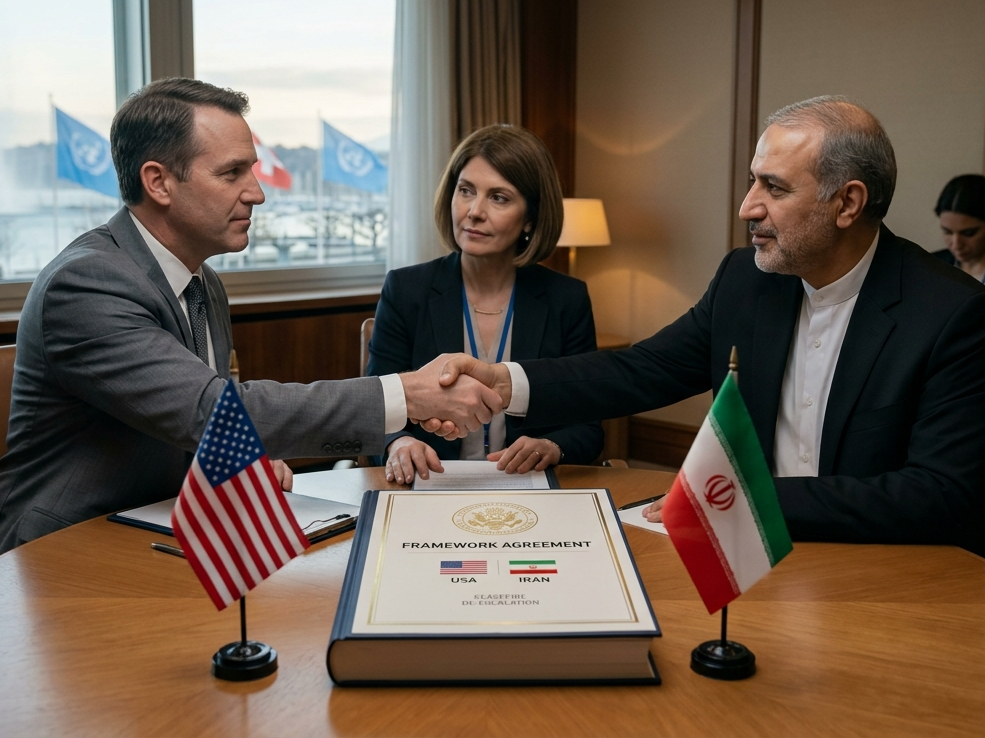
The possibility of a ceasefire between Iran and the United States is realistic but challenging. Both nations possess sufficient war stamina but lack the incentive for prolonged conflict. Their demands, though conflicting, are not irreconcilable if approached with sincerity and compromise.
The involvement of regional and global powers adds complexity but also provides opportunities for mediation. Pakistan, along with countries like China, Russia, and Turkey, can play a vital role in promoting peace. However, negative interventions—particularly by actors who perceive the conflict through a narrow security lens—can hinder progress.
Ultimately, peace can only be achieved through dialogue, mutual respect, and recognition of legitimate concerns. War brings destruction not only to the involved nations but to the global economy and stability. A ceasefire is not just a strategic necessity—it is a moral imperative for the world community.