
















(www.thenewslark.com)
By: Brig Syed Karrar Hussain Retired
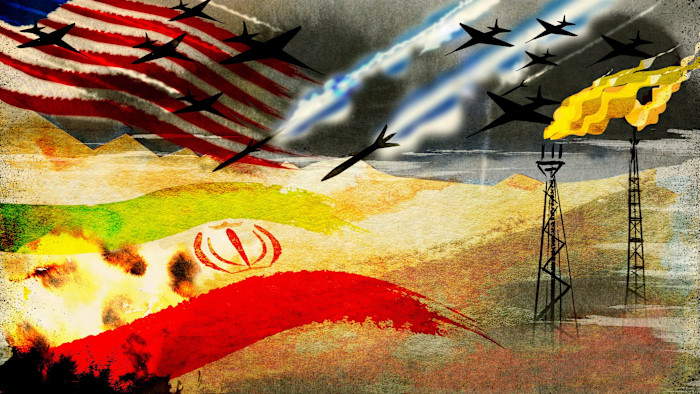
The ongoing confrontation between the United States and the Islamic Republic of Iran has emerged as one of the most dangerous geopolitical crises of the 21st century. What initially appeared to be a limited military confrontation has rapidly evolved into a wider conflict with devastating consequences for regional stability, global economic security, and international peace. The intensity of military exchanges, economic sanctions, cyber warfare, and proxy conflicts has demonstrated that a prolonged war between these two powers will not produce a clear victor. Instead, it will only deepen destruction, increase human suffering, and destabilize an already fragile global order.
In such a complex and dangerous environment, the only sustainable path toward peace lies in meaningful diplomatic dialogue. Military confrontation may temporarily satisfy strategic objectives, but history consistently shows that wars between determined nations rarely end through force alone. Dialogue, negotiation, and political compromise remain the only realistic mechanisms through which lasting peace can be achieved.
The Iranian Nation: A Historical Power with Unbreakable Resolve
To understand the dynamics of the present conflict, it is essential to consider the historical resilience and national character of the Iranian people. Iran, historically known as Persia, has been one of the world’s oldest civilizations and regional powers for thousands of years. From the era of the Achaemenid Empire to modern times, Iranian society has demonstrated remarkable endurance in the face of foreign invasions, political upheavals, and economic hardships.
Throughout history, Iran has confronted powerful adversaries yet maintained its national identity and sovereignty. This historical legacy has deeply influenced the Iranian national psyche. The people of Iran possess a strong sense of cultural pride, independence, and resistance against foreign pressure. As a result, any military confrontation with Iran is unlikely to break the will of its population.
Many analysts believe that in the event of a prolonged war, Iran would be prepared to sustain heavy sacrifices. The Iranian leadership and society often emphasize the concept of resistance and national dignity. Consequently, the conflict may evolve into a war of endurance in which Iran could continue fighting until the “last Iranian and the last building,” as some observers metaphorically describe the national resolve. This determination makes the prospect of a decisive military victory for any side extremely unlikely.
Mounting Losses on All Sides
The war has already begun to generate heavy losses for all involved parties. Military infrastructure, economic facilities, and civilian populations have suffered greatly. Precision missile strikes, drone attacks, cyber operations, and air strikes have caused significant damage across the region.
For the United States, the costs are not limited to financial expenditure. American military installations and naval assets deployed in the Gulf region face continuous threats. Maintaining large-scale military operations in the Middle East requires enormous logistical and economic resources. Prolonged warfare could strain the American defense budget and create domestic political pressures.
Iran, on the other hand, faces severe economic hardship due to intensified sanctions, destruction of infrastructure, and disruption of its energy exports. Civilian populations inevitably bear the burden of such conflicts through inflation, shortages of essential goods, and economic instability.
Regional states are also suffering. Many Middle Eastern countries host American military bases or maintain economic ties with Iran. As a result, they risk becoming indirect battlegrounds through proxy attacks, missile strikes, or sabotage operations.
Beyond physical destruction, the psychological and humanitarian consequences of war are immense. Families are displaced, economic livelihoods collapse, and entire societies face uncertainty about their future.
Effects on the Global Economy
One of the most immediate consequences of the U.S.–Iran war is its impact on the global economy. The Middle East remains the world’s most critical energy-producing region, and any conflict that threatens its stability inevitably disrupts global markets.
The Strait of Hormuz, through which a significant portion of the world’s oil supply passes, has become a focal point of concern. Even the possibility of disruption to this strategic waterway can cause oil prices to surge dramatically. Rising energy prices increase transportation costs, industrial expenses, and inflation worldwide.
Developing countries are particularly vulnerable to such economic shocks. Many South Asian and African economies depend heavily on imported energy. When oil prices rise sharply, these countries face trade deficits, currency depreciation, and increased financial instability.
International trade routes also suffer. Maritime shipping companies often increase insurance premiums when operating in conflict zones. As a result, shipping costs increase, and global supply chains experience delays.
Financial markets react negatively to geopolitical uncertainty. Investors tend to withdraw capital from unstable regions, leading to stock market volatility and reduced economic growth. Even technologically advanced economies cannot remain insulated from such disruptions.
Impact on Gulf States
The Gulf region stands directly in the path of the conflict. Countries such as Saudi Arabia, the United Arab Emirates, Kuwait, Qatar, and Bahrain depend heavily on stable energy exports and regional security. Any escalation between the United States and Iran threatens both of these critical interests.
Oil infrastructure, shipping routes, and energy facilities could become potential targets during the conflict. Even limited attacks can severely disrupt production and export capacities. This creates economic uncertainty not only for Gulf states but also for global markets that rely on their energy supplies.
Furthermore, the Gulf states face delicate diplomatic challenges. Many of them maintain strategic security partnerships with the United States while also seeking to avoid direct confrontation with Iran. Escalation forces these countries into difficult political positions where neutrality becomes increasingly difficult.
The region also faces security risks from proxy groups and militant organizations that may exploit the chaos created by a larger war. Internal stability within several Gulf states could be threatened if tensions escalate further.
The Role of the United States as the World’s Only Superpower
As the world’s most powerful nation, the United States carries significant responsibility in maintaining international peace and stability. Since the end of the Cold War, the U.S. has often been described as the world’s sole superpower with unparalleled military, economic, and diplomatic influence.
With such power comes a corresponding obligation to act responsibly within the framework of international law. The principles outlined in the Charter of the United Nations emphasize peaceful conflict resolution, respect for sovereignty, and the avoidance of unnecessary military aggression.
The international community expects major powers to exercise restraint and pursue diplomatic solutions before resorting to war. Military dominance should ideally be used as a deterrent to conflict rather than a primary instrument of foreign policy.
The Urgent Need for Diplomatic Dialogue
History demonstrates that most major wars eventually end at the negotiating table. The longer a conflict continues, the greater the human and economic costs become for all parties involved. Therefore, diplomatic engagement must begin before irreversible damage occurs.
Constructive dialogue between the United States and Iran could focus on several key issues including regional security, nuclear concerns, economic sanctions, and confidence-building measures. International mediators, including neutral states and global organizations, could facilitate negotiations and ensure that both sides feel their security concerns are addressed.
Regional powers should also play a supportive role in encouraging de-escalation. Countries that maintain relations with both sides can serve as intermediaries and help rebuild trust between adversaries.
Recommendations for Moving Toward Peace
To prevent further destruction and restore stability, several steps should be considered:
1. Immediate Ceasefire and De-escalation
Both sides should halt military operations to create space for diplomatic engagement. A ceasefire would reduce humanitarian suffering and prevent further regional destabilization.
2. Multilateral Negotiations
International forums should facilitate structured negotiations involving major global powers and regional stakeholders. Such platforms can ensure transparency and mutual accountability.
3. Respect for Sovereignty
All nations must respect the sovereignty and territorial integrity of other states, in accordance with international law and the UN Charter.
4. Economic Cooperation and Sanctions Relief
Gradual easing of sanctions in exchange for verifiable commitments could build trust and encourage constructive engagement.
5. Regional Security Framework
A broader security arrangement for the Middle East could reduce tensions and prevent future conflicts by addressing the concerns of all regional actors.
6. Responsible Leadership by the United States
As the world’s most powerful nation, the United States should prioritize diplomacy, conflict prevention, and international cooperation. Demonstrating leadership in peacebuilding would strengthen global stability and reinforce the credibility of international institutions.
Conclusion
The ongoing conflict between the United States and Iran represents a dangerous moment in modern international relations. Continued escalation will only intensify destruction, destabilize the global economy, and endanger millions of lives.
Iran’s historical resilience and determination mean that military pressure alone cannot impose a lasting solution. Likewise, prolonged warfare would impose heavy costs on the United States and its allies. In such circumstances, diplomacy becomes not merely an option but a necessity.
The international community must encourage both nations to return to the negotiating table. Only through dialogue, mutual respect, and responsible global leadership can the world move away from the path of war and toward a future of stability and peace.