
















By Brig Syed Karrar Hussain Retired
The year 2025 will be remembered as a defining chapter in Pakistan’s contemporary history. It was a year marked by extraordinary challenges across defence, economy, international security, and foreign affairs. Pakistan confronted external aggression, internal economic stress, regional instability, and intense diplomatic pressure. Yet, despite these odds, the state demonstrated resilience, strategic clarity, and institutional maturity. Through calibrated military responses, prudent economic measures, proactive diplomacy, and internal cohesion, Pakistan not only survived a turbulent year but emerged stronger and more confident on the regional and global stage.
This article reviews the key challenges Pakistan faced in 2025, examines how the country effectively dealt with them, and highlights the tangible fruits of success achieved in defence, economy, international security, and foreign affairs.
Defence Challenges in 2025
Pakistan’s foremost challenge in 2025 was the serious deterioration of its security environment. The brief but intense Pakistan–India confrontation in May 2025 fundamentally altered regional dynamics. India’s aggressive posture, coupled with its persistent attempts to undermine Pakistan through hybrid warfare, cyber operations, and covert support to terrorist networks, created a volatile situation.
On the western front, instability in Afghanistan added another layer of complexity. The misuse of sophisticated weapons left behind by US and NATO forces, cross-border terrorism, and the resurgence of militant groups targeting Pakistan posed grave threats to internal security. At the same time, maritime security challenges in the Arabian Sea and growing militarisation of the Indian Ocean demanded enhanced naval vigilance.
Internally, Pakistan faced the challenge of maintaining counterterrorism momentum while avoiding overextension of its armed forces amid economic constraints.
How Pakistan Dealt with Defence Challenges
Pakistan’s response to defence challenges in 2025 was marked by restraint, precision, and preparedness. During the May 2025 conflict, Pakistan’s armed forces demonstrated professional excellence, jointness, and technological competence. The measured but firm response effectively deterred further escalation while safeguarding national sovereignty.
The appointment of a Chief of Defence Forces strengthened joint operational planning and inter-services coordination. Integrated command structures enhanced rapid decision-making, particularly in air defence, cyber security, and space-based surveillance.
On the western border, Pakistan adopted a multi-layered security strategy combining intelligence-based operations, enhanced border fencing, and diplomatic engagement with Afghan authorities. Counterterrorism operations were conducted with surgical precision, minimising collateral damage and restoring public confidence.
The Pakistan Navy significantly expanded its maritime surveillance and protection of sea lines of communication, ensuring uninterrupted trade and energy supplies.
Fruits of Defence Success
The fruits of Pakistan’s defence success were evident by the end of 2025. Deterrence stability was restored, and Pakistan reaffirmed its position as a responsible nuclear state capable of defending itself without adventurism. Terrorist incidents declined significantly, particularly in previously volatile regions.
Internationally, Pakistan’s military professionalism earned renewed respect. Defence cooperation with friendly countries expanded, joint exercises increased, and Pakistan’s indigenous defence industry gained fresh momentum, reducing reliance on imports and creating employment opportunities.
Most importantly, national morale was strengthened. Public confidence in state institutions increased, reinforcing unity at a time of regional uncertainty.
Economic Challenges in 2025
Economically, 2025 was one of the most testing years for Pakistan. The country faced high inflation, energy shortages, mounting public debt, currency pressure, and the lingering impact of climate-related disasters. External financial obligations and global economic slowdowns further constrained fiscal space.
Structural weaknesses such as low tax compliance, a narrow export base, and inefficiencies in public-sector enterprises continued to burden economic recovery. Public frustration over cost of living and unemployment posed political and social challenges.
How Pakistan Addressed Economic Challenges
Pakistan’s economic response in 2025 focused on stabilisation, reform, and resilience. The government adopted tough but necessary fiscal measures, improved revenue collection, and curtailed non-essential expenditures. Energy sector reforms reduced circular debt and improved supply consistency.
Export-led growth became a strategic priority. Incentives were provided to textile, agriculture, IT, and defence production sectors. The Special Investment Facilitation Council (SIFC) played a critical role in attracting foreign direct investment, particularly from Gulf countries.
Remittances were encouraged through formal channels, strengthening foreign exchange reserves. Simultaneously, targeted social protection programmes helped cushion vulnerable segments of society against inflationary pressures.
Fruits of Economic Success
By the end of 2025, Pakistan achieved relative economic stability. Inflation showed a downward trend, foreign exchange reserves improved, and investor confidence gradually returned. The national currency stabilised, while exports recorded noticeable growth.
The IT and services sectors emerged as major contributors to foreign exchange earnings. Agricultural reforms improved food security and rural incomes. Most importantly, economic discipline restored Pakistan’s credibility with international financial institutions and friendly nations.
These achievements laid the foundation for sustainable growth, shifting Pakistan from crisis management toward long-term planning.
International Security Challenges
The international security environment in 2025 was marked by wars in the Middle East, heightened great-power competition, and the rise of non-state threats. Pakistan had to carefully navigate this volatile landscape while protecting its national interests.
The spillover effects of regional conflicts, including refugee flows, radicalisation risks, and disruptions in global trade routes, posed indirect but serious challenges. Additionally, attempts to malign Pakistan internationally through misinformation and propaganda required strategic countermeasures.
How Pakistan Responded to International Security Challenges
Pakistan adopted a policy of principled neutrality and active diplomacy. It consistently advocated dialogue, ceasefires, and peaceful resolutions to international conflicts. Pakistan’s voice in multilateral forums such as the United Nations carried moral weight, particularly on issues of Palestine, Kashmir, and regional peace.
Pakistan strengthened intelligence cooperation with regional and global partners to counter transnational terrorism. Cyber security frameworks were enhanced to protect critical infrastructure and counter hostile information campaigns.
Peacekeeping remained a cornerstone of Pakistan’s international security contribution. Pakistani troops continued to serve with distinction in UN missions, reinforcing Pakistan’s image as a responsible global actor.
Fruits of Success in International Security
Pakistan’s balanced approach enhanced its international standing. The country was increasingly viewed as a stabilising force rather than a security risk. Diplomatic engagement improved access to security partnerships, training programmes, and technology sharing.
Pakistan’s role in peacekeeping and conflict mediation strengthened its soft power, while improved internal security allowed greater focus on development and diplomacy.
Foreign Affairs Challenges in 2025
Pakistan’s foreign policy challenges included managing relations with India, Afghanistan, the United States, China, the Muslim world, and emerging global blocs. Diplomatic isolation attempts, economic coercion, and regional rivalries required careful navigation.
Maintaining strategic autonomy while benefiting from global partnerships was a delicate balancing act.
How Pakistan Strengthened Its Foreign Relations
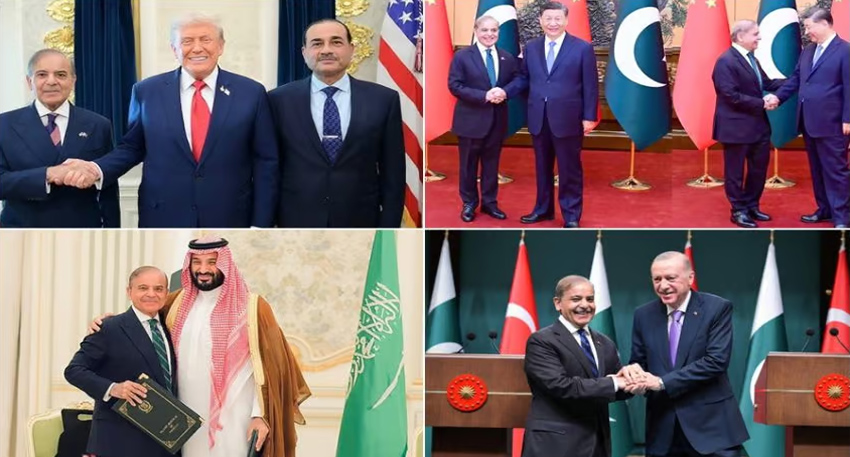
Pakistan pursued proactive, diversified diplomacy in 2025. Relations with China deepened through economic and security cooperation. Engagement with Gulf countries expanded in energy, investment, and defence sectors.
Pakistan improved ties with Central Asian states, enhancing regional connectivity and trade. Constructive engagement with the United States focused on trade, counterterrorism, and climate cooperation.
Pakistan also revitalised its role within the Muslim world, promoting unity, humanitarian assistance, and peaceful conflict resolution.
Fruits of Foreign Policy Success
The fruits of Pakistan’s foreign policy success were tangible. Diplomatic credibility improved, economic partnerships expanded, and Pakistan avoided entanglement in regional conflicts. Enhanced global engagement translated into trade opportunities, investment inflows, and strategic leverage.
Pakistan’s principled stance on international issues earned respect, reinforcing its image as a sovereign, responsible, and peace-oriented nation.
Conclusion
Pakistan’s achievements in 2025 are a testament to national resilience, institutional strength, and strategic maturity. Faced with immense challenges in defence, economy, international security, and foreign affairs, Pakistan chose discipline over panic, diplomacy over aggression, and reform over denial.
The fruits of these efforts—enhanced security, economic stabilisation, diplomatic credibility, and renewed national confidence—will continue to shape Pakistan’s trajectory in the years ahead. While challenges remain, 2025 proved that Pakistan possesses the will, capacity, and vision to overcome adversity and secure a dignified place in the comity of nations.