













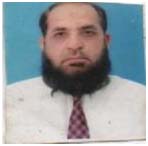
Dr. Syed Mehboob
Economic and Political Analyst
email: drmehboob.thenewslark@gmail.com
Allama Iqbal was a genius poet, philosopher, and politician. His poetry has a global influence. So far world’s renowned scholars, researchers, and intellectuals have written more than 7,000 books on Allama Iqbal. His poetic charisma influenced millions of minds and hearts in the world. The world’s many independence movements got food for thought and motivation from his poetry, which paved the way for their independence. Indonesia’s General Habibi said that they started their independence war after studying the translation of Iqbal’s poetry into the Indonesian language. The largest symbol of Illegal Indian Occupied Kashmir’ leader Syed Ali Gilani, was a great admirer of Allama Iqbal, and he translated two of his Persian poetry books into Urdu, and one Book, “Iqbal Rooh e Deen Ka Shanasa” was written on Iqbal’s personality. This book is part of my library and I often read it. Iqbal’s poetry has been translated into twelve different languages of the world.
Asrar -E – Khudi ( the secrets of Self) was translated by Renold Alleyne Nicholson in 1991. Zabur-e E Ajam was translated into English by Professor Arthur John Arberry in 1948, Shikwa, Jawab e Shikwa in 1955, and Javed Nama in 1966. Eva Meyerovitch translated Iqbal’s poetry into the French language, Pyam e Mashriq in 1956, Javed Nama in 1963, and also Iqbal’s lectures “The Reconstruction of the Religious Thoughts “in 1956. Similarly, Dr. Laereq Babree translated Iqbal’s selected part of Zarb e Kaleem into the French language. Mr. Liu Shunxiong translated Allama Iqbal’s “Asra e Khudi “into the Chinese language in 1999, and that was a great contribution. Mr. Jose E. Calderon translated Iqbal’s lectures into the Spanish language. Selected parts of Payam e Mashriq, Asrar e Khudi, Ramuz e Bekhudi, and Javed Nama into the Arabic language by Dr. Abdul Wahab Azzam. Also, Javed Nama was translated into Arabic by Dr. Husayn Mujib Al Misri in 1973, Aramghan e Hijaz in 1975. Iqbal’s lectures were translated into the Russian language by Marietta Stephanites. Also, Dr. Ludmilla has done an excellent job in writing about Allama Iqbal in the Russian language. Dr. Anne Marrie Schimmel translated Iqbal’s lectures into the German language. These lectures were also translated into the German language by Axel Monte and Thomas Stemmer. Dr. Jan Marek is another valuable name who translated Payam e Mashriq in 1977 into the Czech language. Iqbal’s lectures were translated into the Czech language by Filip Hanjny. Zarb e Kalim has been translated into the Persian language by Dr. Abdul Hamid Irfani. Mr. Alessandro Bausani translated Javed Nama in 1952 into the Italian language. Mr. Mustanir Mir and Vito Salierno translated Iqbal’s lectures into the Italian language. Renowned Iranian intellectual and scholar Dr. Ali Shariati wrote a book on Iqbal, “Iqbal o Ma”. Iranian Supreme Leader Sayyid Ali Khamenei said,” Iqbal Murshad e Man Ast” means Iqbal is my teacher. Spiritual guide. Dr. Abdul Kadir Karahan translated selected parts of Kalama e Iqbal into the Turkish language. Dr. Halil Tokar of Turkiye, who is a very much admirer and lover of Pakistan, also wrote on Iqbal and his poetry. Omer Dogrul is another prominent name who did valuable research on Iqbal in Turkiye. Dr. Anne Marries Schimmel wrote a thesis on Iqbal with a title “Mohammad Iqbal, poet and Philosopher: A collection of translations, essays.” She also wrote, “ Iqbal in the eyes of a Western Historian, importance of Study of Iqbal in Future”.
Professor John Arberry of the United Kingdom wrote, “ Iqbal: Manifestation of the Islamic Spirit” and “ Notes on Iqbal’s Asrar e Khudi. Dr. Abdul Wahab Azzam of Egypt’s work on Iqbal includes on Iqbal’s poetry and thoughts. Prof. Jagan Nath Azad of India was also an admirer of Iqbal, and he wrote” Iqbal: His Poetry and Philosophy” and “Iqbal: Mind and Art”. Dr. Sheila McDonough of Canada also contributed with her thesis “Iqbal: His Metaphysical Ideas “ in 1966, and “ Mosques of Cordoba “ in 1977. Dr. Jan Marek of the Czech Republic published his research article on Zarb e Kaleem in 1955, and “Muhammad Iqbal and Pabloneurada “in 1977. French Scholar Mr. Luce Clude Maitre, American Scholar Dr. Barbra Matkaf, Russian Scholar Natlia Progarina, Dr. Taha Hussain of Egypt, Prof I.S. Fahad of Tunisia, Muhammad Natsir of Indonesia, Prof Dr. Ali Nihad Tarlan of Turkiye, and Ali Ganjeli of Turkiye are among those who have done excellent research on Allama Iqbal.
The great leader of the Subcontinent, originator and founder of the Islamic Republic of Pakistan, Quaid e Azam Muhammad Ali Jinnah, paid a rich tribute to Allama Iqbal and said, “
“Iqbal was the greatest interpreter of Islam in modern times. No
One in this era has understood Islam better than him. I have
had the privilege and opportunity of being associated with
him. I have never found a truer and more loyal colleague than him.”
Sir Herbert Edward Read, (1893 – 1968), English poet, and critic of literature and art said about this illustrious poet that, “ “[If today’s poets are tested on the standard of expression of metaphysical realities in poetry, Applying it here and
now, I can think of only one living poet who in any way sustains the test, and almost necessarily he is not of our race and creed. I mean Muhammad Iqbal.”
Prof. R.A Nicholson (1868 – 1945), a renowned English scholar, was another admirer of Iqbal. He said, “He is a man of his age and a man in advance of his age; he is also a man in disagreement of his age.”
Great German Scholar Dr. Annemarie Schimmel (1922-2003), who was an internationally acclaimed scholar and lover of Pakistan, said, “My long-lasting love of Iqbal has led me to publish several works which are more or less relevant for a study of his contribution to Muslim thought… In many articles, I have tried to show Iqbal in the context of Islamic modernism, or dealing with his imagery.”
Renowned Iranian Scholar Dr. Ali Shariati (1933 – 1977), an Iranian revolutionary and sociologist, paid tribute to Allama Iqbal in these words, “ “Iqbal… a man of religion and a man of this world, a man of faith and knowledge, a man of intellect and emotions, a man of philosophy and literature, a man of God and people. A devotee during the night and a lion during the day, “Iqbal is considered to be a contemporary thinker and philosopher of the same rank as Bergson in the West or at the same level as Ghazali in Islamic history.”
Rabindranath Tagor (1861 –1941), a Bengali polymath of India, also admired Allama Iqbal in his words, “The death of Sir Muhammad Iqbal creates a void in
literature that, like a mortal wound, will take a very long time to heal. India, whose place in the world is too narrow, can ill afford to miss a poet whose poetry had such universal value.”
Philip Kerr, known as Lord Lothian (1882 -1940), British politician, diplomat, and newspaper editor, said, “ Not only in the Islamic World but in the entire East,
there is no intellectual as effective as Iqbal”. “The thoughts of Iqbal will change the course of history. Political minds fail to understand how inspiring poets like Iqbal can be”.
In Konya, Turkey, adjacent to the grave of Mavlana Rum, there is a symbolic grave for Iqbal. In Heidelberg, Germany, a road is named after Iqbal (Iqbal Ufer). “A Companion to Philosophers” by Blackwell 1996 edited by Robert Arrington, includes Iqbal in the list of renowned philosophers of the world.
In “Fifty Eastern Thinkers”
Diane Collinson, Kathryn Plant, and Robert Wilkinson in 2000 enlisted Iqbal in the section of Islamic Philosophy. A team from Chicago produced a documentary on Iqbal.
( To be continued)