














Dr. Syed Mehboob
Senior Business and Political Analyst
https://www.thenewslark.com
Agriculture is the backbone of Pakistan’s economy. It contributes 23.3 percent to its GDP, 37% to the labour force. Its industry mostly depends on agriculture. Textile has a share of 55.2% in Pakistan’s total exports, and the food group has a 23% share in total exports. So about 78% Pakistan’s exports are agriculture-based.
Agriculture Sector’s Contribution to Pakistan’s GDP
| Sector | Share in GDP% % |
| Agriculture overall | 23.54 |
| Crops | 7.72 |
| Live Stocks | 14.97 |
| Forestry | 0.54 |
| Fisheries | 0.31 |
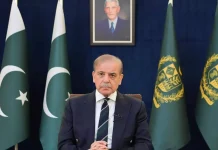
It is a matter of great pleasure and satisfaction for the whole Pakistani nation that China has extended its cooperation to boost Pakistan’s agriculture. Pakistan has decided to send one thousand graduates to China to train in modern agricultural techniques after Prime Minister Shahbaz Sharif visited Shaanxil last year. A first batch of around three hundred Pakistani graduates has completed advanced agriculture training in China’s Shaanxi province, and the Prime Minister of Pakistan described this success as very heartening. Prime Minister thanked the Chinese government and the universities that imparted hands-on training to Pakistani graduates, as well as appreciated the Pakistani National Food Security Ministry, Higher Education Commission ( HEC), and described Chinese support as vital for Pakistan’s economic growth. These three hundred graduates are trained in important areas of water-saving irrigation, seed production, animal husbandry, agriculture production, and prevention of post-harvest losses. A fast-growing population, climate change, and poor resource management have greatly impacted Pakistan’s crops in recent years, prompting officials to ponder alternative ways to enhance production. Modern irrigation methods and sprinkler systems are critical tools for Pakistan’s agriculture’s survival and growth.
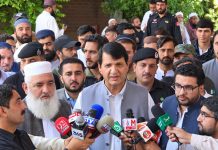
Pakistan’s Foreign Minister, Mr. Ishaq Dar, shared good news with Pakistanis that China was willing to deepen cooperation with Pakistan in agriculture, industry and mining. FM Ishaq Dar’s meeting with his counterpart Mr. Wang Yi was very fruitful. There was also a very fruitful meeting between Federal Minister for National Food Security Mr. Rana Tanveer Hussain and the Chinese delegation, including He Zhongyon, Deputy Secretary of the Party Committee of Xinjiang Uygur Autonomous Region ( XUAR), the Chairman of China Xinjiang Group and Chinese Ambassador to Pakistan Mr. Jiang. Both sides agreed to establish technical working groups to fast-track joint research, pilot projects, and technology transfers tailored to Pakistan’s diverse ecological zones. The minister proposed launching targeted initiatives in Gilgit-Baltistan, leveraging its geographic similarities with Xinjiang. Mr. Tanveer Hussain also also invited Chinese enterprises to invest in Pakistan’s agri-business sector, proposing joint ventures, demonstration farms, and public-private partnerships. “We are fully committed to translating this strong partnership into real benefits for our farmers, researchers, and future generations,” he said.
Ambassador Jiang welcomed Pakistan’s proactive approach and reiterated Beijing’s support under the China-Pakistan Economic Corridor (CPEC). He appreciated Pakistan for its openness to collaboration and highlighted the potential for long-term partnership in food security, technology transfer, and rural development. They pledged to sustain high-level dialogue and move swiftly to implement shared goals, reinforcing what Hussain called the “time-tested Pakistan-China friendship”.
While infrastructure and energy projects dominated the first phase of CPEC, Phase II is ushering in a new era,an era of agricultural modernization, scientific collaboration, technology transfer, and trade expansion. The significance of this transformation cannot be overstated. It holds the power to uplift rural communities, enhance food security, reduce poverty, and drive inclusive growth in Pakistan. More importantly, it stands as a living testament to the strength and sincerity of China-Pakistan friendship.
It is interesting to note that when China launched its reform and opening-up in 1978, it began with agriculture. Between 1978 and 1984, China successfully lifted around 500 million people out of povertyan unparalleled feat in human history. The success was not accidental. It was achieved through pragmatic policy reforms, incentives for farmers, land responsibility systems, and most critically, the use of science and technology to modernize the agri-sector. From being a food-deficient country where even three meals a day were once a challenge, China evolved into a food-secure nation and eventually a net exporter of agricultural products. This transformation continues to serve as an inspiring model for Pakistan. Despite entering the era of artificial intelligence, digital technologies, and smart cities, China has never sidelined agriculture. Instead, it remains central to its economic vision, food sovereignty, and rural revitalization strategies.
Pakistan is blessed by Allah Almighty with over 80 million hectares of cultivable land, a vast irrigation network—one of the world’s largest—and a hardworking agrarian population. However, like many developing nations, Pakistan’s agriculture sector has long been constrained by outdated methods, low yields, post-harvest losses, and lack of value addition. These challenges, though persistent, are not insurmountable,especially when a trusted and experienced friend like China steps forward with open arms, advanced technologies, and decades of experience. The China-Pakistan agricultural partnership under CPEC is now gaining remarkable momentum. On July 3rd, a major milestone was achieved when the China-Pakistan High-Quality Agricultural Cooperation Development Forum was held in Islamabad. Organized by the China Chamber of Commerce in Pakistan (CCCPK), and attended by senior officials, experts, and industry leaders from both nations, the seminar showcased the depth, diversity, and dynamism of this growing partnership.
Speaking at the event, Mr. Shi Yuanjiang, Minister and Chargé d’Affaires of the Chinese Embassy in Pakistan, articulated a clear message: “China has always maintained openness and worked with other countries to enhance agricultural technology, share agricultural product markets and development experiences. “This spirit of openness, trust, and mutual development reflects not only China’s foreign policy ethos but also the profound depth of its ties with Pakistan.Over the past three years, the fruits of China-Pakistan agricultural cooperation have been both visible and impactful: Nine New Protocols for Pakistani Agricultural Exports. These protocols have facilitated bilateral agricultural trade of over $1 billion annually, with Pakistan enjoying a consistent trade surplus. Pakistan has successfully exported heat-treated beef, fresh cherries, and frozen buffalo embryos to China. These are firsts in Pakistan’s export history and demonstrate its growing capacity to meet international sanitary and phytosanitary standards. In February 2025, Pakistan’s high-value buffalo dairy products reached China for the first time. By June 2025, 655 tons had been exported,an impressive achievement that opens up new revenue streams for dairy farmers and processors. From January to May 2025, Pakistan’s sesame exports to China exceeded $50 million, a 33% year-on-year increase, making sesame the top agricultural export to China.
These are not isolated statistics; they are indicators of deeper structural progress. Pakistan’s agri-sector is gradually evolving from subsistence farming to commercial, export-oriented, and technology-driven agriculture.China has made it clear that it is ready and willing to transfer modern agricultural technologies to Pakistan. Whether it is drip irrigation, high-yield hybrid seeds, greenhouse farming, smart sensors, mechanization, or climate-resilient crops, China’s vast agricultural research ecosystem can play a transformative role in building Pakistan’s capacity.
Moreover, partnerships with Chinese research institutions and universities offer Pakistan opportunities to train its young agricultural scientists and engineers. Joint ventures and demonstration farms are being developed where new technologies are tested and adapted to local conditions.
Agriculture is not only an economic sector,it is a source of employment, culture, identity, and resilience. In this context, China-Pakistan cooperation is emerging as a model of South-South collaboration that is rooted in mutual respect, shared challenges, and collective goals. China’s commitment to working with international organizations like the FAO further strengthens this narrative. As Mrs. Amina Bajwa, Head of Programme at FAO Pakistan, rightly pointed out: “These initiatives reflect our shared commitment to innovation, technology transfer, and sustainable farming systems.They also demonstrate the power of cooperation, not just between governments, but between private enterprises, researchers, and local communities. Looking ahead, the opportunities are vast. Pakistan can benefit immensely from expanding areas of cooperation such as:
- Agri-industrial parks and processing zones to reduce post-harvest losses and increase exports.
- Cold chain logistics to ensure freshness and reduce spoilage.
- E-commerce platforms to enable Pakistani farmers to directly access Chinese markets.
- Joint breeding programs for high-yield and pest-resistant varieties.
- Agro-financing mechanisms to empower small and medium farmers.
- Organic and halal certifications to capture niche markets abroad.
Furthermore, climate-smart agriculture and water-efficient technologies are crucial areas where Chinese experience can help Pakistan face its environmental challenges with resilience and innovation.
The China-Pakistan agricultural partnership is more than a bilateral initiative,it is a story of hope, a symbol of solidarity, and a catalyst for change. It is proof that when nations cooperate with sincerity, respect, and purpose, they can overcome any challenge,be it poverty, food insecurity, or climate change.