






















By Brig Syed Karrar Hussain (Retired)
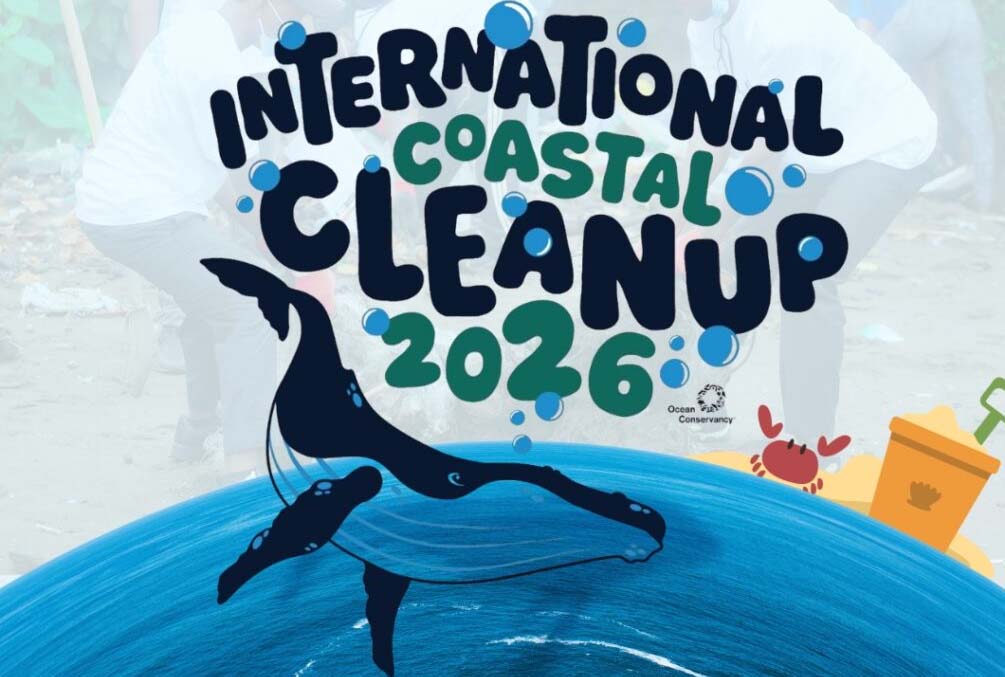
Every year, the third Saturday of September is observed as International Coastal Cleanup Day, bringing together communities, volunteers, environmental organisations and governments across the world to remove waste from beaches, waterways and coastal areas. What began as a community effort in Texas in 1986 has developed into a global movement. According to Ocean Conservancy, nearly 20 million volunteers have participated in International Coastal Cleanup activities since its beginning, removing more than 400 million pounds of waste from beaches and waterways. The movement has also developed an important scientific purpose: volunteers record the types of waste they collect, helping researchers and policymakers understand the sources of marine pollution.
The purpose of Coastal Cleanup Day, therefore, is much greater than simply collecting rubbish for a few hours. It is about creating awareness that whatever we throw on a street, beach, roadside or open drain can eventually find its way into the sea. The ocean does not recognise municipal boundaries. A plastic bottle discarded inland may travel through a drainage system, stormwater channel or river and ultimately become marine pollution.
Why Clean Coasts Matter
Oceans cover most of the Earth’s surface and support an enormous variety of marine life. They also contribute to food security, employment, transportation, tourism and the economic well-being of coastal communities.
Marine litter, particularly plastic, has become one of the major environmental challenges of our time. The United Nations Environment Programme has described plastic pollution and marine litter as threats to marine ecosystems, wildlife, food chains and human well-being. UNEP estimates that plastics constitute at least 85 percent of marine litter.
Plastic bags, bottles, food wrappers, fishing material, Styrofoam and other discarded items can remain in the environment for long periods. Marine animals may become entangled in waste or ingest plastic. Eventually, plastic breaks down into smaller particles, including microplastics, creating a problem that is considerably more difficult to remove.
Consequently, coastal cleanliness is not merely an aesthetic matter. It is connected with environmental protection, public health, marine biodiversity, fisheries, tourism and the economic future of coastal cities.
Pakistan and the Karachi Coast
For Pakistan, the subject has particular importance because the country has a long Arabian Sea coastline and Karachi is a major port city whose economic, commercial and social life is closely connected with the sea.
Karachi’s coastline is not simply a recreational area. It includes important ports, fishing communities, industrial activities, maritime infrastructure and beaches visited by thousands of citizens. The sea supports livelihoods and contributes significantly to the city’s economy.
Unfortunately, marine litter has become a serious challenge.
A 2023 study published in Marine Pollution Bulletin examined pollution at West Wharf, Kemari Jetty and Manora. It identified restaurants, export activities, boat construction, tourism and commuter activity among sources associated with coastal litter, while plastic was found to be the most prevalent category.
More recent research examining Clifton, commonly known as Sea View, and Sandspit beaches has also found plastic to be the dominant category of debris, accounting for approximately 47 percent at Clifton and 45 percent at Sandspit in the study sample. The research also identified paper, tetra packs, wood and Styrofoam among other forms of debris.
These findings should make every citizen of Karachi think seriously.
When a family visits Sea View and leaves behind plastic bottles, food packets, disposable cups or other waste, the problem does not end when the family leaves the beach. Tides, wind and human activity can carry that waste towards the sea, where it becomes part of a much larger environmental problem.
What Does Islam Teach Us?
Environmental responsibility is not a modern concept foreign to Islam. The Qur’an repeatedly teaches human beings to avoid corruption and destruction on Earth.
Allah Almighty says in the Holy Qur’an:
“And do not spread corruption on the earth after it has been set in order.”
(Surah Al-A’raf 7:56)
This verse provides a powerful principle for environmental responsibility. Allah has created the Earth with balance and order; human beings should not deliberately damage that order.
The Prophet Muhammad ﷺ also attached great importance to removing harmful things from public paths. In Sahih Muslim, the Prophet ﷺ instructed believers to remove harmful objects from the paths of Muslims.
Another narration in Sahih Muslim describes a person who removed a harmful branch from a pathway, and Allah appreciated his action and forgave him.
If removing a harmful object from a road is considered a virtuous act, then removing harmful waste from a public beach and preventing it from entering the sea should also be understood as an act of social responsibility and public benefit.
The teachings attributed to Imam Ali (ع) also emphasise responsibility, moderation, justice and care in the use of the blessings entrusted to human beings. The broader Islamic concept of amanah—trust—provides an important framework: the Earth and its resources are a trust, not something that human beings have the right to destroy without accountability.
Karachi’s Coastline Is Our Collective Responsibility
Keeping Karachi’s coastline clean cannot be left entirely to government agencies. Municipal authorities, port authorities, cantonment organisations and other institutions have important responsibilities, but citizens also have a fundamental role.
A clean beach begins with a simple principle:
“I will not leave my waste behind.”
Every visitor to Sea View, Clifton, Manora, Sandspit, Hawkesbay or any other coastal location should carry waste back to an appropriate disposal point if a proper bin is not immediately available.
Restaurants and vendors operating near beaches should provide sufficient waste containers and ensure that waste does not enter drains or waterways. Fishing communities and boat operators should be encouraged to collect discarded fishing material and plastic rather than throwing it into the sea.
Schools, colleges, universities, religious institutions and civil society organisations can turn Coastal Cleanup Day into a continuing educational campaign rather than a one-day activity.
Recommendations for Karachi
First, Sea View to Kemari should be treated as one continuous environmental responsibility zone, with coordinated cleanliness arrangements rather than isolated cleanup operations.
Second, sufficient and clearly marked waste bins should be installed at busy points, particularly near food stalls, recreational areas, parking locations and pedestrian routes.
Third, authorities should establish regular—not merely annual—coastal cleanup programmes, with measurable targets and publicly reported results.
Fourth, single-use plastics should be progressively reduced around major recreational beaches, while environmentally safer alternatives should be encouraged.
Fifth, restaurants, vendors and commercial operators should be made responsible for waste generated by their activities.
Sixth, schools and universities should organise student coastal-cleanup campaigns and environmental awareness programmes.
Seventh, citizens should be encouraged to follow the simple rule: “Take only memories, leave only footprints.”
Finally, Coastal Cleanup Day should become a reminder of a responsibility that continues throughout the year.
Conclusion
The coastline of Karachi is a priceless natural asset. It provides us with beauty, recreation, livelihoods, maritime connectivity and economic opportunities. We have no moral right to enjoy these benefits while simultaneously turning the sea and its shores into dumping grounds.
International Coastal Cleanup Day gives us an opportunity to change our attitude—from seeing cleanliness as somebody else’s responsibility to recognising it as our collective duty.
For the people of Karachi, the message should be particularly clear:
Keep Sea View clean. Keep Clifton clean. Keep Kemari clean. Keep the entire coastline clean.
A clean coastline reflects a responsible society. And when we protect the sea, we are not merely protecting water—we are protecting marine life, human health, livelihoods, the beauty of Karachi and the inheritance we will leave for our children.
The words of the Qur’an should remain our guiding principle:
“Do not spread corruption on the earth after it has been set in order.”
Let International Coastal Cleanup Day therefore become not just a day of cleaning beaches, but a day of cleaning our habits, strengthening our sense of responsibility and renewing our commitment to the environment entrusted to us by Allah Almighty.I believe the Islamic references and the Karachi-specific research make this version particularly suitable for publication in a newspaper or magazine. The strongest message for Karachi could be the concept of “Sea View to Kemari: One Coast, One Responsibility.”