
















By: Malik Muhammad Bostan
(www.thenewslark.com)
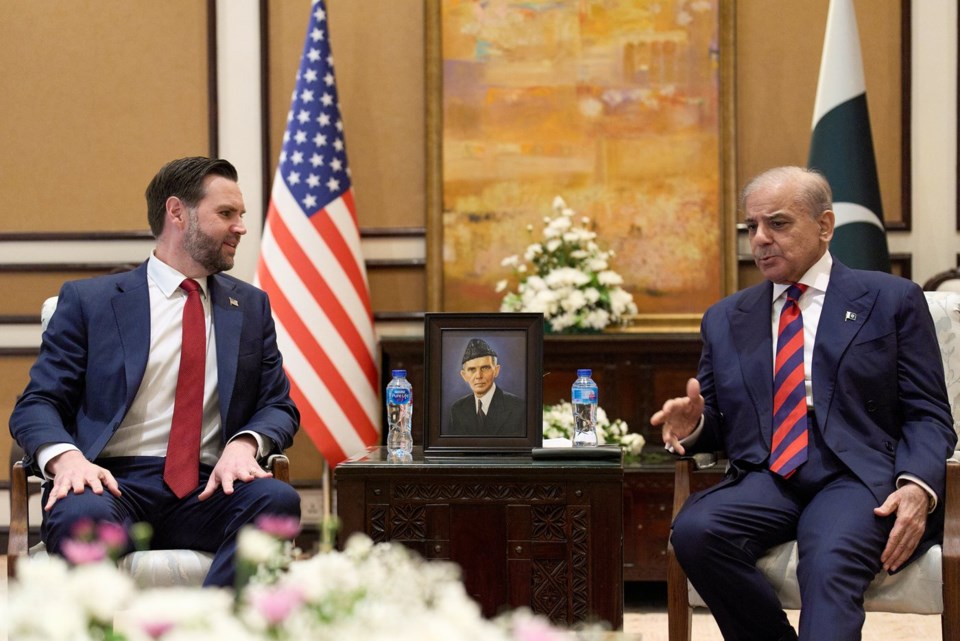
All eyes are currently on Islamabad, where high-stakes negotiations between Iran and the United States are underway. Pakistan has emerged as a key diplomatic facilitator, credited with helping secure a temporary ceasefire and bringing the two adversaries to the negotiating table—an achievement of considerable global significance.
The US delegation, led by Vice President J.D. Vance, includes prominent figures such as President Donald Trump’s advisor Steve Witkoff and senior aide Jared Kushner. Their presence underscores the seriousness of Washington’s engagement, even as expectations for a decisive breakthrough remain cautious.
At this stage, predicting a concrete outcome would be premature. However, the mere fact that both sides have agreed to engage in direct dialogue marks a diplomatic success. That said, deep-rooted differences persist. Both Tehran and Washington appear to have entered the talks with the belief that they hold the upper hand and that the other side is under pressure to seek a ceasefire—an assumption that may complicate progress.
A central issue clouding the talks is the lack of clarity over the negotiation framework. President Trump has described Iran’s proposed plan as a “workable basis” for dialogue, but this falls short of endorsing its ten points. Iran, however, interprets this as implicit acceptance, creating a gap in expectations from the outset.
As a result, Iran is pushing for immediate concessions, including a ceasefire in Lebanon, upfront sanctions relief, and continued control over the strategically vital Strait of Hormuz. In contrast, the US and Israel maintain that ongoing military operations against Hezbollah in Lebanon fall outside the scope of any ceasefire arrangement.
Mutual distrust remains a defining feature of US-Iran relations. While President Trump appears keen to find an exit from the conflict, he is equally constrained by the need to present any agreement as a clear and decisive victory. This may be achievable on the nuclear front, where both sides have historically found some common ground.
Indeed, prior to the escalation, negotiations mediated by Oman had brought the two sides close to an understanding. The proposed framework would have allowed Iran limited uranium enrichment under strict international oversight, while temporarily halting enrichment on its soil. Although this indicates that room for compromise exists, it may not suffice for the political optics required in Washington.
Meanwhile, Israel remains skeptical of any deal that does not significantly weaken Iran. Its strategic objective appears to extend beyond containment to the possibility of regime change or, at minimum, an internally weakened Iran. However, such an outcome is not necessarily aligned with the interests of the US or key Gulf states.
Despite the challenges, there are modest grounds for cautious optimism. The participation of Vice President Vance suggests that Washington anticipates at least incremental progress. Regional stakeholders, particularly Saudi Arabia, are also closely involved, given the potential economic and security implications of any agreement.
Reports of possible involvement by China and Russia have surfaced, but their roles are likely to remain limited. China has shown reluctance to offer binding guarantees, while Russia remains preoccupied with the ongoing conflict in Ukraine.
Complicating matters further, Iran has set preconditions for formal talks, including the restoration of its overseas assets and a ceasefire in Lebanon. Iranian parliamentary speaker Mohammad Bagher Ghalibaf has publicly reiterated these demands, raising uncertainty over the timing and substance of negotiations.
Although a two-week ceasefire announced by President Trump has halted US and Israeli airstrikes on Iran, it has not resolved critical flashpoints. Iran’s control over the Strait of Hormuz continues to disrupt global energy supplies, while hostilities between Israel and Hezbollah persist in Lebanon.
Additionally, US sanctions on Iran’s banking and energy sectors have prevented Tehran from accessing billions of dollars in foreign reserves, further complicating the economic dimension of the talks.
Ultimately, achieving a permanent ceasefire will be the most challenging phase, requiring sustained diplomacy and compromise on deeply contentious issues. While Islamabad has provided a crucial मंच for dialogue, the path to a durable resolution remains uncertain and fraught with geopolitical complexities.