





















Written by: Syed Munawar Ali
Pakistan’s banking system is considered one of the key pillars of the country’s economy. Banks not only facilitate financial transactions but also play an important role in investment, business development, and overall economic growth. In Pakistan, there is a wide network of public, private, and Islamic banks that provide various financial services to the public as well as to the business community.
One of the positive aspects of the banking system is that it has helped create financial discipline within the economy. Through banks, investment opportunities are created, businesses are provided with loans, and industrial development is promoted. At the same time, the use of modern technology has made people’s lives easier through facilities such as online banking, mobile banking, and ATM services.
The growth of Islamic banking is also an important positive feature of Pakistan’s banking system. Islamic banks attempt to provide an interest-free financial system, which has encouraged many people to become part of the banking system who previously avoided conventional banking for religious reasons.
Despite these advantages, Pakistan’s banking system also faces several challenges. One of the biggest issues is that a large portion of the country’s population still remains outside the banking system. Due to the limited access of banks in rural areas, many people are unable to benefit from financial services.
Another negative aspect is that bank lending policies are sometimes strict for ordinary individuals and small businesses. Small traders and farmers often face difficulties in obtaining loans on easy terms, which can slow down economic activity.
Issues of corruption and lack of transparency within the banking system also appear from time to time. In some cases, unfair distribution of loans and financial mismanagement reduce public confidence in the banking sector.
In addition, the high interest rates in the banking sector are another major concern. Because of higher interest rates, borrowing becomes expensive for business owners, which may slow down investment and industrial growth.
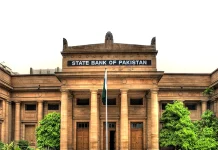
However, in recent years efforts have been made to improve the system through digital banking and financial reforms. The State Bank of Pakistan has introduced various policies to promote financial inclusion and make the banking system more transparent and efficient.
There is a need to make the banking system stronger and more people-friendly. Small businesses, farmers, and the middle class should be provided with loans on easier terms so that the process of economic development can be accelerated.
In conclusion, Pakistan’s banking system has many positive aspects but also faces several challenges that need to be addressed. Through effective policies, transparency, and the use of modern technology, the banking sector can be further strengthened so that it continues to play a vital role in the country’s economic development.