














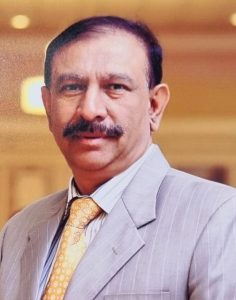
By Brigadier Syed Karrar Hussain (Retd.)
The morning sun had just begun to rise over Karachi’s coastline when the city awoke to the news that pierced the heart of every patriotic Pakistani. Hakim Muhammad Saeed — the man whose life had been a living testament of service, faith, and intellect — had fallen to an assassin’s bullet. For many, it was not just the loss of a human being; it was the silencing of a voice that had for decades whispered hope, health, and harmony into the soul of the nation.
Years later, I often imagine him walking through the lush gardens of Madinat al-Hikmah, his eyes filled with dreams far beyond his lifetime. “Education and health,” he would say, “are the twin lights that can guide any nation out of darkness.” His words still echo across the wide corridors of Hamdard University, where young men and women, armed with books and belief, continue the mission of their martyred mentor.
Born in Delhi in 1920, Hakim Saeed inherited not just the legacy of herbal medicine but also the spirit of service from his forefathers. When he migrated to Pakistan after Partition, he carried little more than hope — but that hope soon blossomed into Hamdard, a symbol of purity, trust, and healing for millions. Through the sale of herbal medicines and the income from his institution, he built schools, hospitals, and research centres — each brick reflecting his unshakable faith in humanity.
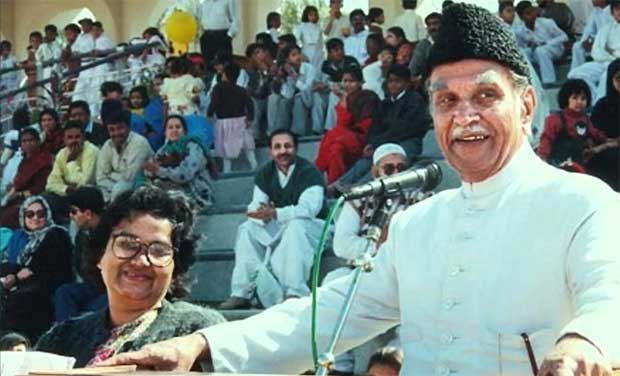
Those who met him describe a man of immense simplicity. His white sherwani, soft-spoken voice, and gentle manners made him appear almost ascetic. Yet behind that calm exterior burned the passion of a reformer. He believed that true independence was not achieved through slogans but through self-reliance and education. He saw every child as a future leader and every young mind as a garden waiting to bloom with knowledge.
In the fictional world, I imagine, a young student named Sara once approached him after a lecture.
“Sir,” she asked timidly, “how can we serve Pakistan when the world seems so indifferent?”
Hakim Saeed smiled and replied, “By refusing to be indifferent ourselves. The nation is not an idea written in books — it lives in every honest act you perform.”
That one line, though imagined, captures the essence of the man — a patriot whose belief in Pakistan was unwavering. He wrote extensively, not to glorify himself, but to awaken thought. His books on ethics, science, and social responsibility were a reflection of a restless intellect striving to rebuild a fractured society.
Under his guidance, Hamdard Foundation grew into one of the largest philanthropic networks in South Asia. From Hamdard Naunehal, the children’s magazine that inspired generations, to Hamdard University, which blended ancient wisdom with modern science — each project bore his unmistakable mark of sincerity and vision.
Even in administrative duties, Hakim Saeed was a man apart. During his tenure as Governor of Sindh, he declined official privileges, drove himself without escorts, and continued to open the office of Hamdard every morning. Power never altered his humility; authority never dimmed his light.
But destiny often claims the brightest among us too soon. On that tragic morning of October 17, 1998, he was on his way to the Hamdard University campus to preside over a meeting about educational reforms. The same streets that had once echoed with the laughter of his students became silent witnesses to his martyrdom. His death was a wound — but his life, a lesson.
Today, when nations search for models of ethical leadership, the figure of Hakim Saeed stands tall — a blend of scholar, scientist, philanthropist, and saint. He proved that one man’s sincerity could build an empire of goodness without corruption, greed, or vanity.
As I reflect on his legacy, I find myself drawn to one thought: perhaps true healing is not just of the body but of the soul of a nation. And in that sense, Hakim Muhammad Saeed remains forever — the healer of Pakistan’s soul.