














By Dr. Umair Haroon
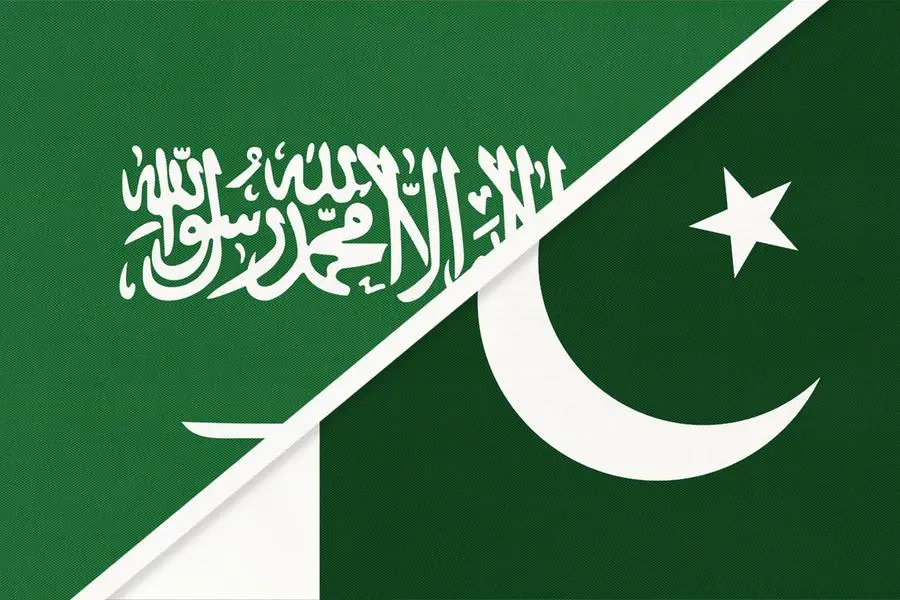
The relationship between Pakistan and Saudi Arabia is a partnership between two of the most important countries in the Islamic world. It’s built not just on religious harmony but also on strategic, economic, defense, and cultural foundations. Spanning over seven decades, this bond has deepened and broadened over time. Pakistan is considered Saudi Arabia’s closest friend, while Saudi Arabia is not only a strong defense partner for Pakistan but also a significant economic supporter. A recently signed strategic defense agreement has further strengthened this deep bond.
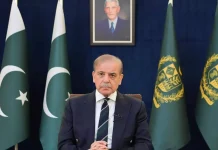
On September 18, a major Strategic Mutual Defence Agreement (SMDA) was signed between Pakistan and Saudi Arabia. Under this agreement, an attack on one country will be considered an attack on both. The SMDA aims to formalize and strengthen defense cooperation. The agreement was signed by Prime Minister Shehbaz Sharif and Saudi Crown Prince Mohammed bin Salman, with Field Marshal Syed Asim Munir also present. Field Marshal Asim Munir played a key role in finalizing this agreement.
This pact is a response to the changing security environment and the growing ambitions of global powers. The recent Israel-Hamas conflict, along with attacks on Qatar and the overall situation in the Middle East, have prompted Saudi Arabia and other Gulf countries to reconsider their defense policies. The agreement is being viewed favorably across the Islamic world and has been likened to a NATO-style strategic pact. There’s also speculation about the inclusion of other Islamic countries. Pakistan’s Defense Minister Khawaja Asif has stated that the door remains open for other Arab nations to join, emphasizing that it is a defensive partnership and not directed against any specific country.
The SMDA has caused considerable concern and unease in India. In response, India stated that it would assess the impact of the Pakistan-Saudi defense agreement in the context of its national security, as well as regional and global stability. The spokesperson for the Indian Ministry of External Affairs, Randhir Jaiswal, said that the Indian government was aware that “this development was under consideration, which formalizes a long-standing arrangement between the two countries.” He added, “We will study the impact of this development on our national security in the context of regional and global stability. The government remains committed to protecting India’s national interests and ensuring national security in every field.”
If implemented, the agreement is expected to bring about significant changes in the region. The balance of power could shift, and while the pact enhances confidence for Pakistan and Saudi Arabia, it presents new challenges and possibilities for India and other neighboring countries.
Historically, the ties between Pakistan and Saudi Arabia are based on religious, historical, cultural, economic, and defense principles. The relationship has only grown stronger over time. The two nations are not only bound by Islamic brotherhood but also frequently align on global and regional political issues. Saudi Arabia was among the first countries to recognize Pakistan after its creation. Formal diplomatic relations were established in 1951, and since then, the two nations have consistently grown closer in cooperation.
During the 1965 and 1971 wars between Pakistan and India, Saudi Arabia provided strong support to Pakistan. The 1970s saw close ties between Prime Minister Zulfikar Ali Bhutto and King Faisal. Under King Faisal’s leadership, Pakistan received significant financial and moral support. In 1974, Pakistan hosted the Islamic Summit Conference in Lahore, where Saudi Arabia actively participated, taking steps to promote unity in the Islamic world. In the 1980s, following the Soviet invasion of Afghanistan, Pakistan and Saudi Arabia collaborated with the U.S. to support the Afghan mujahideen. During this time, Saudi Arabia provided financial and logistical support, while Pakistan hosted refugees.
Saudi Arabia has consistently provided financial assistance to Pakistan during difficult times. When global sanctions were imposed on Pakistan after its nuclear tests in May 1998, Saudi Arabia supplied free oil. During economic crises in 2014, 2018, and 2023, Saudi Arabia extended billions of dollars in loans and deferred oil payment facilities. In 2023, Saudi Arabia deposited $2 billion with the State Bank of Pakistan. Pakistan exports rice, textiles, and other products to Saudi Arabia, while importing oil and petrochemicals. During Crown Prince Mohammed bin Salman’s visit to Pakistan in 2019, investment agreements worth $21 billion were signed, including a $10 billion oil refinery in Gwadar. Over 2 million Pakistanis reside in Saudi Arabia, sending billions of dollars in remittances back home. In 2023, remittances from Saudi Arabia were nearly $6 billion, forming a crucial pillar of Pakistan’s economy.
Military cooperation between Pakistan and Saudi Arabia spans decades. Pakistani forces have been deployed in Saudi Arabia on several occasions, particularly during the Iran-Iraq War in the 1980s. Today, Pakistani military advisors, trainers, and experts continue to train the Saudi armed forces. Many Saudi officers receive education at Pakistan’s military academies. The two countries also conduct joint military exercises to promote counter-terrorism, conventional warfare tactics, and military cooperation. In 2015, Saudi Arabia formed the Islamic Military Counter Terrorism Coalition, which Pakistan joined. Former Army Chief General (R) Raheel Sharif was appointed as the alliance’s first commander, a symbolic gesture of Saudi Arabia’s trust in Pakistan.
Every year, millions of Pakistani pilgrims visit Saudi Arabia for Hajj and Umrah. The Saudi government works closely with Pakistan on Hajj arrangements. In recent years, the “Road to Makkah” project has provided Pakistani pilgrims with immigration facilities directly from Islamabad. Both countries see themselves as leaders in the Islamic world and often take a unified stance at Islamic conferences and international forums. They frequently align on issues such as the Palestinian cause, the Kashmir issue, and Islamophobia.
While both countries have adopted a cautious approach toward the Taliban government in Afghanistan, there have been some differences in their policies regarding Iran. From 2023 to 2025, Prime Minister Shehbaz Sharif and Crown Prince Mohammed bin Salman held several high-level meetings. Saudi Arabia has expressed interest in investing in Pakistan’s minerals, energy, agriculture, and infrastructure sectors. A strategic dialogue has been initiated to promote institutional cooperation on defense, economy, energy, and security.
The relationship between Pakistan and Saudi Arabia is not just traditional diplomacy but a deep strategic partnership. It is founded on religious unity, economic cooperation, defense collaboration, and people-to-people connections. The Pakistan-Saudi defense agreement is expected to bring positive outcomes for both countries and for the broader Islamic world, potentially leading to a stronger Islamic alliance. It is imperative that other Muslim countries, such as the UAE, Qatar, Turkey, and Egypt, also become part of this strategic defense agreement to form a comprehensive Islamic defense bloc. This historic pact is not merely a display of military cooperation between two brotherly Islamic nations but an expression of a shared vision for the leadership of the Muslim world. It represents not only a strategic victory for Pakistan but also a new ray of hope for the entire Muslim Ummah. May Allah bless this agreement, making it a source of well-being, progress, and stability for both nations and a testament to the unity, security, and sovereignty of the Islamic world.