














By Brig Syed Karrar Hussain, Retd
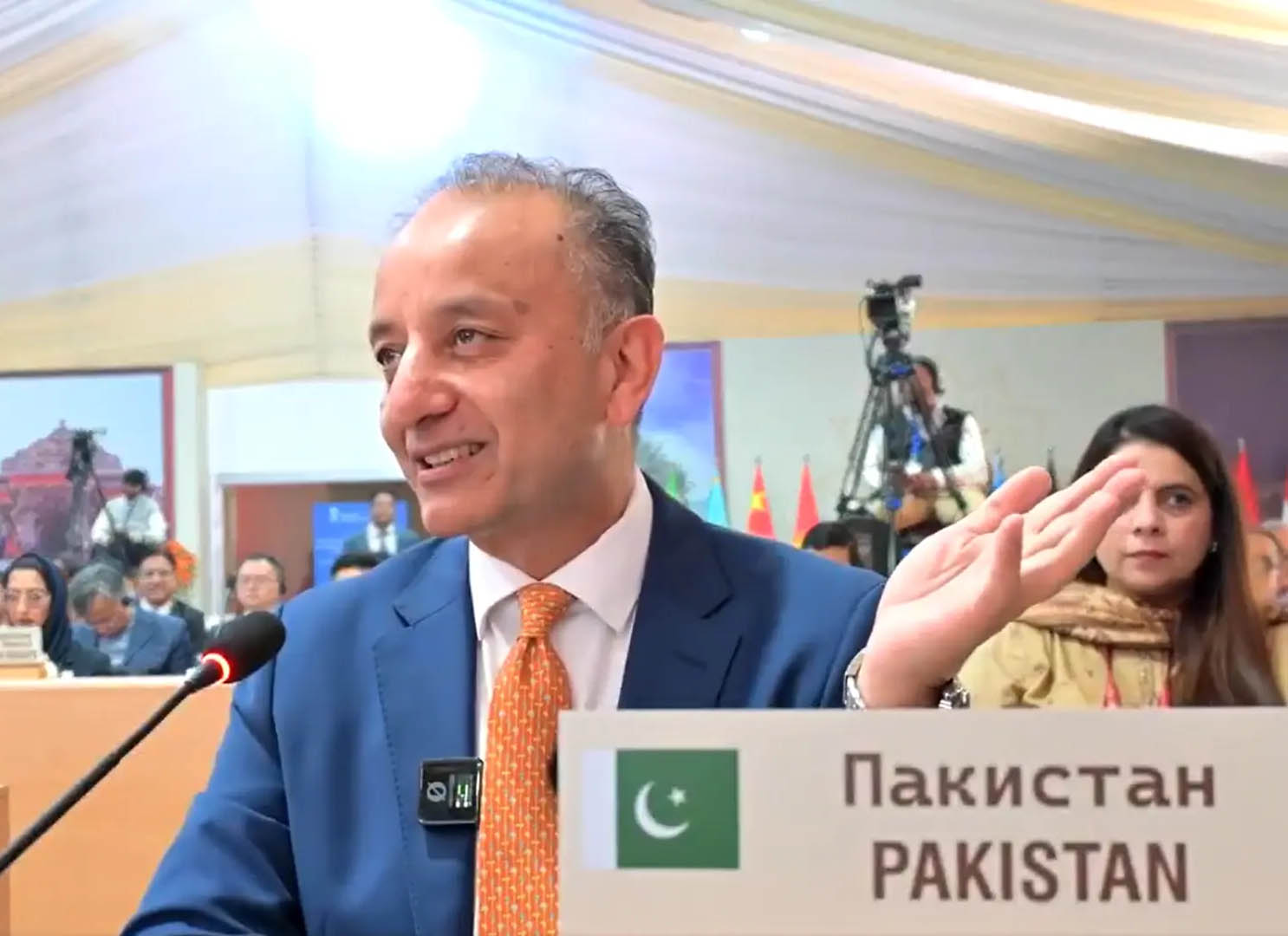
The recent visit of Pakistan’s Federal Minister for Climate Change and Environmental Coordination, Dr Musadik Masood Malik, to New Delhi to participate in the Shanghai Cooperation Organisation (SCO) Civilisational Dialogue Forum from November 20 to 22, 2026, deserves appreciation and recognition. At a time when relations between Pakistan and India remain strained, Pakistan’s decision to send a senior minister to represent the country at this important international gathering reflects political maturity, diplomatic wisdom and a commitment to regional peace.
This was not an ordinary diplomatic engagement. It was an opportunity to communicate an important message: disagreements between neighbouring countries should not permanently close the doors of dialogue, cultural exchange and peaceful coexistence.
Pakistan made the right decision by participating in this forum. Diplomacy is not merely about negotiating with friendly countries; it is also about maintaining channels of communication with neighbours with whom differences exist. Pakistan has consistently expressed its desire for peaceful relations with all neighbouring countries, including India. Our geographical realities, historical connections and shared regional interests make peaceful coexistence essential for the future of South Asia.
A Positive Step Towards Diplomatic Engagement
Dr Musadik Malik’s visit was particularly significant because it marked the first visit by a Pakistani federal minister to India since May 2023, when former Foreign Minister Bilawal Bhutto Zardari attended the SCO Foreign Ministers’ meeting in Goa.
The participation of Pakistan in the New Delhi forum demonstrated that Islamabad believes in multilateral cooperation and constructive engagement. Pakistan’s Foreign Office also emphasised the importance of dialogue among civilisations and people-to-people contacts within the SCO framework.
Pakistan currently holds the chairmanship of the SCO Council of Heads of State for 2026–27 and is preparing to host the next summit in Islamabad in August 2027. Therefore, active participation in SCO activities is not only a diplomatic responsibility but also an opportunity to strengthen Pakistan’s international standing.
Dr Musadik Malik’s presence in New Delhi should be viewed in this broader context. Pakistan is an important member of the international community and wishes to contribute positively towards regional stability, economic cooperation and mutual understanding.
An Excellent Expression of Cultural Diplomacy
One of the most admirable aspects of Dr Musadik Malik’s participation was his emphasis on poetry, literature, language and shared civilisational heritage.
His decision to address the gathering in Urdu was particularly meaningful. Referring to the literary legacy of Mirza Ghalib, he expressed his feelings about speaking in English while being so close to the resting place of one of Urdu’s greatest poets. He highlighted the historical and cultural connections associated with Ghalib, whose family roots also connected him to Central Asia.
His reference to Ghalib and the literary traditions of Delhi, Lucknow and Lahore was an excellent example of cultural diplomacy.
It was more than a speech; it was a reminder that culture transcends political boundaries.
Mirza Ghalib, Allama Iqbal, Faiz Ahmed Faiz, Saadat Hasan Manto, Josh Malihabadi and countless other literary figures belong to a shared literary heritage that continues to inspire millions of people on both sides of the border.
The minister rightly highlighted that literature and poetry have the extraordinary ability to connect people even when political circumstances create divisions.
There is a famous couplet of Ghalib:
ہزاروں خواہشیں ایسی کہ ہر خواہش پہ دم نکلے
بہت نکلے مرے ارمان لیکن پھر بھی کم نکلے
Poetry such as this does not belong to geographical boundaries. It belongs to humanity.
Dr Malik’s cultural message was therefore a commendable effort to remind the region of its common intellectual and literary inheritance.
People of Pakistan and India Are Not Enemies
An important distinction must be made between political disagreements and the feelings of ordinary citizens.
The people of Pakistan and India are not naturally enemies. Millions of people on both sides share emotional, linguistic, cultural and historical connections. They have common traditions, similar social customs, family histories and an appreciation of one another’s literature, music and sporting achievements.
There are particularly three important bridges connecting the people of these two countries: Urdu literature, cultural heritage and sports.
First, Urdu literature: Urdu is a beautiful language that has flourished across the subcontinent. The poetry of Ghalib, Iqbal, Faiz, Mir Taqi Mir and other literary giants continues to be read and appreciated in both countries. Literary gatherings, poetry recitals and intellectual discussions can become effective instruments of peace.
Second, culture and traditions: Food, music, festivals, historical monuments, architecture and traditional customs reflect a common cultural heritage. From Lahore to Delhi and from Karachi to Mumbai, people can recognise familiar elements of their shared history.
Third, sports: Cricket is perhaps the most visible example of the emotional connection between the two nations. Millions of people watch matches involving Pakistan and India with extraordinary passion. Sporting competition should remain an expression of talent, discipline and friendship rather than becoming a source of hatred.
These common interests demonstrate that ordinary people have much more in common than political narratives sometimes suggest.
Political Opposition Should Not Become an Obstacle to Peace
Unfortunately, diplomatic initiatives between Pakistan and India frequently become subjects of domestic political controversy.
The criticism surrounding Dr Musadik Malik’s visit, including the argument that his participation was merely routine because of the SCO framework, reflects how political competition can influence the interpretation of diplomatic developments.
It is worth remembering that political parties in both countries have sometimes criticised diplomatic initiatives undertaken by their opponents. When the Congress was in power in India, the BJP frequently questioned its policies and diplomatic decisions. Today, with the BJP in government, the Congress and other opposition parties scrutinise the government’s decisions.
Democratic opposition is legitimate and necessary. Governments must remain accountable, and political parties have every right to question national policies. However, diplomacy and regional peace should ideally remain matters of national interest rather than becoming instruments of partisan competition.
A diplomatic initiative should be evaluated on its potential contribution to peace, dialogue and national interests, not merely on which political party happens to be in government.
Pakistan’s participation in the SCO forum should therefore be appreciated on its merits.
India Must Also Recognise the Importance of Good Neighbourly Relations
Peace is a shared responsibility. Pakistan alone cannot create a peaceful regional environment; India also has an important role to play.
As the larger country in South Asia, India has an opportunity to demonstrate leadership through constructive engagement, respect for international commitments and peaceful resolution of outstanding disputes.
Both countries need to reduce hostile rhetoric, encourage diplomatic communication and create an atmosphere in which trade, tourism, educational exchanges, cultural activities and sporting relations can gradually resume.
The Kashmir dispute, water-related concerns, cross-border security and other outstanding issues require serious and meaningful attention.
Pakistan has repeatedly emphasised that lasting peace in South Asia cannot be achieved without addressing the fundamental issues affecting bilateral relations.
India should also understand that maintaining tension with a neighbouring country does not serve the long-term interests of either nation. Cooperation, on the other hand, can create opportunities for economic growth, poverty reduction, regional connectivity and improved living standards.
The Future of South Asia Lies in Peace and Cooperation
South Asia is home to a significant proportion of the world’s population. Millions of people continue to face poverty, unemployment, educational challenges, environmental degradation, climate change and public health problems.
Both Pakistan and India have enormous human and economic potential. Instead of spending valuable resources on hostility, the two countries should explore opportunities for cooperation in education, healthcare, climate resilience, disaster management, scientific research and regional economic development.
As the climate crisis intensifies, cooperation becomes even more important. Environmental challenges, floods, heatwaves, water management and air pollution do not recognise political boundaries.
Dr Musadik Malik’s participation in the Civilisational Dialogue Forum was particularly relevant in this regard because it offered an opportunity to discuss not only cultural understanding but also broader areas of regional cooperation.
The SCO provides an important platform where member states can discuss shared challenges and explore practical solutions.
Conclusion:
Let Literature Build Bridges Where Politics Creates Walls
The visit of Dr Musadik Masood Malik to India deserves appreciation as a positive diplomatic initiative. His participation, particularly his emphasis on Urdu literature, Mirza Ghalib and the shared cultural heritage of the region, conveyed a message that deserves to be heard by political leaders and ordinary citizens alike.
Pakistan wants peace, stability and friendly relations with its neighbours. This does not mean compromising on national interests, sovereignty or legitimate positions on outstanding disputes. Rather, it means believing that disagreements can be addressed through diplomacy and responsible dialogue.
The people of Pakistan and India should reject hatred and promote mutual respect. Governments must recognise that peace is not a weakness; it is a sign of confidence, maturity and responsible leadership.
There is an old and meaningful message in the philosophy of Allama Iqbal that remains relevant today: humanity must rise above narrow divisions and recognise its common destiny.
Let the poetry of Ghalib, the philosophy of Iqbal, the music of the subcontinent and the spirit of sports bring people closer.
Let Delhi and Lahore once again become symbols of literary and cultural friendship rather than political division.
The message to both governments, particularly to the Indian leadership, is simple: improve relations with your neighbours, reduce tensions and create opportunities for peaceful coexistence.
South Asia does not need another generation of hostility. It needs a generation of peace, prosperity, education and cooperation.
And perhaps the most appropriate message for both nations is:
We may have different political positions, but we share a common history, a common culture and a common responsibility towards the future generations of this region.