





















Dr. Syed Mehboob
Economic and Political Analyst
http//: www.thenewslark.com
Chinese are a peace-loving nation. They have never invaded other nations, but they have a history of resistance and resilience against foreign invaders. The Victory Day of the Chinese People’s War of Resistance against Japanese Aggression is a history of sacrifice, steadfastness, bravery, valor, and commitment to defending China’s beloved homeland. This Victory Day is celebrated every year on 3rd September. In 2014, China’s national legislature officially designated September 3 as a formal day of remembrance and national commemoration. Since then, it is regularly celebrated every year enthusiastically and with great zeal.
On 15th August 1945, the Japanese government declared unconditional surrender, but the formal legal surrender procedure had not yet been completed. In September 1945, the signing ceremony of Japan’s surrender was officially held on the battleship in Tokyo Bay. Japanese Foreign Minister Mamoru Shigemitsu and Chief of the General Staff Yoshiro Umezu signed the surrender document on behalf of the Japanese government. General Xu Yongchang, the Chinese representative, signed the documents on behalf of China. Thus ending the Second Sino-Japanese War. On the same day that the Japanese government signed the surrender document, the Chinese government ordered the whole country to celebrate the victory, with the next day, 3rd September 1945, as the “ Victory Day of China against Japanese Aggression”.
On 1st October 1949, the People’s Republic of China was officially established. On December 23 of the same year, the Government Administration Council promulgated the Regulations on National Holidays and Memorial Days, which also included “ The Victory Day against Japanese Aggression”.
The World Anti-Fascist War was the greatest just war in human history, and the historical enlightenment it left for all of humanity is invaluable. For the sake of world peace, development, and progress, all countries, regardless of size, strength, poverty, wealth, or social system, should respect each other, seek common ground while reserving differences, live in harmony, and develop together. This is the best way to review history and comfort the spirits of the heroes today.
The earliest tradition of the Chinese Communist Party (CCP) celebrating the victory of the Anti-Japanese War can be traced back to the celebration held in Yan’an on August 15, 1945. That night, grand torch parades were held in all districts of Yan’an, with brilliant lights and loud gongs and drums. The poet Ai Qing once described the scene in his article The People’s Carnival: “Crowds, crowds everywhere. Gratitude spreads gratitude, joy spreads joy; everyone holds their chests high, holds torches high, follows the gongs and drums, and rushes to the streets – all doors are open to welcome joy, entertain joy, joy is the most noble guest tonight”.
Since the beginning of the reform and opening-up era, the importance of commemorating the Victory Day of the Anti-Japanese War has been increasing. At the same time, as the rectification of chaos and the restoration of order were carried out, the contributions of anti-Japanese forces outside the CCP were gradually recognized;it was declared as “the whole nation’s war of resistance”.
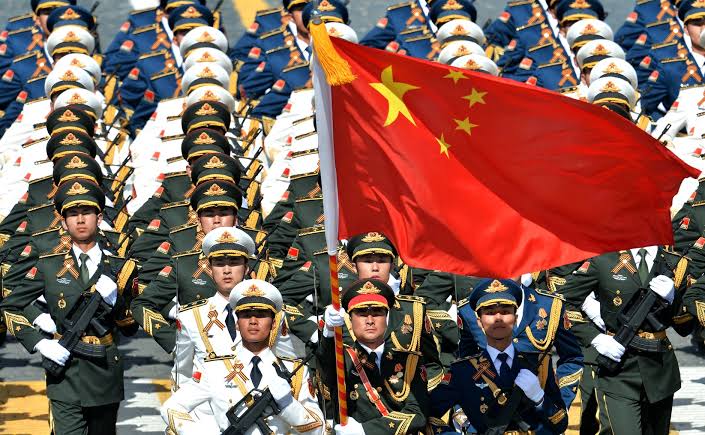
This year on September 3, 2026, people across China held commemorative activities to mark the 81st anniversary of the victory in the Chinese People’s War of Resistance Against Japanese Aggression and the World Anti Fascist War.
The Chinese People’s War of Resistance Against Japanese Aggression (1931-1945) was the first to break out and lasted the longest in the World Anti-Fascist War. Over 14 years, some 35 million Chinese were killed or wounded. Japan officially surrendered on Sept. 2, 1945, by signing the Instrument of Surrender.
The war marked China’s first complete victory against foreign aggression in modern times. Through immense sacrifice, the Chinese people made a major contribution to the salvation of human civilization and the defense of world peace.
On Thursday, 3 September 2026, a symposium was held in Beijing to commemorate the 81st anniversary. Li Shulei, a member of the Political Bureau of the Communist Party of China (CPC) Central Committee and head of the Publicity Department of the CPC Central Committee, attended the event.About 200 people took part in the symposium, including veterans of the war, relatives of wartime commanders and fallen soldiers, and international friends who contributed to China’s victory, as well as representatives of their families.Officials, young military personnel, and student representatives spoke at the event, vowing to remember history, honor fallen heroes, cherish peace, and build a better future.
In Harbin, the capital of northeast China’s Heilongjiang Province, a series of activities commemorating the hard-won victory 81 years ago was held at the Northeast China Revolutionary Martyrs’ Memorial Hall.Representatives from government agencies, businesses, military units, schools and social organizations attended a memorial event and paid silent tribute to those who fell in the War of Resistance.They also visited an exhibition featuring wartime relics to learn more about the historical significance and contemporary relevance of the spirit of the Northeast Anti-Japanese United Army (NAJUA).
For 14 years, the soldiers of NAJUA fought in extreme conditions, suffering severe food and clothing shortages while facing overwhelming enemy superiority. Yet they still inflicted heavy losses on Japanese forces, making an indelible contribution to the World Anti-Fascist War.
“We commemorate the victory so that we do not forget history,” said Tong Guobo, head of the memorial hall. “The NAJUA spirit — of unwavering faith, deep patriotism, and dauntless courage — has taken deep root in northeast China, inspiring generations to forge ahead.”
At the Memorial Hall of the Victims in the Nanjing Massacre by Japanese Invaders in east China’s Jiangsu Province, people took part in poetry readings and historical reenactments, bringing to life the harrowing stories of that dark chapter for the audience.College students recited poems during a ceremony marking the 81st anniversary of the victory of the Chinese People’s War of Resistance against Japanese Aggression and the World Anti-Fascist War at the Memorial Hall of the Victims in Nanjing Massacre by Japanese Invaders, in Nanjing, east China’s Jiangsu Province, Sept. 3, 2026.
“Both my parents were survivors of the Nanjing Massacre, and we lost six family members to the Japanese forces in 1937,” said Cao Yuli, who was participating in the event.
“We should always remember the past and value the peace we enjoy today,” said Zhang Xinjue, a student choir member during the commemorations.
In east China’s Shandong Province, more than 3,000 artifacts that bear witness to the Japanese atrocities are exhibited at a private museum in Pingyin County. Among them are military postcards and letters and soldiers’ diaries, as well as photographs, combat maps, and other items such as swords, helmets, and gas masks.
Han Guangyou, the 65-year-old curator of the museum, has spent more than four decades amassing these artifacts from across China. “These exhibits stand as undeniable proof of the war crimes committed by imperial Japan,” he said.
The museum now receives more than 20,000 visitors annually. Han is currently collaborating with several universities to catalog, digitize, and research the collection. “These stark exhibits serve as a sobering reminder for young people to remember the lessons of history and strive to build a stronger China,” Han said.( Continued )