















By Brig Syed Karrar Hussain (Retired)
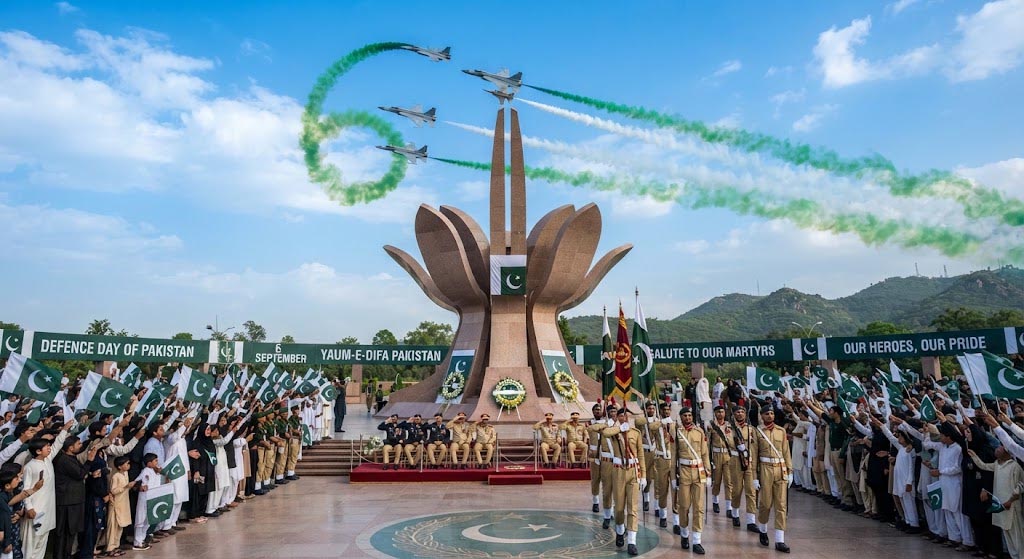
Every nation has moments in its history when its courage is tested, its unity is challenged and its very existence demands sacrifice. For Pakistan, September 6 is one such historic day. Defence Day is not merely a commemoration of a war fought in 1965; it is a reminder of an enduring national journey—from the unresolved tragedy of Kashmir and the trials of the early years, through the epic defence of 1965, to the historic Marka-e-Haq of May 2025.
The journey from 1965 to 2025 teaches us one fundamental lesson: nations survive not merely because they possess weapons, but because their people possess faith, unity, courage, knowledge and an unbreakable will to defend their homeland.
I — The Unfinished Question of Kashmir and the Roots of Tension
Pakistan and India emerged as two independent states in August 1947 after the partition of British India. The division, however, left behind several unresolved disputes, the most painful and consequential being the question of Jammu and Kashmir.
At the time of Partition, the princely states were given the option of acceding to either India or Pakistan. Kashmir’s demographic reality was overwhelmingly Muslim, while its ruler, Maharaja Hari Singh, initially sought to maintain an independent position. The situation rapidly deteriorated into conflict, and the first Indo-Pakistan war began in 1947.
The Kashmir dispute subsequently reached the United Nations. The UN Security Council adopted resolutions envisaging a process through which the people of Jammu and Kashmir would ultimately determine their political future. Yet, decades later, the dispute remains unresolved. The Kashmiri people continue to demand that their political aspirations and right to self-determination be addressed.
This unresolved dispute has remained the central source of tension between Pakistan and India. Other contentious issues—including territorial disputes, water resources, cross-border violence, competing security doctrines and mutual mistrust—have repeatedly aggravated relations.
The result has been a cycle of conflict: wars in 1947-48, 1965 and 1971, the Kargil conflict of 1999, and repeated crises in subsequent decades.
The Kashmir issue is therefore not simply a territorial question. For Pakistan, it represents a question of principle, identity and the rights of a people. For durable peace in South Asia, the issue cannot simply be pushed aside. It requires a peaceful, just and internationally credible resolution that takes into account the aspirations of the Kashmiri people.
Pakistan’s official position has consistently linked sustainable regional peace with the resolution of Jammu and Kashmir in accordance with relevant UN Security Council resolutions.
The lesson is clear: unresolved disputes do not disappear with time; they demand statesmanship, dialogue and justice.
II — 1965: When the Nation Stood Like a Wall
Nineteen sixty-five was a defining chapter in Pakistan’s history.
On the night of September 5-6, Indian forces crossed the international border and launched attacks towards the Lahore and Kasur fronts. Pakistan’s armed forces responded with extraordinary determination. What followed was a war in which the Pakistan Army, Pakistan Air Force and Pakistan Navy, despite limitations in resources, demonstrated remarkable courage and professional competence.
The Lahore Front became a symbol of national resistance. The Sialkot sector witnessed some of the largest armoured engagements since the Second World War, particularly around Chawinda. Pakistani troops faced a numerically superior armoured thrust and fought with extraordinary resilience.
The Pakistan Air Force also played a historic role. On September 7, Squadron Leader M. M. Alam’s famous combat achievement became one of the most celebrated episodes of the war. Across the country, the armed forces were supported by an extraordinary display of public unity.
But the real story of 1965 was larger than the battlefield.
The shopkeeper, farmer, student, labourer, doctor, engineer and teacher all felt that the defence of Pakistan was their collective responsibility. Mosques echoed with prayers. Families sent their sons to the front. Citizens donated blood and resources. The entire nation seemed to have become one extended family.
That national unity became a force multiplier.
The defenders of Lahore, Sialkot and other fronts were not fighting alone. Behind every soldier stood a nation.
The spirit of 1965 demonstrated that Pakistan’s greatest strategic asset is not merely military hardware. It is national cohesion.
The Defence Day of 1965 therefore belongs equally to the soldier in the trench and the mother praying for him at home; to the pilot in the sky and the citizen keeping the national spirit alive on the ground.
The message of 1965 was simple and unforgettable:
When the nation stands united, even the most difficult challenge can be confronted with courage.
III — From Defence Day 1965 to Marka-e-Haq 2025
Sixty years later, history once again presented Pakistan with a serious security challenge.
The events of May 2025 demonstrated how warfare has transformed. The battlefield was no longer restricted to trenches, tanks and aircraft. It extended into the domains of precision weapons, drones, cyber operations, information warfare, diplomacy, electronic systems and real-time intelligence.
Following the escalation in early May, Pakistan launched Operation Bunyanum Marsoos on May 10, 2025, describing it as a response in self-defence to Indian military action. Pakistan’s Foreign Ministry stated that its response was designed to be precise, proportionate and restrained, while avoiding civilian casualties.
The broader military confrontation was subsequently designated Marka-e-Haq by Pakistan. According to ISPR reporting carried by Radio Pakistan, the operation demonstrated jointness among the three services, supported by real-time situational awareness, network-centric capabilities and multi-domain operations.
What makes 2025 particularly significant is the transformation in the nature of national defence.
In 1965, the nation united behind soldiers fighting primarily on conventional battlefields.
In 2025, the soldier remained central—but so did the engineer, scientist, cyber specialist, diplomat, journalist, information warrior and young Pakistani using technology responsibly.
The Pakistani youth emerged as an important component of the information and cyber environment. ISPR specifically acknowledged the role of young Pakistanis and the media in countering disinformation and supporting national morale.
The conflict also highlighted another essential truth: modern victory is not produced by one institution alone. It is the outcome of national integration.
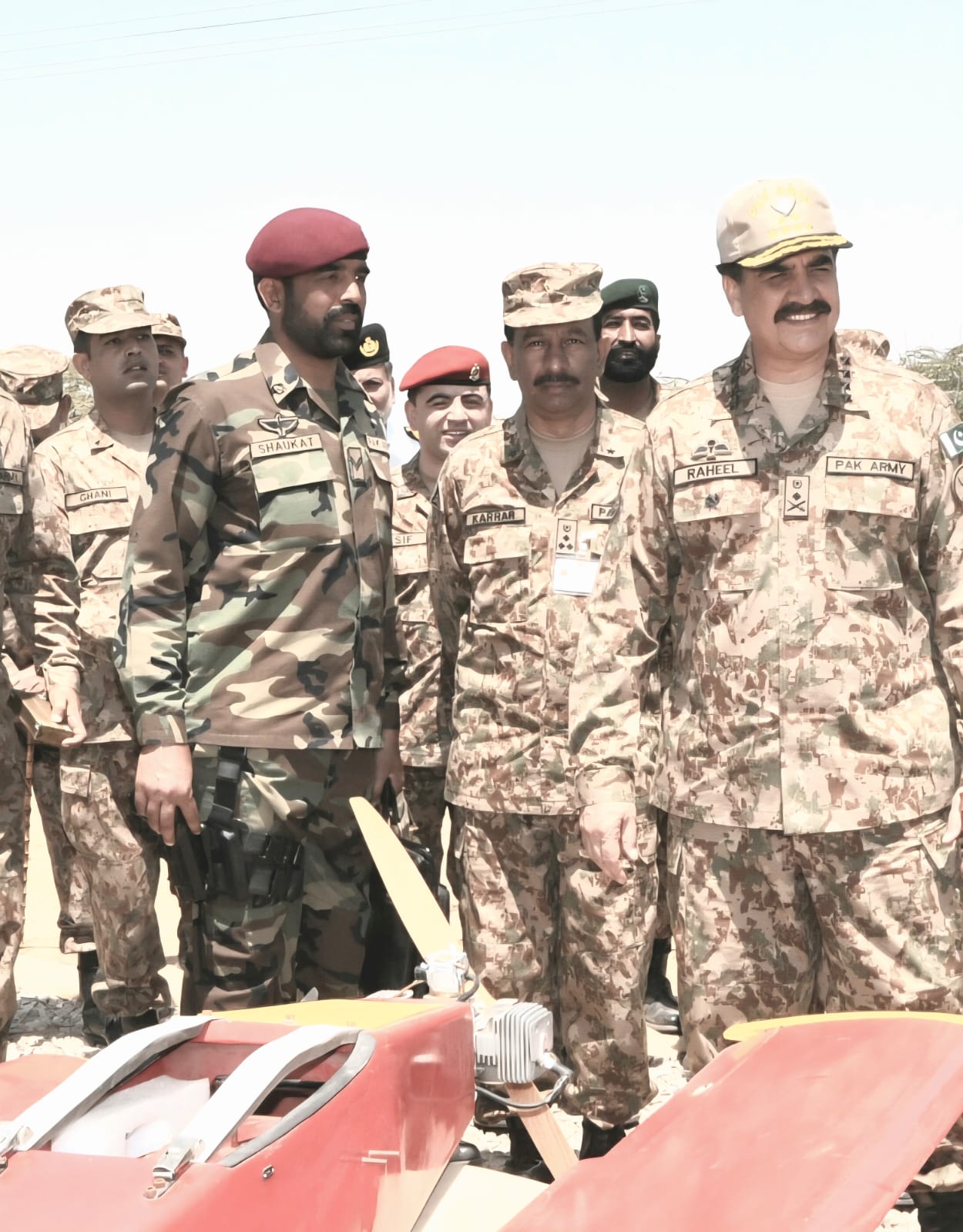
Armed forces provide defence. Scientists provide technology. Diplomats defend the national position internationally. Economists strengthen national resilience. Media informs society. And citizens provide the moral foundation upon which the entire national response rests.
That is why the significance of Marka-e-Haq goes beyond the military dimension.
It became, in the Pakistani narrative, another demonstration of the principle witnessed in 1965: the strength of Pakistan lies in the combination of professional armed forces and a united nation.
Yet victory must never produce arrogance. Pakistan is a nuclear-armed state living in a strategically sensitive region. The responsible lesson of 2025 should therefore be deterrence with restraint, strength with wisdom, and defence with a genuine desire for peace.
Pakistan’s leadership repeatedly emphasized that the country seeks peace but will not compromise on sovereignty and territorial integrity.
Thus, from 1965 to 2025, the character of warfare has changed—but the principle remains unchanged:
Pakistan desires peace, but peace must be protected by strength, preparedness and national unity.
IV — The Way Forward: A Message to Pakistan and Its Youth
The greatest tribute to the martyrs of 1965 and 2025 is not merely to remember them. It is to build the Pakistan for which they sacrificed their lives.
The first requirement is national unity.
Pakistan cannot afford political, sectarian, ethnic or provincial divisions to become greater than our national identity. Differences are natural in a democracy; hatred and fragmentation are not. We must learn to disagree without destroying one another.
Second, Pakistan must invest in education, science and technology.
The wars of tomorrow will increasingly be fought through artificial intelligence, cyber capabilities, space technology, electronic warfare, unmanned systems, information operations and advanced engineering. Our youth must therefore become creators of technology rather than merely consumers of it.
Third, we need economic strength.
A weak economy eventually weakens national security. A strong defence requires a productive economy, a skilled workforce, exports, industrial development, energy security and responsible use of national resources.
Fourth, we must strengthen our information resilience.
The youth of Pakistan live in an age where a smartphone can become a battlefield. False information can damage national morale as effectively as a physical attack. Every Pakistani, particularly every young citizen, must learn to distinguish truth from propaganda, verify information before sharing it, and use social media as a tool for knowledge rather than hatred.
Fifth, we must preserve the moral and spiritual values that have historically given courage to our nation.
Faith does not mean abandoning reason; patriotism does not mean abandoning humanity. The strongest Pakistan will be one that combines faith with knowledge, courage with discipline, and patriotism with justice.
Finally, we must understand that defence is a national responsibility.
The armed forces are the shield of Pakistan, but the strength behind that shield is the nation itself. Every teacher who educates a child, every scientist who develops a new technology, every farmer who produces food, every entrepreneur who creates employment, every journalist who speaks responsibly and every young person who chooses excellence over despair contributes to national defence.
The journey from 1965 to 2025 is therefore not merely a journey through wars. It is a journey from conventional defence to comprehensive national resilience.
September 6 reminds us of the courage of 1965.
May 2025 reminded us that the spirit of resistance remains alive.
But the Pakistan of tomorrow will be decided not on the battlefield alone. It will be decided in our classrooms, laboratories, universities, factories, farms, courts, media houses and homes.
The greatest victory will be the creation of a Pakistan that is so educated, economically strong, technologically advanced, socially united and morally confident that no adversary can ever undermine its future.
Let us therefore remember our martyrs not only with tears, but with determination.
Let us tell our youth:
Build your character. Acquire knowledge. Master technology. Reject hatred. Serve Pakistan. Stand united.
Because the true meaning of “Haq Ka Haq” is not merely to claim victory over an adversary. It is to uphold truth, justice, sovereignty and dignity—and to build a Pakistan worthy of the sacrifices made for it.
From 1965 to 2025, the battlefield has changed. The weapons have changed. The technology has changed. But the spirit of Pakistan remains the same:
Faith in Allah, courage in the heart, unity in the nation—and an unwavering commitment to defend Pakistan.
Pakistan Zindabad.