


















Written by Muhammad Zeb, Peshawar
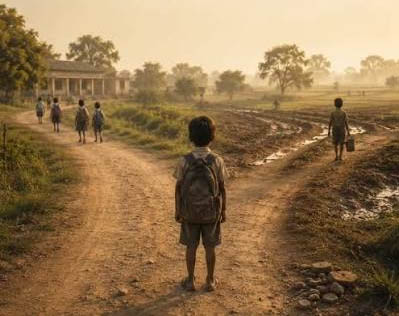
A child does not choose the family into which he or she is born. A child does not choose poverty, conflict, displacement, neglect, or the circumstances surrounding childhood. Yet millions of children are forced to carry burdens created by adults.
Every child deserves more than survival. They deserve education, protection, dignity, and the opportunity to imagine a future beyond the limitations of their circumstances.
Unfortunately, in many communities, childhood is disappearing too early.
Some children leave school because their families cannot afford basic necessities. Some are pushed into labour. Some girls are pressured toward marriage before they are emotionally or physically prepared for it. Others experience violence, abuse, neglect, or exploitation behind closed doors.
The most painful part is that many of these realities are known within communities but remain unspoken.
Poverty is often blamed for everything, but poverty alone does not explain why a child’s rights are ignored. Attitudes, weak enforcement, lack of awareness, institutional failures, and social silence also play a role.
We must stop treating child protection as a subject that only concerns parents, teachers, police, or government departments. It concerns everyone.
A teacher who notices a frightened child has a responsibility. A neighbour who suspects abuse should not simply look away. A journalist who receives credible information must approach it responsibly. Institutions must have mechanisms through which complaints can be reported, investigated, and addressed without unnecessary delay.
Most importantly, children must be treated as human beings with rights, not as possessions controlled entirely by adults.
Education is one of the strongest protections a society can provide. An educated child is more likely to understand his or her rights, make informed decisions, and contribute meaningfully to the community. Educating girls is particularly important because the benefits extend far beyond one individual. Educated women are better positioned to participate in economic and social life and to make informed decisions about their families and futures.
But education alone is not enough.
A child can attend school and still live in fear. A child can wear a uniform while carrying trauma that nobody notices. Protection, dignity, healthcare, family support, and justice must therefore exist alongside education.
Government institutions have a responsibility to enforce child-protection laws effectively. Communities have a responsibility to challenge harmful practices. Families have a responsibility to listen to children rather than dismissing their concerns.
And society has a responsibility to stop calling every harmful practice “tradition.”
Tradition deserves respect when it preserves dignity, culture, and community values. But anything that destroys a child’s safety, education, freedom, or future should be examined honestly, regardless of how long it has existed.
We cannot build a strong country while allowing children to grow up without hope.
The future of Pakistan is not an abstract idea. It is sitting in classrooms, working in markets, standing on streets, and living inside homes across the country.
If we protect those children today, we strengthen the nation tomorrow.
If we abandon them, no amount of speeches about progress will change the reality.
A nation cannot truly move forward by leaving its children behind.