















http//: www.thenewslark.com
Dr. Syed Mehboob
Senior Research Editor, The News Lark
Political and economic analyst
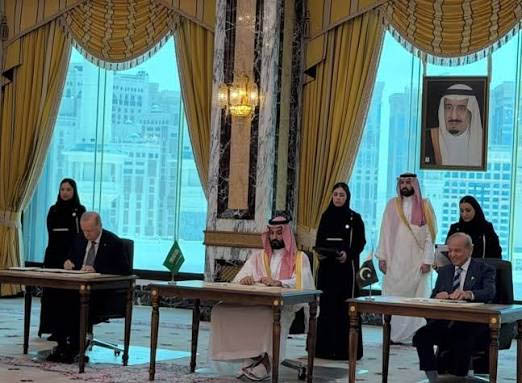
Israel’s plan for Greater Israel is a great threat for all Muslim countries and the region. Israel committed genocide in Gaza and killed 50,000 children and women, 21,000 other civilians, destroyed all hospitals, schools, masjids, churches, colleges, universities, and media centers. United Nations’ General Assembly ( UNGA), United Nations Security Council ( UNSC), International Court of Justice (ICJ), International Criminal Court (ICC), and Organization of Islamic Cooperation (OIC) all have given their verdicts that Israel, its forces, and its Prime Minister Netanyahu committed genocide, but unfortunately no action was taken against Israel. This jeopardized regional and international peace. Israel not only attacked Iran but also threatened Türkiye and Saudi Arabia and fully supported India in its aggression against Pakistan, in which Pakistan gave a humiliating defeat to India. This changed perception about Pakistan, and first Pakistan and Saudi Arabia signed a defense agreement, and now Pakistan, Saudi Arabia, and Türkiye signed a defense agreement on 7th August 2026, in the Holy City of Makkah, which has changed the whole scenario and is going to change the game in the region. In a signing ceremony held at Makkah, where Saudi Crown Prince Mohammed bin Salman, Prime Minister of Pakistan Muhammad Shehbaz Sharif, Turkish President Recep Tayyip Erdogan, Field Marshal Hafiz Syed Asim Munir, Turkish Foreign Minister Hakan Fidan, Pakistan Foreign Minister Ishaq Dar, Saudi Foreign Minister Faisal bin Farhan Al Saud, and Pakistan Defense Minister Khwaja Asif were present on the occasion. It was indeed historical. Collective deterrence against any act of aggression.
Regional powers are looking to strengthen security ties against the backdrop of the US-Israel war on Iran, which started on February 28,2026 and has had a major impact on the region — drawing in several Gulf countries and paralyzing maritime traffic through the strategic Strait of Hormuz.Pakistan has been in the spotlight since the war began as it has played the role of a key mediator between the warring US and Iran.
In the statement, the Foreign Office said the pact reflects the three countries’ shared commitment to strengthening collective security and promoting peace, security and stability in the region and beyond.Flags of Saudi Arabia, Pakistan, and Türkiye were hoisted ahead of the summit in Makkah, Saudi Arabia. The agreement is intended to strengthen collective deterrence against any act of aggression, and stipulates that any armed attack against any one of the three states shall be regarded as an attack against them all.
The agreement also provides for the enhancement of all aspects of defense cooperation among the three countries. Türkiye has Nato’s second-largest military. Saudi Arabia, the strongest Gulf state, is one of the world’s top oil exporters, while Pakistan is the only nuclear-armed Muslim country. This comes a year after Pakistan signed a mutual defense agreement with Saudi Arabia, committing both sides to treat any aggression against either country as an attack on both. Analysts termed this agreement a historic and highly important one, as three major Islamic countries of the region, each with their own unique strength and position, are joining together and made a very important and game-changing decision to manage security matters themselves.
Analysts around the world termed it a “historic and landmark day”, as three major Islamic nations of the region, each with their own unique positions, came together today and “decided to manage security matters themselves”. The foundation of this agreement was essentially laid during the Pakistan-India standoff last year. The world witnessed how Pakistan managed that situation and defeated a major power, which led to a rise in Pakistan’s military prestige. This agreement could become a “magnet” for everyone, and there are benefits of “collective security”, which is seen in Europe or through the Nato alliance.
A major message is being sent from East to West: regional countries will now look after their own security. There is no need for a hegemonic power, whether it be Israel or India, which issues threats daily. The three most significant nations of the Muslim world agreeing serves as evidence that they possess not only an awareness of the security challenges facing the Muslim world on both global and regional scales but also a sense of their own responsibility. This is a highly positive and timely initiative that will significantly assist in fostering peace, stability, and security throughout the Muslim world generally, and the Middle East specifically. It demonstrates that the leaders of the Muslim world are now stepping forward to tackle existing challenges, recognizing that to combat internal discord, terrorism, and aggression, these nations need to combine their experience, resources, and insights into a unified strategy to enhance stability and peace. This initiative further proves that Pakistan is demonstrating responsible and balanced strategic thinking through its diplomatic efforts, including military diplomacy.
Turkish Vice President Cevdet Yilmaz said the agreement was not aimed at any specific country. A Turkish official added that it was purely defensive and did not abrogate any existing agreements the countries had with other states.
This agreement is also very important for Türkiye to deepen its defense Industrial footprint through joint production and technology partnerships, procurement and military interoperability. It is interesting to note that Pakistan and Saudi Arabia already have a defense agreement; however, now three nations together represent a stronger alliance. Saudi Arabia is a major oil producer and exporter, while Türkiye is a very important member of NATO and Pakistan is the only Muslim country with nuclear capability. The three nations share concerns about the increasingly aggressive military stances of Israel.
Saudi Foreign Minister Faisal bin Farhan welcomed the “milestone” agreement, which he said aims to “unify efforts to confront the challenges and threats” in the region.The agreement is “an embodiment of the shared political will of the three countries” for a secure and stable Middle East, he said. He said it should “positively reflect on the region as a whole, and pave the way for a secure future in which opportunities for development and prosperity are enhanced”.
Saudi Arabia said Friday that the joint defense pact signed with Turkey and Pakistan was not linked to “any nuclear ambitions” and was not a threat to any country in the region. The pact comes as regional powers seek to strengthen security ties amid the US-Iran war. Follow our liveblog for the latest developments.
Iranian Foreign Minister Abbas Araqchi said that Iran’s armed forces had demonstrated their readiness and strength in confronting what he called the world’s most expensive military, and urged Muslim countries to unite and rely on themselves in the face of “hostile outsiders”.He also welcomed the defense agreement among three Muslim nations.
“The Mecca Agreement, which is not aimed at any particular country, will strengthen the shared security and collective deterrence of the three nations … thereby making significant contributions to the preservation of peace and stability in our region,” Burhanuddin Duran, the Turkish presidency’s communications director, posted on X.
According to a joint statement, “The agreement is intended to strengthen collective deterrence against any act of aggression and stipulates that any armed attack against any one of the three states shall be regarded as an attack against them all,” the statement read.
“It further provides for the enhancement of all aspects of defense cooperation among the three states,” the statement said, adding that the agreement was called the “Mecca Joint Defense Agreement”.
Pakistan has sought to mediate efforts to bring an end to the US-Iran war, while Turkey has played a diplomatic role in negotiations aimed at resolving the war in Gaza.The agreement also comes amid rising tensions between Turkey and Israel over Gaza and other regional conflicts, including the war in Iran and Lebanon.( Continued )