















By Sarang Munir Soomro
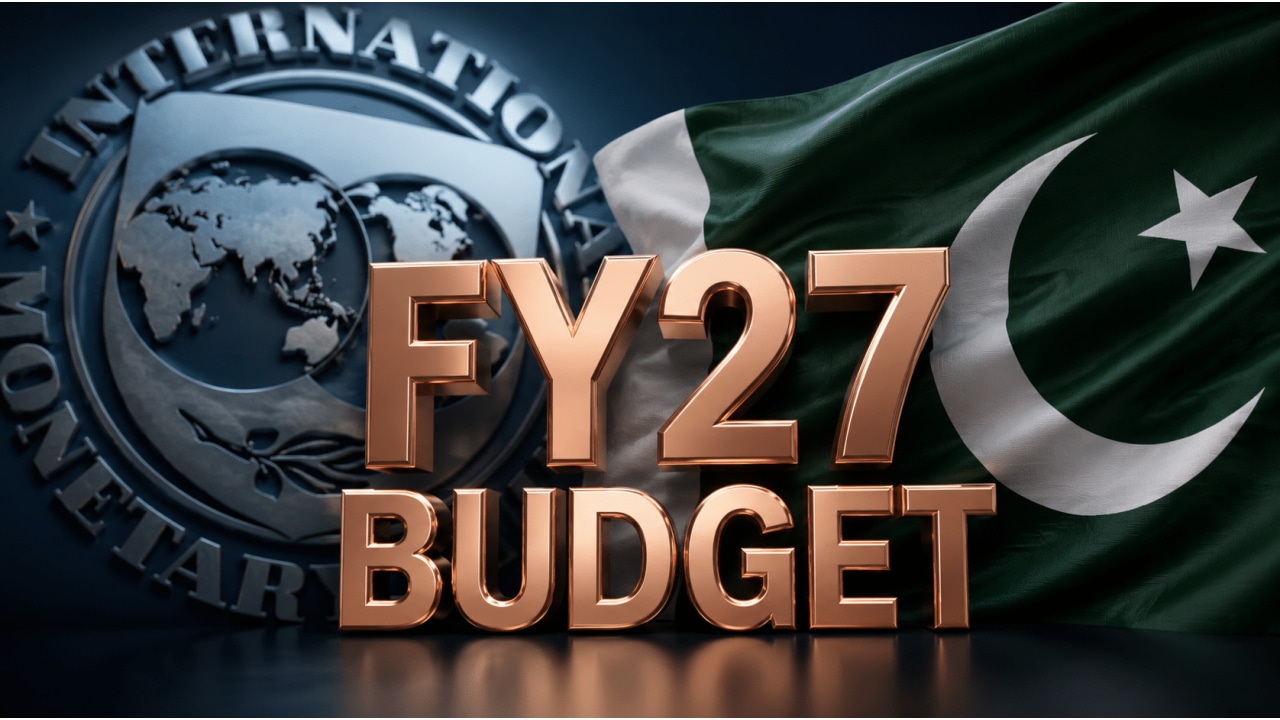
The federal government has presented the Federal Budget for the fiscal year 2026–27 with a total outlay of Rs. 18.771 trillion. The budget proposes a 7 percent increase in salaries for government employees and a 7 percent increase in pensions, while the minimum monthly wage has been increased by 10 percent.
The total federal budget has been estimated at Rs. 18.771 trillion. Out of this amount, Rs. 3 trillion has been allocated for national defense, while Rs. 8.054 trillion will be spent on debt servicing and interest payments. An allocation of Rs. 1.016 trillion has been proposed for pension payments. The government expects economic growth of 4 percent during the next fiscal year, with average inflation projected at 8.2 percent. The budget deficit target has been set at 3.6 percent of GDP, while a primary surplus target of 2 percent has been fixed.
The Federal Board of Revenue (FBR) has been assigned a tax collection target of Rs. 15.264 trillion, representing a 17.6 percent increase over the previous fiscal year. The provinces’ share under the NFC Award has been estimated at Rs. 8.848 trillion. Federal non-tax revenues are expected to reach Rs. 5.336 trillion, while net federal revenues are projected at Rs. 11.751 trillion.
The Public Sector Development Programme (PSDP) has been allocated Rs. 1 trillion, while current expenditures are estimated at Rs. 17.495 trillion. Major development allocations include Rs. 100 billion for the dualization of the Karachi–Chaman N-25 Highway, Rs. 30 billion for the Sukkur–Hyderabad Motorway, and Rs. 25 billion for the Karachi–Rohri section of the ML-1 railway project.
Similarly, Rs. 14 billion has been allocated for the Diamer-Bhasha Dam, Rs. 22 billion for the Mohmand Dam, Rs. 15 billion for the Dasu Hydropower Project, and Rs. 10 billion for the K-IV Water Supply Project in Karachi.
According to reports, the government has introduced additional taxation measures worth approximately Rs. 650 billion, including nearly Rs. 150 billion in new taxes. The proposed budget seeks to impose sales tax on hundreds of retail-packaged products. These include milk, infant formula, dairy products, ghee, cooking oil, sweets, pasta, sauces, agricultural pesticides, plastic household goods, kitchenware, storage products, luggage, footwear, sanitary fittings, crockery, and various household items.
The retail sale of automobiles and auto parts will also come under the tax net. Luxury SUVs valued between Rs. 20 million and Rs. 30 million are proposed to face a 30 percent tax, while vehicles worth more than Rs. 30 million may be subject to a 40 percent tax.
Under the proposed legislation, buyers of properties worth more than Rs. 100 million will be required to declare their sources of income. Failure to do so may prevent them from purchasing such properties. The government has also decided to maintain higher tax rates on non-filers involved in property transactions.
The budget proposes that sales tax be imposed on products such as jams, fruit juices, and other beverages. At the same time, the government has decided not to impose any tax on solar panels.
Traditionally, one of the most anticipated aspects of the federal budget is the relief package for government employees. In my view, if there were no announcements regarding salaries and pensions, many people would hardly pay attention to the budget at all. Unfortunately, this year’s budget has not brought any substantial relief that would enable government employees to cope with the ever-increasing cost of living.
The government has announced only a 7 percent increase in salaries and pensions. Considering the pace of inflation and the rising cost of essential commodities, this increase appears insufficient. The question remains: how can a government employee survive on a fixed salary in a country where inflation continues to rise sharply while salaries increase only marginally?
The situation of pensioners is equally concerning. Many elderly citizens depend entirely on modest pensions for their livelihood. A 7 percent increase in pensions is unlikely to provide meaningful relief to those struggling with escalating household expenses and healthcare costs.
It is also surprising that parliamentarians, who have approved significant increases in their own salaries and benefits, remained largely silent regarding the limited relief provided to government employees and pensioners.
A day before the budget announcement, the federal government presented the Economic Survey of Pakistan 2025–26, often described as the country’s economic report card. Ideally, the budget should reflect and address the realities highlighted in this survey. However, a comparison of the survey findings and budget proposals reveals several contradictions.
The Economic Survey indicates that Pakistan failed to achieve many of its economic growth targets. Poverty has increased significantly, and more than 700,000 Pakistanis sought employment abroad during 2025. Nearly 70 percent of these workers migrated to Saudi Arabia, while the number of Pakistanis going to the UAE, Oman, and the United Kingdom declined considerably compared to previous years.
The survey also highlights a worrying rise in poverty. According to the report, Pakistan’s poverty rate has increased to 28.9 percent. Rural areas have been particularly affected, with a poverty rate of 36.2 percent compared to 17.4 percent in urban areas. Provincial figures reveal that poverty stands at 47 percent in Balochistan, 35.3 percent in Khyber Pakhtunkhwa, 32.6 percent in Sindh, and 23.3 percent in Punjab.
The survey further notes that inflation and economic pressures have pushed millions of people back below the poverty line, reversing progress made in previous years. These findings present a deeply concerning picture of Pakistan’s economic condition.
When viewed in light of these realities, the federal budget does not appear to offer a clear strategy for reducing poverty or improving living standards. The direction suggested by the budget differs significantly from the challenges identified in the Economic Survey. As a result, many citizens remain uncertain about whether the coming years will bring meaningful economic improvement.
A country whose budgetary priorities fail to align with its economic realities risks prolonging the cycle of poverty, inequality, and economic hardship. The ultimate burden of such policies is borne by ordinary citizens, who continue to struggle with rising prices, limited opportunities, and declining purchasing power.
The fundamental question remains: What has the federal budget truly delivered to the common people?