












Dr. Syed Mehboob
Economic and Political Analyst
http//: www.thenewslark.com
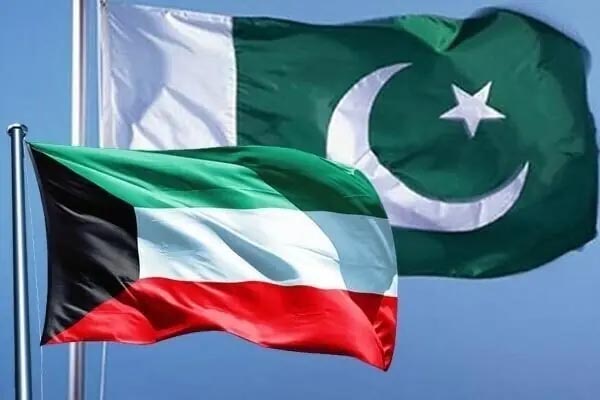
Pakistan and Kuwait have brotherly,close and very friendly relations and share common Islamic values. Both countries are active members of Organization of Islamic Cooperation( OIC), United Nations Organizations ( UNO) . Both countries are cooperating for regional durable peace, harmony promoting tolerance and curbing terrorism and extremism.
Kuwait is an oil rich Middle East country and is neighbour of Saudi Arabia, Iraq and Iran. Kuwait’s rich oil reserves and strategic location make it one of the world’s richest country in terms of per capita. It got independence in 1961 from Britian. The country has witnessed external intervention till 1991. But the major political reform took place in 2003 when Emir issued a decree of separating the post of Prime Minister from the Crown Prince. In 2005, Kuwaiti women won their right to vote and became part of parliament.
Kuwait is a member of Multifunctional Trade Agreement include the Great Arab Free Trade Area ( GAFTA). There are seventeen members of GAFTA from the Arab world. Kuwait is also a member of Gulf Cooperation Council ( GCC) and the members include Kuwait, Bahrain, Qatar, Saudi Arabia, Oman, and the UAE.The GCC forum allows free trade among the member countries adue to geographic proximity. GCC and the European Free Trade Agreement (EFTA) has also an active status.
State of Kuwait is a country in west Asia. With a coastal line of approximately five hundred km, it is situated at the northern edge of the Arabian Peninsula, bordering Iraq to the north and Saudi Arabia to the south. Kuwait is geographically closet Gulf country to mainland Iran( separated by a small Iraqi coastline). The country is a small city state, most of its population resides in the urban agglomeration of Kuwait city, the capital and the largest city. Kuwait has a population of 4.82 million, of which 1.53 million are Kuwaiti citizens while the remaining 3.29 million are foreign nationals from over hundred countries. Kuwait has the world’s seventh largest number of foreign nationals as a percentage of the population, where its citizens make up of fewer than 30% of the overall population.
From 1956 to 1982, Kuwait underwent large scale modernization, largely based on income from oil production. In the 1980s, Kuwait experienced a period of geographical instability and an economic crisis following stock market crash. In 1990, the state of Kuwait was invaded by Iraq, had a puppet regime installed, and was subsequently forcefully and illegally annexed by Baathist Iraq under the leadership of Saddam Hussein. The Iraqi occupation to Kuwait ended on 26 February 1991, after a US led international coalition expelled Iraqi forces from the country during the Gulf War.
Kuwait is a high income country, backed by the world’s sixth largest oil reserves. Like most other Arab states of the Persian Gulf, it is an Emirate, The Emir is the head of the state and the ruling family is Al Sabah. Its official state religion is Islam, specifically the Maliki School of Sunni thought. It is a founding member of Gulf Cooperation Council ( GCC) and is also member of the United Nations, OPEC, the Arab League and the Organization of Islamic Cooperation (OIC). As of May 2026 Kuwait has the world’s most valuable currency, with one Kuwaiti Dinar worth US$ 3.25
Despite its relatively small territory, Kuwait has proven crude oil reserves of 104 billion barrels, estimated to be 10% of the world’s reserves. Kuwait also has substantial natural gas reserves. All natural resources in the country are state property.
As part of Kuwait Vision 2035, Kuwait aims to position as a global hub for the petrochemical industry. Al Zour Refinery is the largest refinery in the Middle East. It is Kuwait’s largest environmentally friendly oil refinery. Al Zour Refinery is a Kuwait China cooperation project under the Belt and Road Initiative ( BRI). Al Zour LNG Terminal is the Middle East’s largest import terminal for Liquefied Natural Gas ( LNG). It is the world’s largest capacity LNG storage and regasification green field project. The project has attracted an investment of US$ 3 billion. On January 20,2025, the Kuwait Oil Company announced a major hydrocarbon discovery at the Al Jlaiaa offshore field, which it sees as a significant milestone in the nation’s energy sector
Economy of Kuwait
Population : 4.85 million
GDP Nominal US$ billion : 160.23
GDP PPP US$ billion : 249.25
GDP per Capita US$ Nominal : 32,289
GDP per Capita US$ PPP : 51,200
GDP b Sector
| Sector | % GDP |
| Agriculture | 0.4 |
| Industry | 67 |
| Services | 43.6 |
Exports : US$ 95.46 billion
Imports : US$ 63.43 billion
Pakistan Kuwait Trade Statistics
| Year | Export US$ million | Import US$ million | Total trade US$ million | Balance of Trade US$ million | Pak Export US$ billion | % in Pak export | Pak Import US$ bn | % in Pak import |
| 2020 | 117.5 | 1,123.5 | 1,236 | (1,011) | 22.24 | 0.5 | 45.34 | 2.5 |
| 2021 | 122.5 | 2,278.5 | 2,401.0 | (2,156) | 28.88 | 0.4 | 73.10 | 3.1 |
| 2022 | 131 | 3,082 | 3,213 | (2,951) | 31.17 | 0.4 | 71.10 | 4.3 |
| 2023 | 128.4 | 1,932 | 2,061 | (1,804.2) | 28.95 | 0.4 | 50.36 | 3.8 |
| 2024 | 124.9 | 1,887.6 | 2,012.5 | (1,762.4) | 32.46 | 0.4 | 56.52 | 3.3 |
Historically, Pakistan has remained a major importer of purchasing petroleum and oil products from Kuwait. Only oil purchasing covers 80% of Pakistan’s total import from Kuwait.
Recent war and violence in the region has raised concern among the countries and there is a need to get signed a defense agreement between Pakistan and Kuwait similar like Pakistan and Saudi Arabia Defense Agreement. This will pave the way for durable peace and further cooperation between Pakistan and Kuwait in economic sector as well.