


















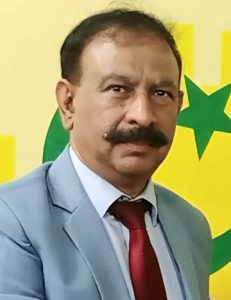
By Brig Syed Karrar Hussain, Retired
At a time when the Muslim world is witnessing profound social, intellectual and moral challenges, there is perhaps no greater need than to reconnect the younger generation with the life, character and teachings of the Holy Prophet Muhammad (Peace Be Upon Him). The Seerah of the Prophet is not merely a record of history; it is a timeless guide to character-building, leadership, resilience, compassion and success in both worlds.
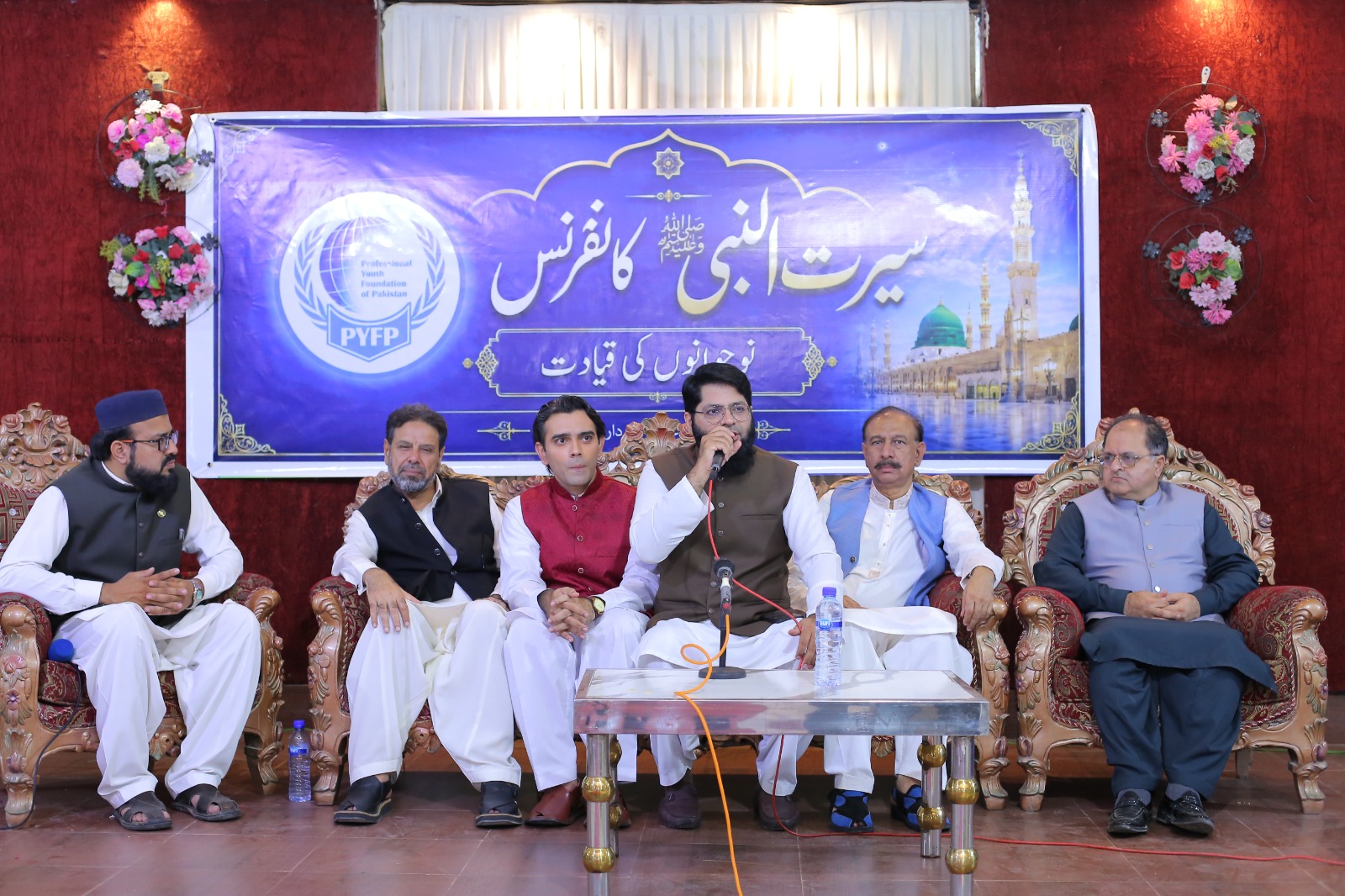
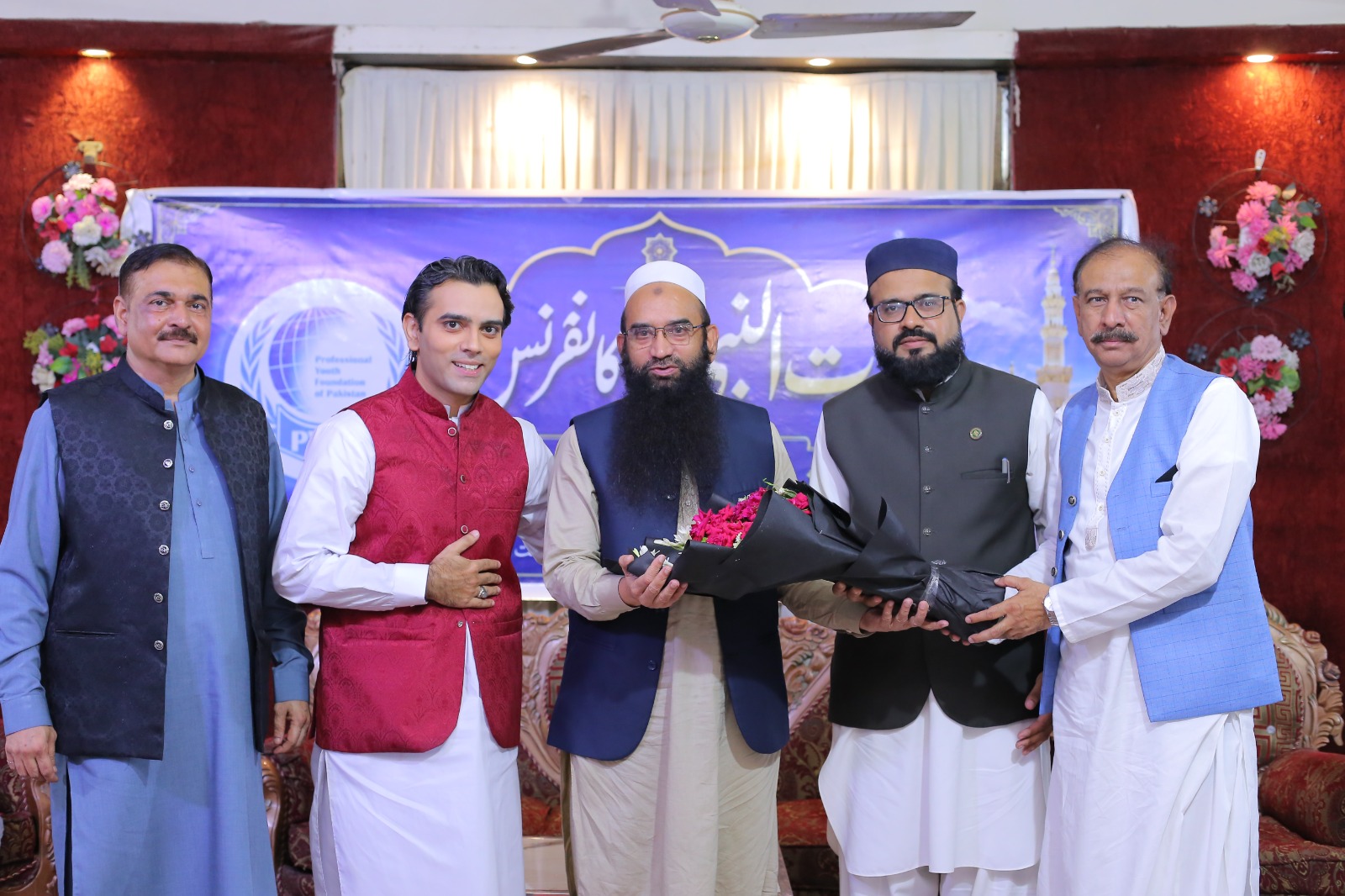
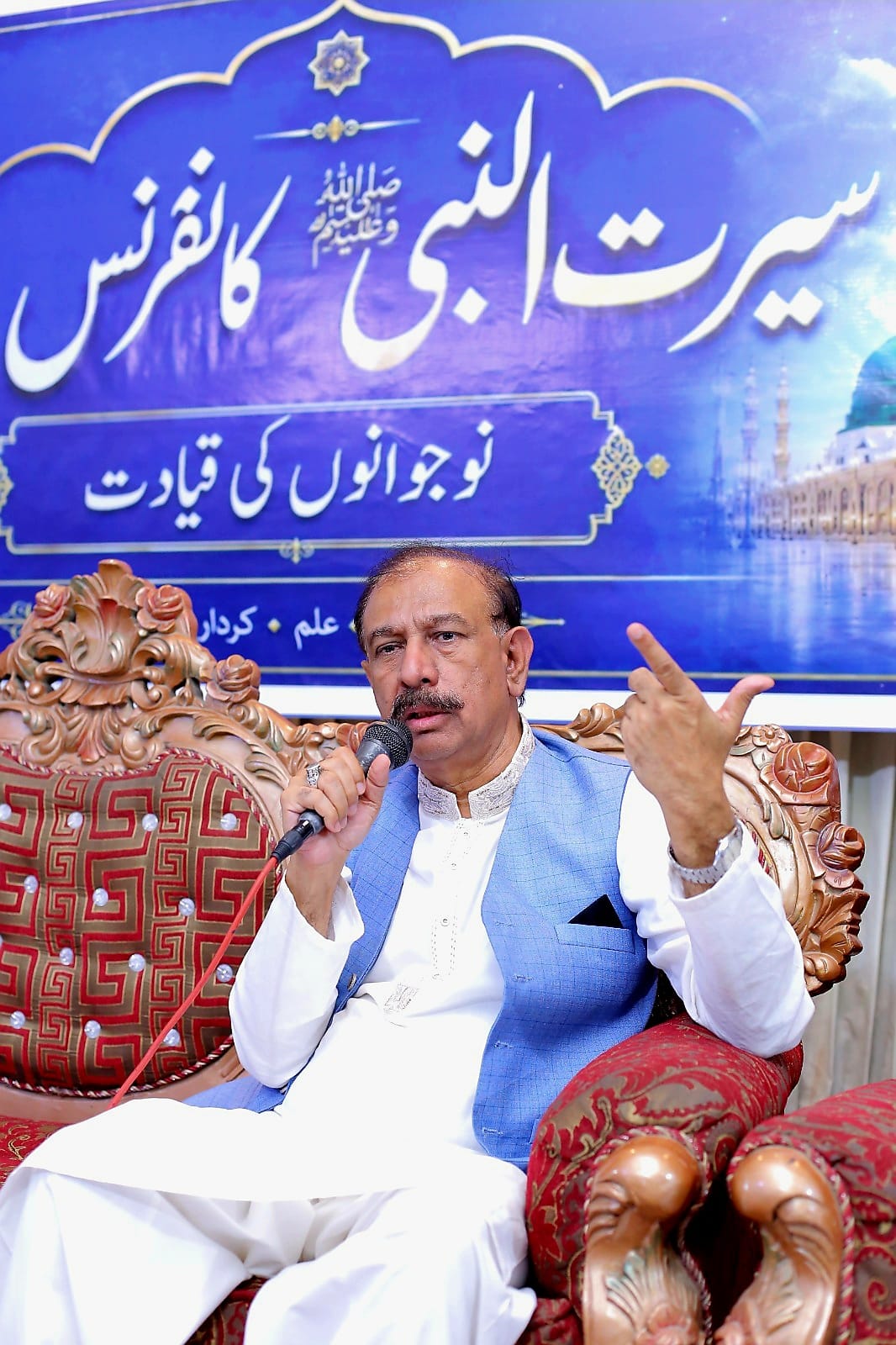
It was in this spirit that a remarkable Seerat-un-Nabi (PBUH) gathering was organised in Karachi by the Professional Youth Foundation of Pakistan (PYFP) under the theme, “Seerat-un-Nabi (PBUH) and Guiding Principles for the Success of the Youth of the Muslim Ummah.” The event brought together religious scholars, intellectuals, social workers, students, Naat reciters and members of civil society, creating an atmosphere of spiritual reflection and intellectual engagement.
The programme was distinguished by the sincere efforts of the entire PYFP team, particularly Engineer Muhammad Umer Khan, whose dedication and commitment to youth development have consistently remained visible in the Foundation’s activities. His leadership ensured that the event was not simply a ceremonial gathering but a meaningful effort to connect the teachings of the Seerah with the contemporary challenges confronting young Muslims.
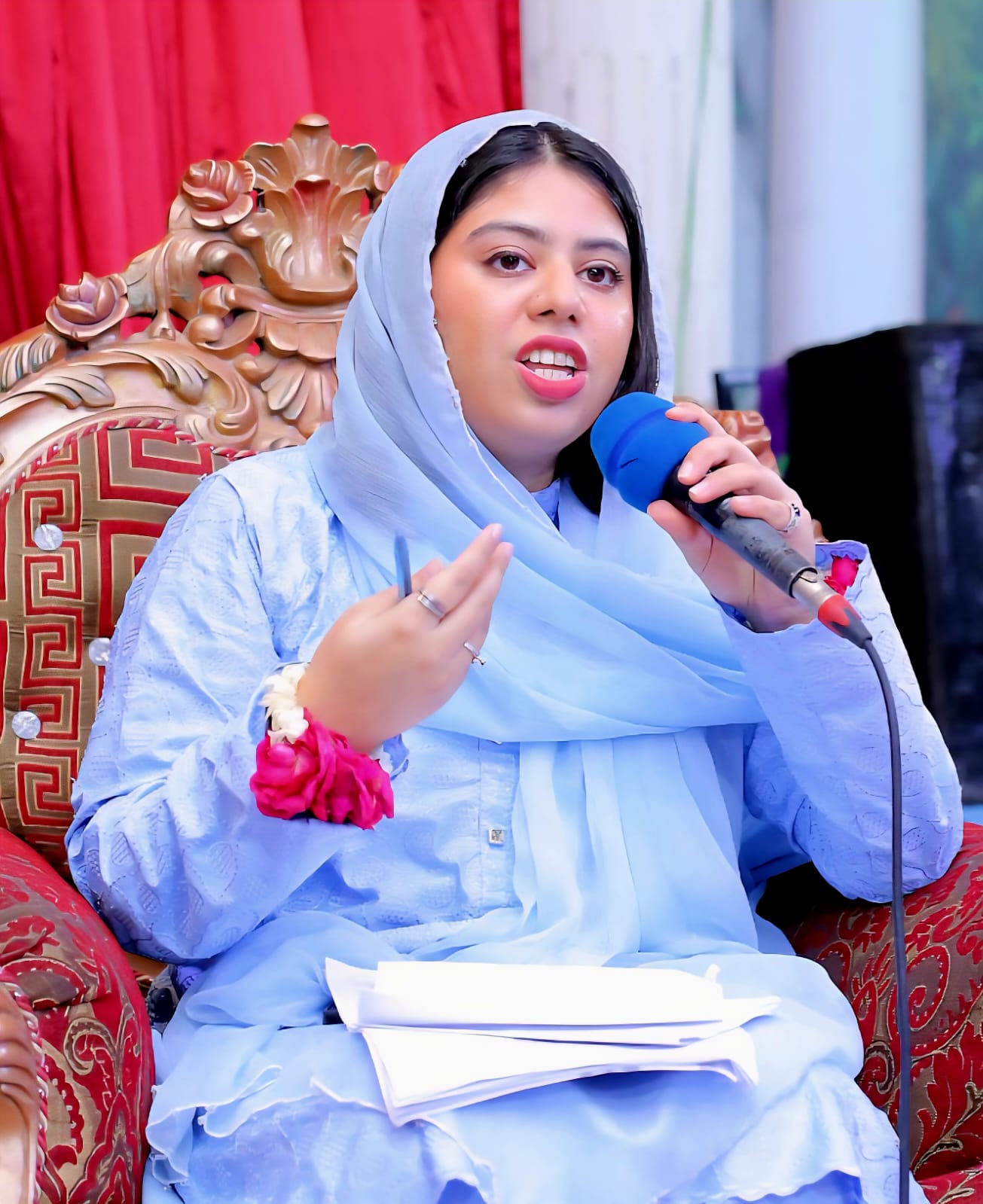
The proceedings were conducted with great confidence and grace by Hadiqa Siddiqui, who performed her responsibilities as stage secretary in an impressive manner. Her presentation added dignity and flow to the programme and kept the audience engaged throughout the evening.
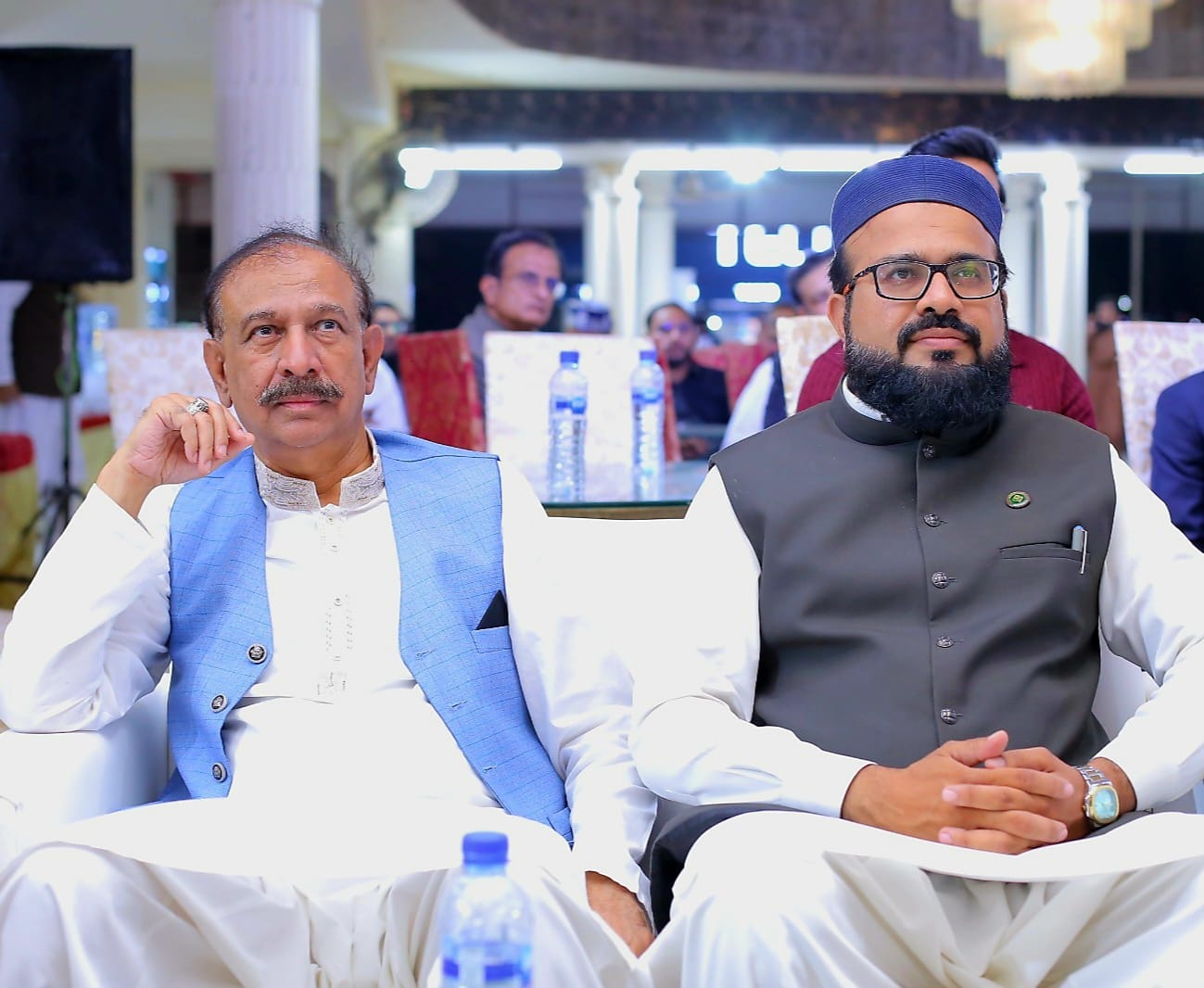
The event featured a number of distinguished personalities. Among those who participated were Muhammad Shah Rukh, Brigadier Syed Karrar Hussain Retired,
Feroz Qadri, Naib Ameer District South, Jamaat Ahle Sunnat Pakistan Karachi, Dr Sabir Abu Maryam of the Palestine Foundation, Professor Dr Muhammad Tahir, translator of the Holy Qur’an, Dr Saleem Haider, Captain Muhammad Nasir Khan, and renowned banker Farrukh Kazmi. Students and young representatives also participated, including Kausain Abbas of Sir Syed University, reflecting the importance attached to giving young people a voice in discussions concerning their own future.
The spiritual dimension of the gathering was further enhanced by the recitation of the Holy Qur’an by Arsalan Sahib, while Bilal Haider offered a special supplication. The Naat recitations created an atmosphere of love and devotion for the Holy Prophet (PBUH), reminding the audience that the essence of Seerat is not only knowledge but also love, obedience and the practical adoption of prophetic values.
One of the most significant addresses of the evening was delivered by Engineer Muhammad Umer Khan. His speech was particularly relevant because he did not confine the Seerah to historical events. Instead, he linked the life of the Holy Prophet (PBUH) with the needs, aspirations and challenges of today’s youth.
This is perhaps the most important approach required in our time. Young Muslims do not merely need to be told about the Prophet’s life; they need to understand how his principles can guide them in the twenty-first century.
The Prophet Muhammad (PBUH) transformed a society through character, knowledge, justice, discipline, consultation, compassion and an extraordinary commitment to truth. His life teaches young people that success is not measured merely by wealth, position or fame. True success is the combination of moral integrity, purposeful living, service to humanity and accountability before Allah Almighty.
The Prophet (PBUH) placed extraordinary emphasis on knowledge and character. For today’s youth, this means that academic excellence must go hand in hand with ethical excellence. A young person may possess degrees, technological skills and professional competence, but without honesty, humility, responsibility and compassion, such achievements remain incomplete.
The Seerah also provides a powerful lesson in perseverance. The early Muslims faced rejection, persecution, economic hardship and immense personal sacrifices. Yet the Prophet (PBUH) never surrendered to despair. His life demonstrates that difficult circumstances do not determine the destiny of individuals or nations; determination, faith, patience and purposeful action do.
This message is particularly important for the youth of the Muslim world, many of whom face unemployment, uncertainty, social pressures, misinformation and an increasingly materialistic culture. Instead of becoming victims of frustration, they must learn to become agents of positive change.
Another essential lesson from the Prophetic model is leadership. The Prophet Muhammad (PBUH) demonstrated that leadership is not domination; it is service. He listened to people, respected their dignity, consulted his companions, cared for the vulnerable and established justice. Modern Muslim societies desperately need young leaders who understand that authority is a responsibility rather than a privilege.
The Seerah also teaches us the importance of unity. The Muslim Ummah may differ in language, culture, geography and schools of thought, but the Qur’an and the life of the Holy Prophet provide common ground. Young people should therefore become ambassadors of tolerance, dialogue and brotherhood rather than allowing sectarian, ethnic or political divisions to consume their energies.
The participation of students in the Karachi gathering was particularly encouraging. Universities and educational institutions are not merely places where young people acquire professional qualifications; they should also be centres of character, creativity, civic responsibility and intellectual development. If our youth are connected with the moral and intellectual principles of the Seerah, they can become a powerful force for national development and positive change.
The distinguished guests and participants added further depth to the programme. Among the guests of honour were Mr Faisal Nadeem, President Pakistan Markazi Muslim League Sindh, Syed Ali Ameer Rizvi, Syed Sault Haider Rizvi, Khan Nadeem Shehzad, Nida Nadeem and Jahangir Aziz. Their presence demonstrated the broad social interest in initiatives aimed at engaging and inspiring the younger generation.
I also had the opportunity to address the gathering and speak about the enduring relevance of the Seerah of the Holy Prophet (PBUH). I emphasised that the Prophet’s life is not simply a subject of reverence and remembrance; it is a practical model of faith, sacrifice, courage, compassion and service. In particular, I highlighted the extraordinary devotion and sacrifices of Hazrat Khadijah (RA) and Hazrat Ali (AS) in support of the Messenger of Allah (PBUH). Hazrat Khadijah (RA) stood beside the Prophet at the most difficult and uncertain beginning of his mission. Her unwavering faith, emotional support, wisdom and sacrifices gave strength to the Prophet when he faced rejection and persecution. Hazrat Ali (AS), from his earliest years, demonstrated exceptional loyalty and courage in the service of the Prophet. His life provides the youth with a powerful example of devotion, bravery, knowledge and readiness to sacrifice for truth and principle.
I stressed that these examples are particularly meaningful for today’s young generation. Hazrat Khadijah (RA) teaches us that genuine support for a great mission requires faith, sacrifice and steadfastness, while Hazrat Ali (AS) demonstrates that youth itself can be a period of extraordinary courage, learning and service. Together, their lives remind us that the strength of a community is built not merely through resources, but through people who are prepared to stand firmly with truth when circumstances are difficult.
The event ultimately conveyed a simple but profound message: if the Muslim youth wish to achieve genuine success, they must rediscover the principles that shaped the greatest generation of believers under the guidance of the Holy Prophet Muhammad (PBUH).
The answer to many of our contemporary problems does not lie merely in importing new ideas or technologies. We certainly need science, innovation, education and modern skills, but these must be guided by values. Technology can provide power; only character can determine how that power is used.
The youth are the future of Pakistan and of the wider Muslim Ummah. Their minds are the laboratories in which tomorrow’s societies are being designed. If their education is combined with faith, their ambition with ethics, their knowledge with humility and their leadership with service, they can transform not only their own lives but the destiny of their communities.
The Karachi Seerat gathering therefore deserves to be viewed as more than a religious ceremony. It was a timely reminder that the life of the Holy Prophet Muhammad (PBUH) remains an extraordinary blueprint for human development and social progress.
The challenge before organisations such as the Professional Youth Foundation of Pakistan is to carry this message beyond the seminar hall—to universities, schools, professional institutions and communities across the country.
For the Muslim youth, the road to success is not without challenges. But the Seerah offers a compass: faith without despair, knowledge without arrogance, ambition without greed, leadership without ego, and success with responsibility.
If our young generation embraces these principles, the future of the Muslim Ummah can indeed be brighter, more united and more purposeful.
And that, ultimately, is the enduring message of the Seerah: to live with faith, strive with courage, serve with compassion, lead with justice and return to Allah with a life of purpose.