
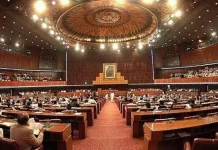














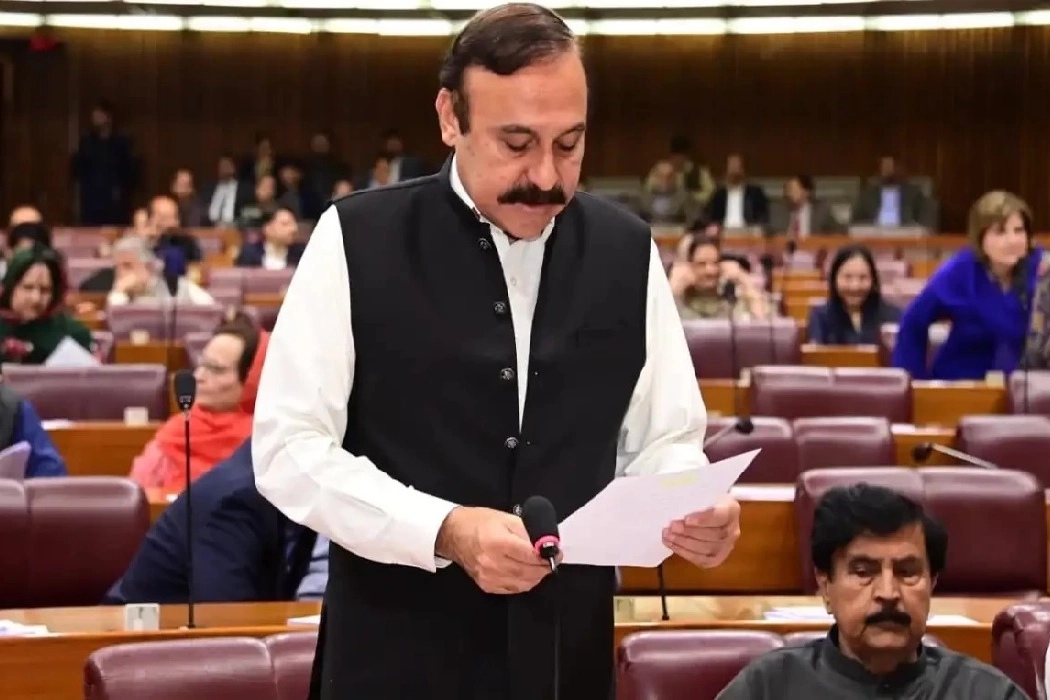
ISLAMABAD:The government on Thursday told the National Assembly that the Benazir Income Support Programme (BISP) remained Pakistan’s flagship poverty alleviation initiative, benefiting millions of families, while outlining measures to improve targeting and expand support for women through skills development.
Responding to supplementary questions during the question hour, Minister for Parliamentary Affairs, Dr. Tariq Fazal Chaudhry said around 10 million families were currently receiving financial assistance under the BISP’s Kafaalat programme, while a total of 38 million individuals were registered in the system.
He said the government had allocated Rs 716 billion for the programme, which he described as globally recognised, noting that international organisations, including the International Monetary Fund, viewed it as a successful case study.
Highlighting women-focused initiatives, the minister referred to the recently launched “Benazir Hunarmand Programme”, aimed at providing vocational training to women across the country. He said over 30,000 women had registered for the initiative, while more than 5,000 were already undergoing training with the support of provincial governments.
Dr. Chaudhry said the programme was being implemented in collaboration with provinces due to initial funding constraints, adding that once full funding was secured and institutional arrangements completed, the federal government would directly oversee training.
Explaining the selection process, he said beneficiaries were identified through a “proxy means test” (PMT), based on a detailed questionnaire assessing household assets and living conditions. Families scoring below a defined threshold were deemed eligible, while provisions existed for vulnerable groups, including persons with disabilities and transgender individuals.
He added that the system underwent re-certification every three years to ensure accuracy, with 40 million beneficiaries reassessed in the latest cycle, resulting in the inclusion of new eligible households and exclusion of those no longer meeting the criteria.
The minister also highlighted reforms in data collection, saying the government had moved from a static survey model to a “dynamic registry”, allowing continuous registration. Over 647 tehsil-level BISP offices had been established nationwide, while mobile registration vans were being deployed to reach remote areas, particularly in Balochistan and Khyber Pakhtunkhwa.
Earlier, lawmakers acknowledged the programme’s role in supporting low-income households but raised questions over implementation, regional equity and accessibility.
Member National Assembly (MNA), Syeda Amna Batool commended the government’s efforts to support vulnerable communities despite economic challenges, describing BISP as an example of targeted governance with tangible impact.
However, other members pointed to gaps in implementation. MNA Aliya Kamran sought details about support for women in underdeveloped regions such as Balochistan, asking how provincial governments were contributing to vocational training initiatives.
Dr Tariq Fazal Chaudhry responded that there was no province-specific quota, and that all eligible families were included based on socio-economic criteria, with Balochistan also part of the programme.
MNA Muhammad Ilyas Chaudhry raised concerns over disparities in fund distribution at the tehsil level, citing inconsistencies in the number of beneficiaries despite similar population sizes. He also questioned the methodology used to assess poverty.
Meanwhile, MNA Naeema Kishwer Khan highlighted challenges faced by people in remote areas in accessing registration centres, as well as potential gaps in reflecting recent economic shocks, including inflation and floods, in eligibility criteria.
In response, the minister reiterated that mobile registration units were addressing access issues, while periodic re-certification ensured that newly vulnerable households were incorporated into the programme.