
















Dr.Syed Mehboob
Economic and Political Analyst
http//:www.thenewslark.com
email:drmehboob.thenewslark@gmail.com
He was a man of commitment and determination, a man with immense inner beauty and spiritual power. A firm believer in Almighty Allah. A true follower of Hazrat Syedena Imam Hussian ( May Allah shower His countless blessings on his grave). He was very impressed by Allama Iqbal and called Iqbal his “Murshid”. Iqbal explained Tauheed (Monotheism) in his verse:
Khudi ka sir e Nihan La Ilaha Illalh
Khudi hai Tegh e Fisan Lailah a Illalah
( The secret of self is hid, in words,” there is no God except Allah alone”. The self is just a dull-edged sword, and it is sharpened by La Ilaha Illalah.”
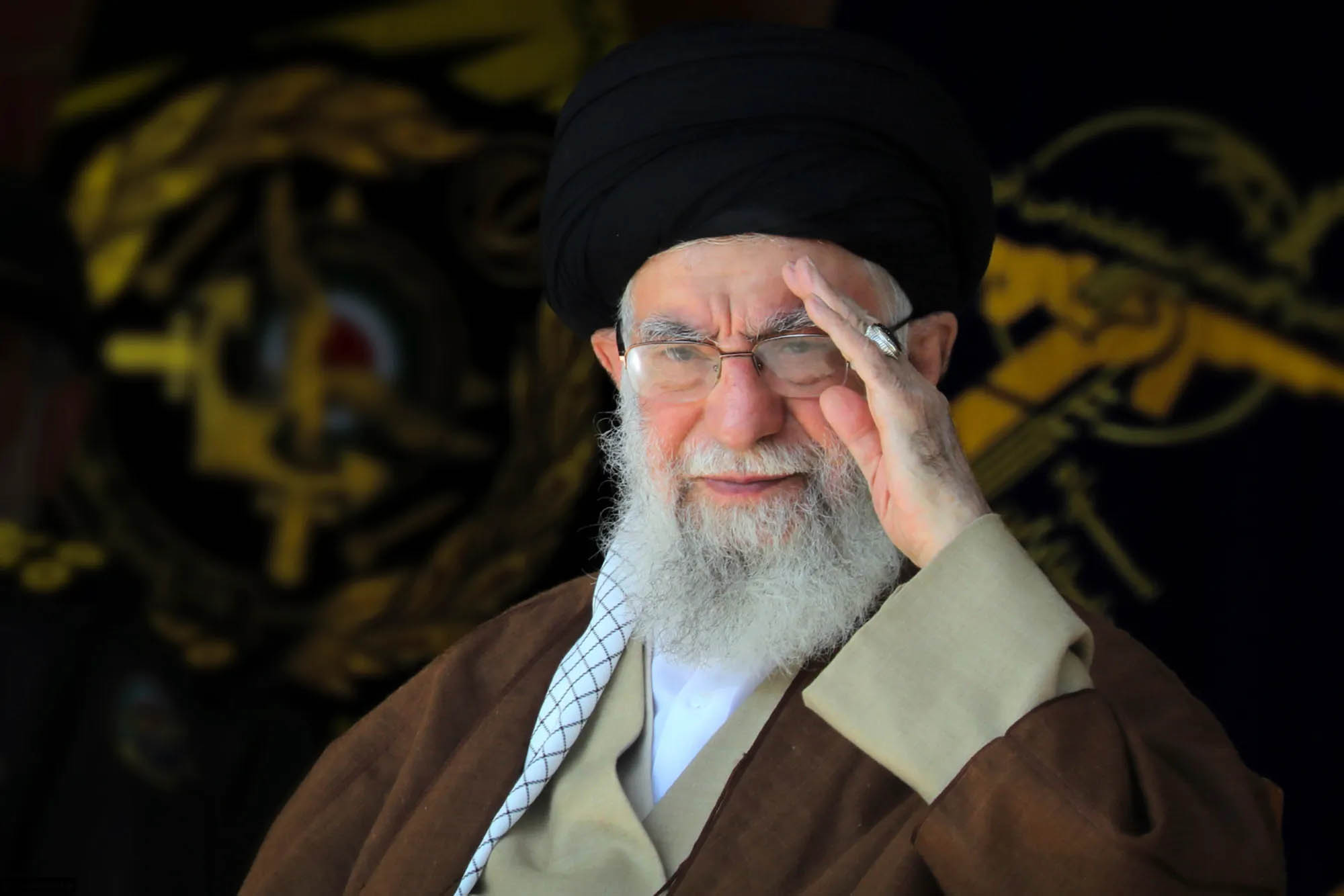
He was a complete picture of Tauheed, monotheism, who refused to bow down his head before worldly gods, Yazid’s and Pharaohs of modern times. In his veins, pure Hussaini blood was running. Of course, he was Syed Ayat Ullah Ali Hussaini Khamenei. He was assassinated by Israeli air attacks and embraced Shahada( martyrdom ) on 28th February 2026. Although he is no more with us but will remain in our hearts forever.
He was born on 19th April 1939 and died on 28th February 2026. He was the second supreme leader of Iran from 1989 until his assassination. He previously served as the Iranian president from 1981 to 1989. His tenure as a supreme leader spanning thirty-six years and six months. Four Syedswere famous in their anti-imperialist views 1. Syed Abu ul Ala Maududi 2. Syed Qytub Shaheed 3. Syed Ali Gilani and Syed Ayatullah Ali Khamenei. They belonged to separate areas, spoke separate languages, but their ideology was based on the Quran, and all of them rejected a sectarian version of religious interpretation, and like Allama Iqbal, they preached, practiced, and promoted the unity among the Muslim Ummah.
Ali Khamenei was born is a very respectable Syed Khamenei family and studied at a Hawza in his home town of Mashhad, later settling in Qom in 1958, where he attended the classes of Ruhollah Khomeini. Khamenei became involved in opposition to Mohammad Reza Pahlavi, the Shah of Iran, and was arrested six times before being exiled for three years by the Shah’s regime. Khamenei was a mainstream figure in the Iranian Islamic Revolution, and upon its success, held many posts in the newly established Islamic Republic of Iran. In the aftermath of the revolution, he was the target of an attempted assassination that paralyzed his right arm. There had been continued assassination threats against Khamenei by Israel.
As supreme leader, Khamenei supported Iran’s nuclear programme for civilian use while issuing a fatwa forbidding the production of weapons of mass destruction. Khamenei favored economic privatization of state-owned industries and, with oil and gas reserves, transformed Iran into an energy superpower. He was a staunch critic of Israel and of Zionism. Khamenei supported the Palestinians in the Israeli-Palestinian conflict.
.As an adolescent, he read widely in literature, poetry, and novels, became familiar with major works of Persian poetry, and began composing poetry himself at a young age. Khamenei characterized himself as having a strong memory and aptitude for literary criticism, stating that he could recall texts read in adolescence and that his critiques of poetry were often affirmed by poets and audiences. He recounted that during the Pahlavi era,ribbed his childhood as marked by poverty, noting that his family lived in a poor neighborhood of Mashhad, that his mother made clothes from his father’s old garments, and that they at times lacked sufficient food, relying on small amounts of raisins or milk purchased with minor sums given by relatives.
The Assembly of Experts reconvened on 6 August 1989 to reconfirm Khamenei with 60 votes out of 64 present.
Khamenei was supportive of scientific progress in Iran. He was among the first Islamic scholars to allow stem cell research and therapeutic cloning.In 2004, Khamenei said that the country’s progress is dependent on investment in the field of science and technology. He also said that attaching a high status to scholars and scientists in society would help talents to flourish and science and technology to become domesticated, thus ensuring the country’s progress and development.In recent years, the growth in Iran’s scientific output is reported to be the fastest in the world. Khamenei has often encouraged young scientists and top academic talents to push the boundaries of science and technology and has promoted policies aimed at raising Iran’s scientific standing and strengthening cooperation between universities, industry, and Muslim Nations.
Khamenei has also publicly acknowledged and praised Iranian women’s roles in science, research, and intellectual life. He has said that Iranian women’s achievements in intellectual and research centers are unprecedented in the country’s history and that women are among the best globally in fields such as science and thought.
Khamenei developed a reputation as an avant-garde scholar, reflecting interests and personal habits that diverged from conventional expectations within the religious establishment. In addition to his appreciation for music and modern Persian poetry. According to accounts from relatives, he maintained a sustained interest in arts and culture throughout his life. He read Iranian and foreign novels as well as historical works, and watched international films. His intellectual engagement was described by some observers as contributing to a reputation for being cultured and well-read, including among certain political opponents.
In 1988, while serving as President of Iran, Khamenei delivered a speech titled The Splendor of the Persian Language and the Need to Protect it. In this address, he described language as a fundamental and defining element of cultural identity across nations and characterized Persian as “the language of true revolutionary Islam”.
Khamenei was fluent in Arabic in addition to his native languages, Persian and Azerbaijani. He translated several books into Persian from Arabic, including the works of the Egyptian political theorist Syed Qutb Shaheed.
The published works of Ali Khamenei include authored monographs, translations, and a large number of compiled volumes of speeches, messages, and lectures issued by institutions affiliated with his office. A major institutional corpus is published by the Office for the Preservation and Publication of the Works of Ayatollah Khamenei, through Islamic Revolution Publications, and distributed in digital form by the Computer Research Centre of Islamic Sciences (Noorsoft). According to a Noorsoft product entry for the compilation Hadith-e Velayat (A Collection of the Statements and Messages of the Supreme Leader), this series alone comprises 121 book titles in 208 volumes, covering materials from 1979 to 2020. Some of his works include:
- Four Main Books of Rijal
- An outline of Islamic Thoughts in the Quran
- Honest Leader
- Discourse on Patience(translation by Sayyid Hussein Alamdar, available online)
- Iqbal — Manifestation of the Islamic Spirit, Two Contemporary Muslim Views
- Iqbal, the poet and philosopher of Islamic Resurgence, is one of the “Two Contemporary Muslim Views”, the other one is Ali Shariati’s.
- Replies to Inquiries about the Practical Laws of Islam
- Lessons from the Nahjul Balaghah
- Human Rights in Islam
- The Charter of Freedom
- Essence of Tawhid: Denial of Servitude but to
- God