













Mukhtar Ahmed Butt
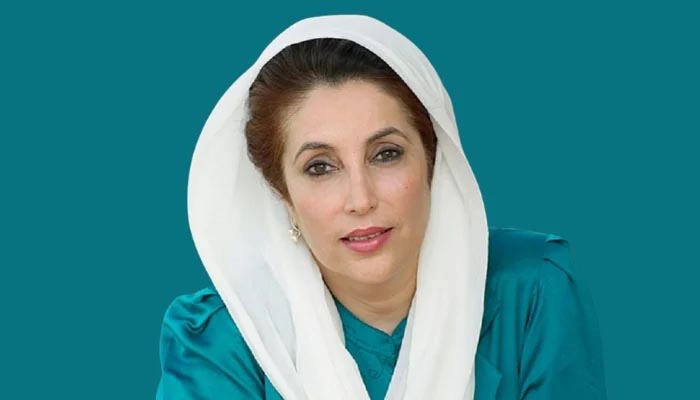
On 27 December 2007, Pakistan lost more than a former prime minister. Benazir Bhutto was assassinated while returning from a public meeting in Rawalpindi, a moment that shocked the nation and reverberated far beyond its borders. Her death was not merely the silencing of a political leader; it was a brutal interruption of Pakistan’s fragile democratic journey.
Benazir Bhutto was a stateswoman of rare global stature. Educated at Harvard and Oxford, she became the first woman to lead a Muslim-majority country when she assumed office as Prime Minister in 1988. At a time when politics in Pakistan was overwhelmingly male-dominated, her rise symbolized hope, courage, and defiance against entrenched authoritarianism. She served twice as Prime Minister, navigating turbulent civil-military relations, economic pressures, and persistent political instability.
Her political legacy, however, cannot be understood without reference to her father, Zulfikar Ali Bhutto. Z.A. Bhutto was a towering figure in Pakistan’s history—charismatic, populist, and controversial—whose execution in 1979 left an indelible mark on the nation’s psyche. Benazir inherited not only his political party, the Pakistan Peoples Party (PPP), but also the burden of unfinished struggles: democracy versus dictatorship, civilian supremacy versus military dominance, and people’s power versus elite control.
Despite her international acclaim, Benazir Bhutto’s tenure in office was far from smooth. Her governments were dismissed twice, amid allegations of corruption and misgovernance. Critics argue that she failed to reform institutions deeply compromised by patronage politics. Supporters counter that she was never allowed to govern freely, constrained by presidential powers, intelligence interference, and a hostile establishment. The truth likely lies somewhere in between.
What remains unquestionable is her personal courage. After years of exile, Benazir returned to Pakistan in 2007 despite clear threats to her life. The devastating attack on her convoy in Karachi in October that year, which killed more than 130 people, did not deter her. She continued to campaign, calling for democracy, reconciliation, and civilian rule—until the assassin’s bullet and blast ended her life.
Her assassination plunged Pakistan into grief and chaos. Riots erupted, the political process stalled, and the country once again confronted its vulnerability to extremism and violence. Yet, even in death, Benazir Bhutto reshaped the political landscape. The 2008 elections brought the PPP back to power, carried forward by a powerful slogan: “Benazir zinda hai”—Benazir lives on.
Today, the Pakistan Peoples Party continues to win elections largely in the name of the Bhutto legacy—first Z.A. Bhutto, then Benazir Bhutto. This raises uncomfortable questions about dynastic politics. Has the PPP become more a custodian of a family name than a vehicle for ideological transformation? While the Bhutto name still inspires loyalty, particularly among the poor and marginalized, reliance on legacy alone cannot substitute for governance, reform, and vision.
Benazir Bhutto believed in democracy, pluralism, and civilian supremacy. Honoring her memory requires more than electoral slogans or anniversary speeches. It demands a recommitment to the principles she stood for: rule of law, freedom of expression, women’s empowerment, and constitutional democracy. It also requires political parties—including her own—to move beyond personality-driven politics toward strong institutions and accountable leadership.
Eighteen years after her assassination, Benazir Bhutto remains a symbol of both promise and tragedy. Her life reflects Pakistan’s enduring struggle to reconcile democratic aspirations with harsh political realities. Her death reminds us of the cost paid by those who challenge extremism and authoritarianism.
History will continue to debate her successes and failures. But one truth endures: Benazir Bhutto did not die fleeing the people—she was killed while returning to them. In that final journey lies the essence of her political life and her lasting place in Pakistan’s history.
The writer is freelance journalist and defence analyst