

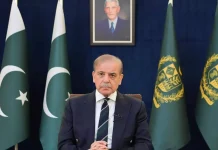



















ISLAMABAD: Prime Minister Shehbaz Sharif said on Thursday that the perception of India’s superiority in conventional warfare was proven wrong by Pakistan during the recent war between the two nuclear powers in South Asia. The prime minister made the remarks while addressing a ceremony for distribution of compensation cheques among the families of those martyred in recent Marka-e-Haq – the recent Pakistan-India war — in Muzaffarabad. A war broke out between nuclear-armed Pakistan and India, and it could have taken a dangerous turn, he added. “The consequences of the war could have been dire,” said the premier. Calling the Pahalgam incident “regrettable”, the premier reiterated that New Delhi made baseless allegations against Islamabad. PM Shehbaz said that the government convinced the international community that India’s allegations were based on lies, and the Pahalgam incident was part of India’s conspiracy. He maintained that Pakistan proposed an impartial international investigation into the Pahalgam incident, but India ignored the offer and attacked Pakistan. Shehbaz added that Pakistan’s armed forces gave a befitting response to Indian aggression and shot down six IAF fighter jets instead of targeting the civilian population. “A measured response was given to India while exercising the right to self-defence,” the premier added. “Prime Minister Narendra Modi-led Indian government would now think a hundred times before attacking Pakistan again.” It is pertinent to mention here that Pakistan’s armed forces launched a large-scale retaliatory military action, named ‘Operation Bunyan-um-Marsoos’, and targeted several Indian military installations across multiple regions in response.to the unprovoked strikes on the night between May 6 and 7. The strikes, described by officials as “precise and proportionate”, were carried out in response to India’s continued aggression across the Line of Control (LoC) and within Pakistan’s territory, which New Delhi claimed were aimed at “terrorist targets”.Pakistan downed six fighter jets, including three Rafale, and dozens of drones. After around 86 hours, the war between the two nuclear-armed nations ended on May 10 with a ceasefire agreement brokered by the United States.