






















By Brig Syed Karrar Hussain Shah, Retd
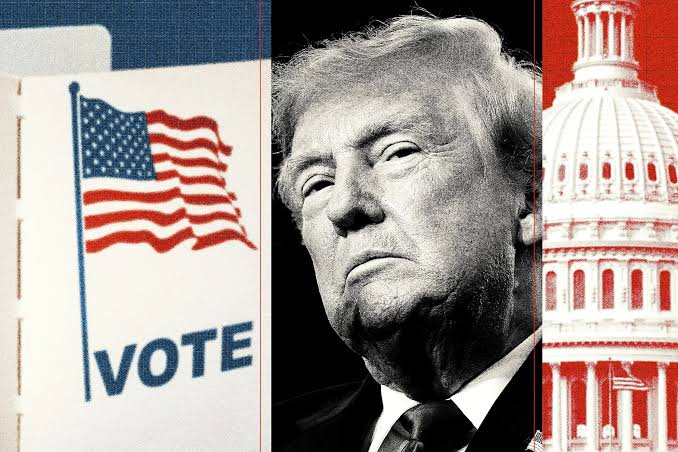
The 2026 United States Midterm Elections have delivered a powerful political message to Washington and the world. The Democratic Party’s sweeping victories in both the House of Representatives and the Senate, along with significant gains in traditionally Republican states, represent a serious setback for President Donald Trump and his Republican Party. These elections were not merely a contest between two political parties; they were a referendum on Trump’s leadership, foreign policy, economic priorities and governing style.
The results demonstrate that even the most powerful political leadership cannot remain immune to public dissatisfaction when its policies begin to affect the everyday lives, economic security and moral values of ordinary citizens.
In my assessment, several major factors contributed to this Republican defeat.
1. The Iran War: A Costly Foreign Policy Gamble
One of the most significant factors behind the Republican setback was the war against Iran. President Trump’s decision to pursue military confrontation in the Middle East has created serious economic, political and strategic consequences.
The conflict has threatened regional stability, disrupted international energy markets and contributed to higher oil and gas prices. The consequences have extended far beyond the Middle East, affecting economies across the world, including the United States.
American families have increasingly felt the burden of rising fuel prices, transportation costs and household expenses. Many voters have questioned why their government is investing enormous financial resources in a foreign military conflict while millions of Americans are struggling with the rising cost of living.
A fundamental question emerged among voters: Should America continue spending billions of dollars on overseas military operations while its own citizens face economic uncertainty?
The Iran conflict became an important electoral issue, particularly because voters associated it with rising energy prices and the administration’s foreign policy priorities.
2. Inflation and the Cost-of-Living Crisis
The economy remains one of the most important determinants of electoral success in the United States.
Although the American economy remains among the world’s strongest, ordinary citizens judge economic performance through their household budgets rather than official economic statistics.
Higher grocery bills, expensive housing, healthcare costs, electricity charges and transportation expenses have created considerable frustration.
Inflation has remained a major political challenge for the Trump administration. The additional pressure generated by the Iran conflict and rising energy prices has intensified public dissatisfaction.
The American electorate expected President Trump to prioritise economic recovery, employment opportunities and affordability. However, many voters increasingly felt that the administration was concentrating more on international confrontation and political controversies than on their daily problems.
3. Unpredictable Tariff and Trade Policies
Another major source of dissatisfaction has been Trump’s aggressive and frequently changing trade policy.
His administration introduced higher tariffs on various foreign products and adopted different tariff arrangements with trading partners. Although the stated objective was to protect American industries, strengthen domestic manufacturing and reduce trade imbalances, the consequences were more complicated.
Importers and American businesses frequently transferred additional costs to consumers. Consequently, products became more expensive, supply chains faced uncertainty and business confidence suffered.
Trade partners also responded with their own measures, creating further uncertainty in international commerce.
A tariff policy cannot be considered successful simply because it imposes higher duties on foreign goods. Its real success must be measured by whether it strengthens domestic industry without imposing excessive costs on American consumers.
Many voters appear to have concluded that Trump’s trade policies were creating more economic uncertainty than economic relief.
4. Unconditional Support for Israel and the Palestinian Tragedy
Another important dimension of public dissatisfaction relates to American policy towards Israel.
The continuing suffering of Palestinians in Gaza and other occupied Palestinian territories has generated widespread international condemnation. The destruction of civilian infrastructure, displacement of families, humanitarian suffering and loss of innocent lives have raised serious questions about international law and human rights.
Despite these developments, President Trump continued to provide strong political and diplomatic support to the Israeli government led by Benjamin Netanyahu.
A growing section of American society, particularly younger voters, progressive citizens and human rights advocates, has questioned why Washington maintains such strong support for Israel while Palestinian civilians continue to suffer.
American foreign policy has traditionally presented itself as a defender of democracy, freedom and human dignity. However, critics increasingly see a contradiction between these principles and the administration’s approach to the Palestinian question.
The Israeli-Palestinian conflict was not the only or necessarily the decisive electoral issue, but it contributed to the broader debate about America’s moral credibility and international responsibilities.
5. President Trump versus Pope Leo XIV: A Religious and Moral Controversy
One particularly unusual controversy involved President Trump and Pope Leo XIV, the first American-born leader of the Catholic Church.
Pope Leo repeatedly called for peace, reconciliation and an end to military confrontation, particularly regarding the war involving Iran. His position reflected the traditional Christian emphasis on the sanctity of human life and the moral responsibility to prevent unnecessary bloodshed.
However, President Trump responded with harsh criticism of the Pope, questioning his political and foreign policy views.
This confrontation was politically unwise.
America is a constitutionally secular country, but Christianity remains deeply influential in its cultural and social identity. Millions of American Catholics and other Christians attach considerable importance to the moral leadership of the Pope.
Criticising a religious leader for advocating peace risked alienating sections of the Christian community, including voters who might otherwise support the Republican Party.
The Pope’s message was essentially about peace, compassion and humanity. Such principles should unite political and religious communities rather than become subjects of political confrontation.
6. Trump’s Political Style and the Decline of Public Confidence
President Trump’s political personality has always been polarising. His confrontational language, personal attacks on political opponents, controversial statements and frequent disputes with institutions have divided American society.
While this style helped him mobilise a loyal political constituency, it also created opposition among moderate voters and independent citizens.
Democracy requires strong leadership, but it also requires institutional respect, political tolerance and the ability to listen to opposing opinions.
Many Americans appear increasingly concerned about political polarisation, democratic institutions and the concentration of political power.
The election results suggest that a significant section of the electorate wanted a change in political direction.
7. Healthcare, Immigration and the Concerns of Younger Voters
Healthcare affordability, access to medical insurance, housing costs and employment opportunities also remained important electoral issues.
For millions of Americans, particularly middle-class and lower-income households, healthcare expenses represent a major financial challenge.
Younger voters have additional concerns, including student debt, affordable housing, employment security and the future of their economic opportunities.
Democrats were able to benefit from dissatisfaction among several groups of voters who believed the Republican administration was not adequately addressing their concerns.
Furthermore, immigration policy, although an important Republican political theme, could not compensate for growing dissatisfaction over economic and foreign policy issues.
8. The Strategic Consequences for Trump’s Presidency
The Democratic victory in both chambers of Congress fundamentally changes the political environment in Washington.
A Democratic-controlled Senate can exercise significant influence over legislation, government appointments, budgetary decisions and the administration’s foreign policy priorities.
The House of Representatives can also initiate investigations, challenge executive decisions and scrutinise government spending.
President Trump will therefore face a much more difficult political environment during the remaining years of his presidency.
However, the American constitutional system provides the President with considerable executive authority. Democratic control of Congress does not automatically mean that every presidential decision can be reversed.
Nevertheless, the administration will have to negotiate, justify its policies and face stronger institutional scrutiny.
9. A Message for America and the International Community
These elections carry a message beyond American borders.
The United States remains a global superpower with enormous economic, military and diplomatic influence. Its domestic political decisions have consequences for international peace, global trade, energy security and regional stability.
The world needs American leadership that promotes dialogue rather than unnecessary confrontation, economic cooperation rather than trade uncertainty, and humanitarian principles rather than selective interpretations of international law.
The United States should reconsider policies that unnecessarily increase tensions in the Middle East. A peaceful resolution of the Iran conflict, an end to the suffering of Palestinian civilians and constructive engagement with regional powers would serve American and international interests.
Conclusion:
The Voters Have Spoken
The 2026 Midterm Elections demonstrate that political popularity cannot be maintained through slogans, personality and promises alone.
American voters have delivered a clear message that economic security, affordable living, peace, democratic accountability and moral responsibility matter.
In my opinion, the Republican defeat was not the result of one isolated policy mistake. It was the cumulative consequence of economic dissatisfaction, an unpopular war, controversial trade policies, unconditional support for Israel despite the Palestinian humanitarian tragedy, and unnecessary confrontation with respected religious leadership.
Donald Trump may continue to command considerable political influence, but these election results have significantly weakened his legislative position and challenged his political judgement.
The most important lesson is that no government, however powerful, can afford to ignore the aspirations and concerns of its people.
*Ultimately, democracy is not about the power of the President; it is about the power of the people. In America, the voters have exercised that power, and their verdict deserves to be heard.*