


















Br. Khan Ab. Ghaffar Khan
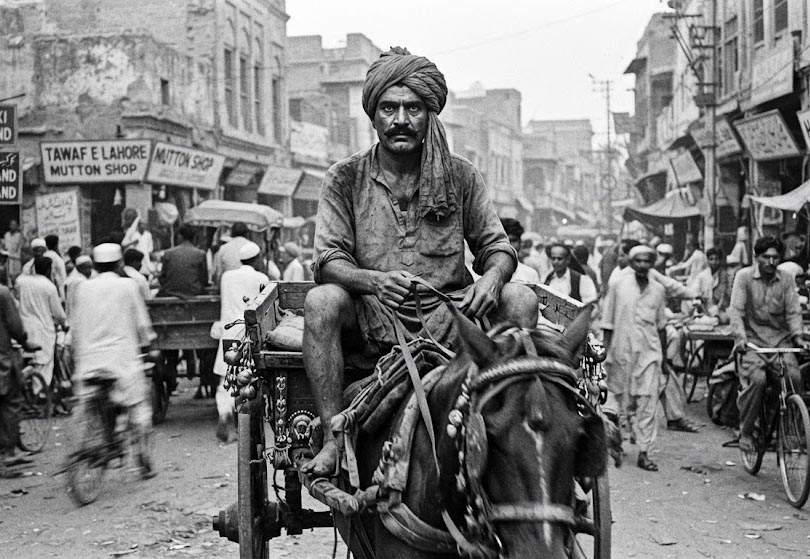
Manto’s famous story of 1938 where his character Mangu, a tonga driver, overhears the enactment of the government of India Act 1935 believing eagerly that the new constitution, as per his little knowledge, will end the British rule and give his likes, freedom from all demeaning colonial trends and practices, not knowing that his innocence were to receive a jolt when on the next day when he attacks a British soldier believing he would have no rights as he had previously. He loses his freedom and is meted out with the same culture he despised and believed to have lapsed with the advent of the new constitution. Something similar is going on in the minds of common Pakistani people who have completely grown estranged with the system and the perils it creates in the life of all struggling citizens. They believe, perhaps, out of aspiration that the proposed scheme of new provinces might bring change in their daily lives just like mangu had thought.
Over a month, a furious debate has gripped the social and political circles in Pakistan over the issue of new provinces. With each side tying their weight over to win an argument, very less has been proffered to sound logically appealing and grounded in firm analogy of what possibly better new administrative units could serve that provinces have failed to. One could see parties mull over and political activists engaged in a constant tug of war to reason out creation of more provinces based on their ethnic leanings without taking into account the multifaceted dimensions involved in the proposed constitutional fiasco.
Although, there is no cavil in the idea of carving out more autonomous administrative units to ensure good governance that can only be ensured when the system has an in-built accountability culture to filter out the financial, political and ethical corruption that ultimately affect institutional behaviour. This means that, despite, the good intent, and the availability of resources, the results could not be secured because of the deprecating national mindset that neither reward the good nor condemns the bad. This moral and nationalistic erosion of values has resulted in self-promotion, primacy of selfish interests over national interests and the attitude of indifference towards societal problems. No one wants to own the problems but eagerly wants the rewards through manipulations and exploitation of all kinds. Due to this almost, every scheme towards national reconciliation has tremendously failed as we walk into the realm of rampant challenges awaiting to welcome us in the 21st century millennia with no homework.
Supposedly and as per the hypothesis, we have 32 new provinces or administrative units, what would change over night? Political leadership, corrupt practises, our way of thinking, educational standards, civic institutions. In 2002, the government of Pakistan enacted local government ordinance, thus creating the post of Nazim-e-ala with impressive set of powers that would ultimately go down to tehsil level. What was the result: dismal. Local political leaders that were previously part of the country’s top parties shifted their allegiance to the new setup and grounded themselves in the new empowered local governments. Most of them are now serving as ministers and members of legislative assemblies across the country. The people, then and now, continue to hue and cry over non-performance of their local representatives. Consequently, it is argued that the change of system of governance, notwithstanding the good intent, serve no result without actually curing the panacea that is corruption and lack of accountability.
Pakistan has two principal watchdogs to hunt down financial malpractice: National Accountability Bureau and the Anti-Corruption Establishment. The former is an independent government agency whereas the latter reports to the provincial government. NAB has a history of politically motivated cases and dismal conviction in cases they registered. Their own institutional reputation is not clean either. However, ACE, since their inception, has remained as an unfunctioning government department doing nothing to secure their purpose and objective. The framework that governs it is also legally questionable as how a subordinate government department could act independently where its superior officials are allegedly involved. This is a reason why, according to a report, $15Billion is annually funnelled outside Pakistan.
However, the argument about the potential pros of the new units is not lost. One can logically assess that it can serve merits if the scheme is processed and accustomed to ground realities. For example, the local municipal elections should be non-partisan and directly elected mayoral slots should be introduced. Candidates should be barred from contesting for more than two consecutive terms at all positions.
Similarly, the provinces should more of perform a supervisory role on municipal affairs whereas, more active role on law enforcement, revenue generation, administration of justice, and legislation.
On the national level, the senate should represent the nation with equal division of seats for all provinces headed by a directly elected President with an open cabinet of ministers, only elected twice.
Above all, and for the effective reconstruction of the nation, a uniform education system and and an independent, robust and professional anti-corruption watchdog is necessary that should report to the Special accountability committee. Viable devolutionary schemes along with practical and on ground accountability can only be the elixir to the governance panacea we face as a nation.
(The writer is a lawyer and a socio-political reformer and can be reached at khaan.hello@gmail.com)


