


















By Brig Syed Karrar Hussain Retired
Remembering the courage of the Pakistan Navy and looking toward a blue-water economy
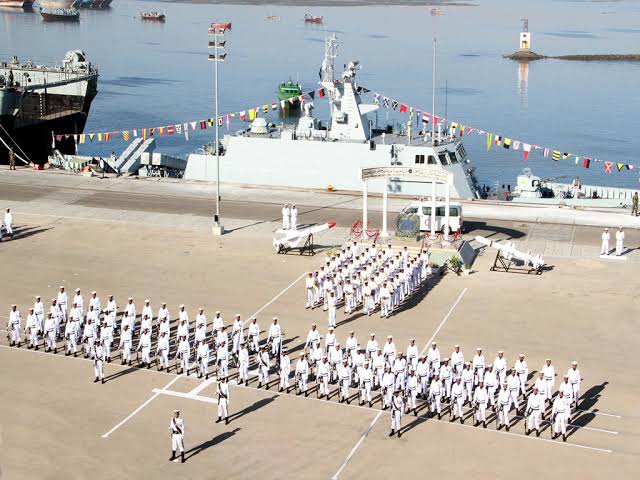
Pakistan Navy Day is observed every year on 8 September to commemorate the remarkable performance of the Pakistan Navy during the 1965 Pakistan-India War. While the land and air battles of that historic conflict occupy a prominent place in our national memory, the contribution of the Pakistan Navy deserves equal recognition. The Navy demonstrated that control and security of the sea are indispensable elements of national defence and that even a comparatively smaller naval force can create strategic effects through professional excellence, courage, planning and effective use of limited resources.
The 1965 war was a defining moment for Pakistan’s armed forces. On the maritime front, the Pakistan Navy maintained its operational posture in the North Arabian Sea and successfully protected Pakistan’s coastline and vital maritime approaches. One of the most remembered naval actions was the bombardment of the Indian coastal installation at Dwarka on the night of 7–8 September 1965, carried out by Pakistani naval surface forces. The operation demonstrated the Navy’s ability to take the initiative and impose psychological and strategic pressure on the adversary. Pakistan Navy’s submarine capability also contributed to deterrence; contemporary naval literature notes that the presence of the submarine Ghazi influenced Indian naval activity during the conflict.
The significance of the 1965 experience goes beyond the individual operation. It established an important principle: a country’s maritime frontier cannot be left undefended. Pakistan’s security, economy and strategic freedom of action are directly connected with the Arabian Sea.
Why the Navy Matters to a Nation
In the modern world, a navy is not merely an instrument of war. It is an instrument of national security, economic security and strategic influence.
A strong navy protects territorial waters, ports, offshore installations, shipping lanes and maritime infrastructure. It safeguards merchant ships carrying imports and exports and helps ensure that the country’s economic lifelines remain open during peace as well as during a crisis.
For Pakistan, this importance is even greater because the country is located at the crossroads of South Asia, Central Asia, China and the Middle East, with a coastline opening into the Arabian Sea. Much of Pakistan’s international trade is dependent upon maritime routes. Energy supplies, industrial raw materials, machinery, food commodities and manufactured exports all depend, directly or indirectly, upon secure maritime transportation.
Thus, the Pakistan Navy’s responsibility is not confined to fighting a war. It also includes contributing to a secure maritime environment in which commerce, investment, shipping and industrial activity can flourish.
The Sea: A Highway of Global Commerce
The sea has historically been one of humanity’s greatest highways. Today, international trade remains heavily dependent upon maritime transportation. Countries possessing secure and efficient ports, reliable shipping infrastructure and strong maritime institutions enjoy enormous economic advantages.
For Pakistan, the Arabian Sea is therefore not simply a geographical feature. It is an economic opportunity.
Pakistan possesses three strategically important port locations: Karachi Port, Port Qasim and Gwadar Port. Port Qasim has developed into a major industrial and energy hub, handling containers, bulk cargo, petroleum products, LNG and other commodities. Its authority describes the port as handling more than half of Pakistan’s sea-borne trade and highlights its extensive industrial connectivity.
Gwadar adds another dimension to Pakistan’s maritime potential. Situated on the Arabian Sea near the approaches to the Persian Gulf and important international shipping routes, Gwadar has the potential to develop into a major gateway for Pakistan and regional transit trade. Its strategic position provides opportunities to connect Pakistan with China, Afghanistan, Central Asia, the Middle East and wider international markets.
This geographical advantage, however, will produce economic dividends only if Pakistan develops the necessary infrastructure, security, policies and commercial ecosystem around it.
Maritime Security and Economic Growth Must Go Together
There can be no sustainable maritime economy without maritime security.
A merchant ship will not choose a route merely because a port exists. Investors also consider security, reliability, connectivity, turnaround time, customs procedures, insurance costs, political stability and the availability of supporting infrastructure.
The Pakistan Navy therefore has an important role in creating the secure maritime environment required for economic activity. Protection of sea lanes, surveillance of maritime approaches, prevention of hostile activity, support to maritime law enforcement and readiness during national emergencies all contribute to economic security.
The lesson of 1965 remains relevant: economic activity at sea requires the confidence that the sea will remain open and secure.
Pakistan’s Geostrategic Advantage
Pakistan’s location gives it an opportunity that few countries possess. We sit close to some of the world’s most commercially important regions and maritime routes. Our western coastline is connected to the Arabian Sea and lies relatively close to the Persian Gulf and the Strait of Hormuz, through which a substantial portion of global energy trade passes.
At the same time, Pakistan can potentially serve as a maritime outlet for landlocked or relatively distant markets in Central Asia and Afghanistan, while providing important connectivity for western China.
Pakistan’s own maritime authorities have highlighted the potential of Karachi, Port Qasim and Gwadar to support trade with Central Asian republics, Afghanistan and western China, including opportunities for transshipment and cargo consolidation.
This means that Pakistan’s future economic strategy should not remain exclusively land-focused. The maritime dimension must become a central component of national economic planning.
The Business of the Future
Pakistan has enormous potential to develop a broader maritime economy. The opportunity extends well beyond traditional port operations.
Future growth can come from transshipment, container terminals, shipbuilding, ship repair, logistics, warehousing, fisheries, marine tourism, offshore services, maritime insurance, coastal industrial zones and port-based manufacturing.
Port Qasim already demonstrates how ports can become engines of industrialization. Its large industrial area contains hundreds of industrial and commercial units and has direct road and rail connectivity with Pakistan’s hinterland.
Gwadar can similarly be developed as a centre for logistics, transit trade, fisheries, tourism, warehousing and value-added industries. The objective should not simply be to move containers through a port. The real objective should be to create businesses around the port, generate employment, attract investment and increase Pakistan’s share in regional trade.
Recommendations for Pakistan
Pakistan should therefore adopt a comprehensive National Maritime Economic Strategy with the following priorities:
First, strengthen the Pakistan Navy and maritime security institutions so that Pakistan’s coastline, ports and sea lanes remain secure.
Second, modernize Karachi, Port Qasim and Gwadar through efficient infrastructure, digital port management, better road and rail connectivity and competitive cargo-handling systems.
Third, develop port-based industrial zones where imported raw materials can be processed and converted into higher-value products for domestic consumption and export.
Fourth, promote Pakistani shipping companies and expand the country’s merchant marine capability. A country should not remain merely a consumer of international shipping services.
Fifth, invest in maritime education and create specialized institutions for naval architecture, marine engineering, logistics, ocean sciences, fisheries and maritime law.
Sixth, develop Pakistan’s blue economy by encouraging responsible fisheries, aquaculture, marine tourism and other sustainable ocean-based industries.
Seventh, establish stronger coordination among the Pakistan Navy, Coast Guards, maritime agencies, port authorities and the private sector. Maritime security and maritime commerce must operate as complementary components of one national strategy.
From the Victory of 1965 to the Vision of Tomorrow
Pakistan Navy Day should therefore not be merely an occasion for remembering the past. It should also be an occasion for imagining Pakistan’s future.
The sailors who served in 1965 understood that the sea was a frontier that had to be defended. Today, Pakistan must understand that the same sea is also a frontier of economic opportunity.
The Pakistan Navy’s gallantry in 1965 demonstrated the importance of maritime strength to national defence. The challenges of the twenty-first century demonstrate something more: maritime power is inseparable from economic power.
Pakistan possesses the coastline, ports, strategic location and human potential required to become an important maritime nation. What is required now is a long-term vision, consistent policies, modern infrastructure, private-sector participation and continued investment in maritime security.
On Pakistan Navy Day, therefore, we should remember with pride the officers and sailors who defended the maritime front in 1965. But we should also look beyond the horizon.
The waters that witnessed the courage of our sailors in 1965 can become the waters of Pakistan’s economic prosperity in the decades ahead.
*Pakistan’s future is not only on its land and in its skies. A significant part of that future lies in the sea as well *