














http//: www.thenewslark.com
Dr. Syed Mehboob
Senior Research Editor, The News Lark
Political and economic analyst
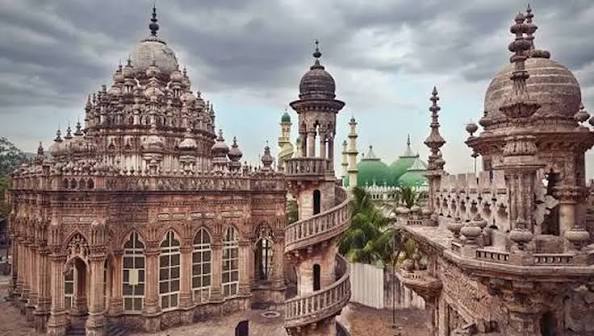
Junagadh has a glorious history of seven hundred (700) years of Muslim rule. It has the strategic port of Verawal on the Indian Ocean and the famous temple of Somnath that was attacked by Afghan conqueror Mehmood Ghaznavi. It was the Afghan tribe Babi that changed the fate of this area and ruled there till 1947. Like Jammu and Kashmir, unfortunately, Junagadh was also attacked and occupied by Indian forces illegally, violating international law. Junagadh is legally part of Pakistan, and there is a need to create awareness among Pakistani youth about it, enabling them to know the accurate, authentic, and credible history of the subcontinent and Pakistan.
His Highness Nawab Mahabat Khanji acceded in favour of Pakistan, and it was unacceptable to the Indian government, which attacked and occupied Junagadh along with neighboring Manawadar. It was a great shock for the Muslims of the subcontinent, especially the Muslims of Junagadh, and about half a million people migrated to Pakistan. The recorded history of Junagadh, spanning over two thousand years, reflects that Junagadh was a wealthy, prosperous, and tolerant region. It was a center of arts, trade, and spirituality. This harmony was completely exhibited during Muslim rule. When it was decided that the princely states had to join either Pakistan or India, Junagadh decided to join Pakistan, and accession documents were signed by the Nawab of Junagadh, Nawab Mahabat Khanji, and Quaid-e-Azam Muhammad Ali Jinnah. Then, 9 November 1947 was a black day in the history of India, when Indian forces illegally attacked the great Muslim welfare state of Junagadh and forcefully and illegally occupied it. After partition, Junagadh was the first state that acceded to Pakistan. It was among the five hundred and sixty-two (562) princely states of the subcontinent. The Nawab of Jehangir took remarkable steps for the administration and development of the state. It was a prosperous state,which was the second largest among Muslim states in terms of revenue generation. It had a standing army of its own, a railway and postal system, and sixteen (16) small and big ports. The state had an effective and reliable, people-friendly political and governance system that ensured the rule of law and justice, peace, and harmony in the state. The rulers of the state had given top priority to education, which was free for all residents without any exclusion or discrimination. Health was another priority sector, and the state ensured free health services and facilities and free food for needy people without any discrimination.
Junagadh state was a maritime state in the Kathiawar Peninsula, 300 miles down the coast from Karachi. Its area was 3,337 square miles, and its population was about 700,000 according to the census of 1941. Junagadh city was its capital. Junagadh was officially declared an independent sovereign state SHER KHAN BABI in 1736. It was ruled by the Nawabs of the Babi dynasty from then till 1947. Junagadh was the fifth-largest state of the 562 princely states in terms of revenue generation and the second-largest Muslim state of India.
The History of Junagadh can be traced back to 250 BC. The Greeks and Romans named this region “ Saurastrene,” which during the Muslim became Sorath. The region has been named as Kathiawar due to the people known as “ Kathi’s,” who entered the region in the thirteenth and fourteenth centuries from Sindh. It was ruled by Greeks and Hindus till the thirteenth century. In 1297, Alauddin Khilji conquered Gujarat and made it a province of the Delhi Sultanate. It was governed by sovereigns of Delhi from 1297 to 1403. The Ahmadabad kings, also known as the Sultans of Gujrat, ruled over Gujrat from 1403 to 1573. In 1403, Sultan Zafar Khan declared Gujrat independent from Delhi and founded the Gujrat Sultanate. The Mughals declared Gujrat a province of their empire. They ruled over Gujrat till 1758 when the Mughal viceroy Momin Khan was defeated by the Marathas.
In 1556, The Mughal emperor Humayun regained the throne with the help of the Afghan tribes. Usman Khan Babi, who was the chief of the Yusufzai tribe, also gave his full support to Humayun. The Mughal emperor Humayun promoted Usman Khan to a higher position in the Mughal Army in favour of the given help. Bahadur Khan Babi, son of Usman Khan Babi, remained in the Royal service of Emperor Akbar during the latter part of his rule and rose to prominence during the rule of Shah Jahan and received lands in Gujrat. Sher Khan Babi, son of Bahadur Khan, was a favourite of Emperor Aurangzeb for his services in supporting the uprising in Gujrat and adjoining territory. In 1693, Jaffer Khan, the son of Sher Khan, was given control of Munjpur, Sami, Radhanpur and Tervada. He as also given the governorship of Bijapur and Patan. Safdar Khan had two sons: Muhammad Salabat Khan and Muhammad Jahan Khan. They were also actively engaged, along with his father, in asserting control of the Mughal Empire in Gujarat and Kathiawar. In 1725, Safdar Khan Babi died.
With the death of Aurangzeb Alamgir in 1707, the period of strong administration and peaceful progress in Gujarat witnessed a decline. The Marathas took advantage of the circumstances and started bloodshed and looting in Gujarat and Kathiawar. In 1728, the Governor of Junagadh, Asad Ali, died and appointed Salabat Khan Babi as the deputy governor of Junagadh on his deathbed. Salabat Khan Babi instructed his son Sher Khan Babi to continue as his deputy. In 1730, Ghulam Mohiyu din removed Sher Khan from the post of deputy of Junagadh. However, he was given the charge of Baroda by the Maharaja. In 1734, the Marathas captured Baroda in the absence of Sher Khan. In 1736, Sher Khan Babi was again given the charge of deputy governor of Junagadh by governor Himmat Ali Khan. However, the incursion of the Marathas was increasing day by day into Kathiawar, causing political and social unrest. The chiefs and subjects of Kathiawar requested Sher Khan Babi to take charge of the management and organize the entire region. In 1736, he formally established an independent state of Junagadh.
The Babi family established three other states in Kathiawar, namely: Radhanpur, Balasimor, and Bantva
Their administrative and state affairs were under the control of Junagadh. Babi dynasty made historic and unprecedented administrative improvements and development in Junagadh ruled afterwards.
The Nawab of Junagadh made some remarkable changes in the political system of the state with the passage of time. They established two key political institutions, i.e., the State Council and Advisory Council. The members of the State Council were appointed, known as the “ Dewan or the Prime Minister. The Dewan was selected by the Nawab of his own will. In the beginning, the members of the State Council were also selected by the Nawab, and later by the Dewan.
Sher Khan Babi, the first Nawab of Junagadh, was actively engaged in wars to strengthen and consolidate his government from the foreign aggression of the Marathas. After the death of Sher Khan Babi in 1758, his son Mahabat Khan I ascended the throne on October 2, 1758. `
The reign of Nawab Mahabat Khanji II, was the pinnacle of administrative reforms in the state. He brought unprecedented reforms in the political, economic, and social sectors. In 1866, the department of registry, department of education, and department of sanitation were organized. The education department had special supervision of the Nawab; therefore, the department was also given a lot of financial support.
In 1870, the Police Department was organized. Crown Prince Bahadur Khanji was appointed as the commissioner of police in a police force of one thousand cavalry and six thousand infantry.
The Economy of the Indian subcontinent was mainly based on agriculture and trade. In the Mughal period, the economy of the subcontinent was thriving. The province of Gujarat was also contributing through agriculture, trade, and manufacturing. It was famous for manufacturing silk and cotton products. ( Continued )