





















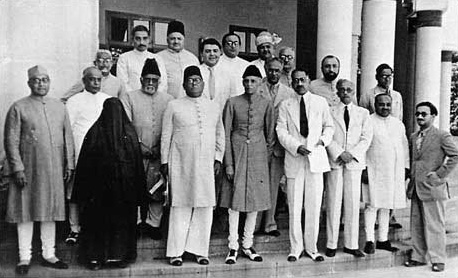

By: Mukhtar Ahmed Butt
The history of Pakistan is a remarkable story of struggle, sacrifice, survival and the determination of a people to establish a homeland of their own. The journey formally took a decisive turn with the Lahore Resolution of 23 March 1940, when the All-India Muslim League, under the dynamic leadership of Quaid-e-Azam Muhammad Ali Jinnah, demanded that the Muslim-majority areas of the subcontinent be constituted into independent states. What followed was one of the most consequential political movements of the twentieth century. After 7 years of constitutional struggle, political negotiations and communal tensions, Pakistan emerged on the world map on 14 August 1947 as an independent state. The birth of the country, however, was accompanied by an enormous human tragedy: Partition resulted in one of the largest migrations in history, with millions of people forced to leave their ancestral homes amid widespread communal violence. Pakistan began its existence with limited resources, a massive refugee crisis, weak administrative structures and the immediate challenge of establishing a functioning state. Relations with India deteriorated almost immediately, particularly over Kashmir, assets and other unresolved issues left by Partition. The first India-Pakistan war followed in 1947–48, and Kashmir became the central and enduring dispute between the two countries. The second major war came in 1965, followed by the 1971 war, which resulted in the separation of East Pakistan and the creation of Bangladesh—a profound political, military and national tragedy for Pakistan. The fourth major war-like conflict came in 1999 at Kargil, adding another painful chapter to the history of confrontation. Despite enormous expenditure, human sacrifices and repeated military confrontations, the fundamental disputes between Pakistan and India remained unresolved. India’s security policies and Pakistan’s perception of an enduring Indian threat profoundly influenced Pakistan’s political and defence thinking, while India, in turn, viewed Pakistan through the prism of security and conflict. The nuclearisation of South Asia fundamentally changed this equation. After India conducted its nuclear tests in May 1998, Pakistan responded with its own nuclear tests on 28 May 1998, followed by additional tests on 30 May, formally entering the nuclear club. Pakistan’s nuclear capability was presented primarily as a strategic deterrent intended to prevent a repetition of conventional military domination and to preserve national security. Yet the acquisition of nuclear weapons did not resolve the underlying political disputes; instead, it created a delicate balance in which both countries possess the capacity to inflict catastrophic destruction. Seventy-nine years after independence, Pakistan therefore finds itself in a difficult neighborhood. India remains its principal strategic rival, Afghanistan has repeatedly been a source of security concerns and mistrust, relations with Iran have their own complexities, while the relationship with China—Pakistan’s closest strategic partner—has also become increasingly important economically and militarily. Pakistan’s geographical position offers enormous opportunities, but its neighborhood also presents extraordinary challenges. The central lesson of Pakistan’s history is that military strength alone cannot guarantee national prosperity or permanent security. The country has survived wars, political upheavals, economic crises and external pressures, but the unfinished task remains to build strong democratic institutions, a prosperous economy, an educated population and stable relations with its neighbors.Let us analyse with all the negativity spead what did Pakistan achieved.Overcoming extreme odds to become the Muslim world’s first declared nuclear power, and establishing a robust space and upper atmosphere research program (SUPARCO). Building massive infrastructure—such as the Tarbela and Mangla dams and the Karakoram Highway—that transformed trade, agriculture, and connectivity. In Global Standing Producing world-class talent, contributing immensely to United Nations peacekeeping missions globally, and achieving legendary status in global sports like cricket, squash, and hockey.Why the Nation Stands Divided and “Enemies of Each Other” The fractures in Pakistani society stem from several systemic failures. Over decades, governance models have frequently relied on identity politics—ethnic, linguistic, regional, and sectarian—rather than inclusive national development, pitting citizens against one another.A widening chasm between the elite and the marginalized creates a zero-sum environment where survival feels like a battlefield, breeding resentment and eroding social trust. In the modern age, polarization is heavily amplified by hyper-partisan narratives, social media echo chambers, and institutional mistrust, making dialogue and empathy scarce. The Betrayal of Quaid’s Pillars and Public Servants, the bedrock principles left behind by Quaid-e-Azam: Unity, Faith, and Discipline. These were not merely slogans, but a survival strategy for a diverse nation. Today, individual and group interests routinely supersede national interest. Discipline has been replaced by systemic lawlessness, and unity has been shattered by tribal, political, and class rivalries The “Servants of the People” Paradox: Quaid-e-Azam made it unequivocally clear in his historic August 11, 1947 address to the Constituent Assembly that government officials, civil servants, and the state apparatus were servants of the people, tasked with working impartially for the welfare of the public. Tragically, this fundamental democratic principle was gradually replaced by a colonial mindset of governance, where power structures often viewed the public as subjects rather than masters. When those in authority treat state machinery as a privilege rather than a public trust, accountability vanishes, and the social contract breaks down.The realization that we have strayed is the first, most vital step toward recovery. Reclaiming Pakistan does not require inventing a new philosophy; it requires returning to the unfulfilled promises of 1947. True patriotism today means demanding institutional accountability, treating fellow citizens with empathy regardless of differences, and insisting that public office remains what the Quaid intended it to be: a solemn duty to serve the people. The Pakistan envisioned by its founders can ultimately be secured not merely through weapons or wars, but through national unity, economic strength, justice, education, diplomacy and the confidence that comes from becoming a strong and prosperous state.