





















By Brig Syed Karrar Hussain Retired
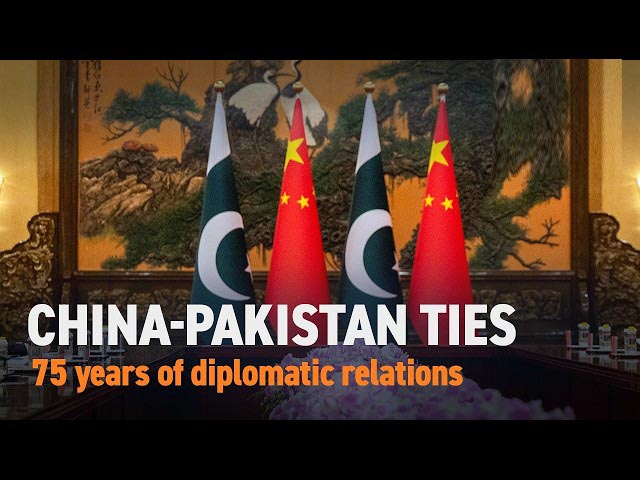
The year 2026 marks the celebration of seventy-five years of diplomatic relations between Pakistan and China. Over the decades, the friendship between the two neighboring countries has transformed into one of the strongest and most reliable partnerships in international politics. Commonly described as “higher than the Himalayas, deeper than the oceans, sweeter than honey, and stronger than steel,” Pakistan-China relations are based on mutual trust, respect, cooperation, and shared strategic interests.
The diplomatic ties between the two countries were formally established on 21 May 1951, making Pakistan one of the first Muslim countries to recognize the People’s Republic of China. Since then, the friendship has continued to grow despite regional and global political changes. Today, both countries stand together not only in defense and diplomacy but also in trade, infrastructure, energy, technology, and regional connectivity.
Pakistan-China Friendship: A Model of Trust and Loyalty
The friendship between Pakistan and China is unique in international relations because it has remained stable and consistent under all circumstances. Unlike many global alliances that change according to political interests, the relationship between Pakistan and China has stood the test of time.
China has always supported Pakistan on important regional and international issues, including the Kashmir dispute, territorial integrity, and economic development. Similarly, Pakistan has consistently supported China on matters related to Taiwan, Xinjiang, Tibet, and the “One China Policy.”
During difficult times, both nations have always extended support to each other. Whether it was natural disasters, economic challenges, or international diplomatic pressures, the two countries stood shoulder to shoulder. The people of Pakistan admire China’s sincerity, while the Chinese leadership appreciates Pakistan’s loyalty and strategic importance.
High-level visits between leaders, military officials, and economic experts have further strengthened bilateral ties. Cultural exchanges, educational scholarships, tourism cooperation, and people-to-people contacts have also contributed significantly to strengthening this friendship.
Pakistan-China Cooperation in the Defense Field
Defense cooperation remains one of the strongest pillars of Pakistan-China relations. Both countries have developed deep military, strategic, and defense ties over the years. China has played a vital role in helping Pakistan modernize its defense capabilities and maintain strategic balance in South Asia.
One of the most important examples of defense cooperation is the joint production of the JF-17 Thunder fighter aircraft. This project reflects the high level of trust and technological collaboration between the two countries. The aircraft has significantly strengthened Pakistan’s air defense capability and has become a symbol of indigenous defense production.
China has also supported Pakistan in areas such as:
Naval modernization
Missile technology
Air defense systems
Military training
Cybersecurity cooperation
Intelligence sharing
Joint military exercises between the armed forces of both countries have enhanced operational coordination and mutual understanding. Pakistan Navy and China’s naval forces frequently conduct joint maritime exercises aimed at maintaining peace and stability in the region.
China’s support has helped Pakistan maintain credible defense preparedness despite regional security challenges. Both countries also cooperate closely in counterterrorism efforts and regional peace initiatives, especially concerning Afghanistan and regional stability.
The strategic partnership between the two nations contributes positively to peace in South Asia by maintaining balance and discouraging aggression.
Pakistan-China Cooperation in the Economic Field
Economic cooperation between Pakistan and China has expanded rapidly during the last two decades. China is today one of Pakistan’s largest trade and investment partners. Both countries are working together in multiple sectors including trade, industry, agriculture, energy, transportation, information technology, and infrastructure development.
China has invested billions of dollars in Pakistan’s development projects. Chinese companies have contributed significantly to the construction of roads, bridges, dams, power plants, industrial zones, and communication networks. These projects have improved Pakistan’s infrastructure and created employment opportunities for thousands of people.
Bilateral trade between the two countries continues to grow steadily. Pakistan exports agricultural products, textiles, seafood, and minerals to China, while China exports machinery, electronics, industrial equipment, and technological products to Pakistan.
Another important aspect of economic cooperation is technology transfer and industrial collaboration. Chinese expertise has helped Pakistan improve its industrial capacity and technical skills. Cooperation in renewable energy, digital technology, artificial intelligence, and telecommunications is also expanding.
Educational cooperation is another growing area. Thousands of Pakistani students are studying in Chinese universities through scholarships and exchange programs. These students are expected to contribute positively to Pakistan’s future development.
China’s economic rise has provided Pakistan with new opportunities for regional trade and connectivity. Pakistan, due to its strategic location, serves as a gateway connecting China with the Middle East, Central Asia, and the Arabian Sea.
Pakistan-China Cooperation under CPEC
The most remarkable symbol of Pakistan-China economic partnership is the China-Pakistan Economic Corridor, commonly known as CPEC. Launched in 2015, CPEC is considered the flagship project of China’s Belt and Road Initiative.
CPEC is a multi-billion-dollar development project aimed at improving infrastructure, energy production, trade connectivity, and industrial growth in Pakistan. The corridor connects China’s Xinjiang region with Pakistan’s Gwadar Port through a network of highways, railways, pipelines, and energy projects.
Under CPEC, numerous projects have already been completed, including:
Motorways and highways
Energy plants
Gwadar Port development
Industrial zones
Fiber optic connectivity
Urban transport systems
One of the greatest achievements of CPEC has been the reduction of Pakistan’s energy shortage. Several power projects established under CPEC have added thousands of megawatts of electricity to the national grid, supporting industries and economic growth.
Gwadar Port holds special importance in CPEC because it has the potential to become a major international trade hub. The development of Gwadar is expected to enhance regional trade, create employment opportunities, and strengthen Pakistan’s maritime economy.
CPEC is not only beneficial for Pakistan and China but also for the entire region. It can improve connectivity between South Asia, Central Asia, and the Middle East, promoting regional cooperation and economic integration.
Despite challenges such as security concerns, political criticism, and economic pressures, both countries remain committed to making CPEC a success. Pakistan’s armed forces and security institutions have taken significant measures to ensure the protection of Chinese nationals and CPEC projects.
Conclusion
The celebration of seventy-five years of diplomatic relations between Pakistan and China reflects a friendship built on trust, sincerity, and mutual cooperation. From defense collaboration to economic partnership and from diplomatic support to regional connectivity, the relationship between the two countries continues to grow stronger with time.
Pakistan and China have demonstrated to the world that true friendship is based on mutual respect and shared interests. Their partnership has contributed significantly to regional peace, economic development, and strategic stability.
As both countries move forward, the future of Pakistan-China relations appears bright and promising. With continued cooperation in defense, economy, technology, education, and CPEC, this historic friendship is expected to enter a new era of prosperity and progress for both nations and the wider region.