





















Dr. Syed Mehboob
Political and Economic Analyst
http//:www.thenewslark.com
drmehboob.thenewslark@gmail.com
Indonesia is a country with great vision, striving for peace, development, and harmony, and is a global partner in efforts to eradicate poverty, illiteracy, and extremism, terrorism, and to provide great economic opportunities to its citizens. Its vision 20250 reflects these goals.
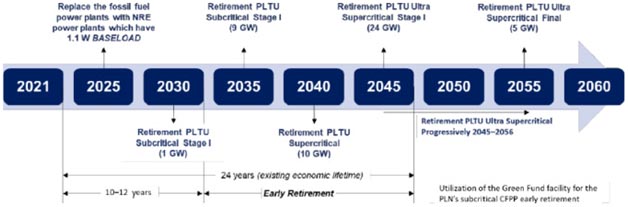
Currently, Indonesia has significant renewable energy potential. The country has a total renewable energy potential of 441.7 GW. This potential is diversified across various sources, including hydropower, geothermal, bioenergy, solar, wind, and ocean energy, resulting from Indonesia’s natural conditions and geographical abundance. However, Indonesia has only developed around 13.1 GW, which is approximately 2.97 % of its total renewable potential
Table 2. Indonesia’s renewable energy potential
| Energy Source | Potential Capacity (GW) | Installed Capacity (GW) | Percentage (%) |
| Hydro | 94.3 | 6.78 | 7.19 % |
| Geothermal | 28.5 | 2.60 | 9.11 % |
| Biomass | 32.6 | 3.2 | 9.82 % |
| Solar Energy | 207.8 | 0.37 | 0.18 % |
| Wind | 60.6 | 0.15 | 0.25 % |
| Ocean | 17.9 | 0 | 0.00 % |
| Total | 441.7 | 13.10 | 2.97 % |
Recently, the Indonesian government has explored additional options to enhance Indonesia’s energy security by developing hydrogen and nuclear-based energy. The development of hydrogen-based energy has already begun with the creation of a green hydrogen-based project, as outlined in IFHE’s roadmap. According to IFHE, Indonesia aims to gradually build hydrogen power plants with capacities of 0.5 GW by 2030, 5 GW by 2035, 20 GW by 2040, and 30 GW by 2050, focusing on transportation uses. Meanwhile, nuclear energy is still in the planning phase, with initial operations projected to begin in 2034.
The Low Emission Analysis Platform (LEAP) is a powerful and versatile software tool developed by the Stockholm Environment Institute (SEI) in 1993 for integrated energy planning and climate mitigation assessment. LEAP is widely applied to track resource extraction, energy production, and consumption across all sectors of an economy, ranging from cities and states to national, regional, and global scales. It has already been adopted by thirty-seven countries and beyond to develop their Nationally Determined Contributions (NDCs) for 2060. It offers a bottom-up approach where it translates end-use accounting techniques across individual sectors such as residential, commercial, industrial, and transport, and then aggregates them to create an integrated energy system.
The key benefit of LEAP utilization is low initial data requirements. In general, most modelling tools rely on creating a complex solution algorithm and tend to have inflexible data requirements. By contrast, LEAP allows for greater flexibility due to its systematic modelling framework and effective solvers, enabling the user to start with a simple scenario. Another advantage of LEAP lies in its capabilities to analyze both power system expansion and climate policy scenarios, factoring in the detailed characteristics of electric power. This feature greatly aids policymakers in evaluating the impact of individual policies as well as the interactions between multiple policies and measures.
The second scenario, Hydrogen Incorporation (HYD), examines the integration of green hydrogen derived from solar PV, a renewable resource with significant untapped potential. This scenario follows the hydrogen development targets set by IFHE, with a projected capacity increase from 0.5 GW in 2030 to 5 GW by 2035, 20 GW by 2040, and 30 GW by 2050, aiming to supply 1–5 % of Indonesia’s energy consumption through hydrogen. This scenario maintains coal power plants as the dominant electricity providers to assess the effects of hydrogen energy within the existing energy roadmap.( Continued).