














By Shama Munshi
(www.thenewslark.com)
Author of the Concept of the Terrorism in the Post Cold War Era
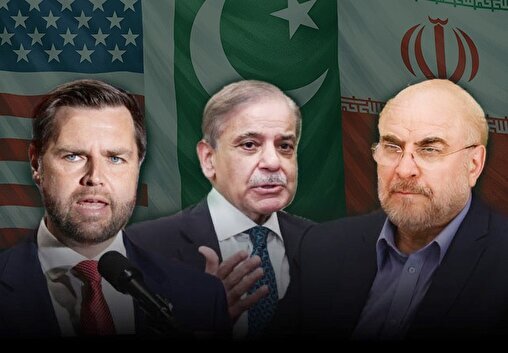
The current impasse in ” Islamabad Dialogues” & negotiations can be attributed to four critical issues on which both parties remain firmly entrenched: Iran’s nuclear program, particularly uranium enrichment; the dispute over control of the Strait of Hormuz; the terms governing a ceasefire in Lebanon; and the removal of economic sanctions on Iran, alongside the repatriation of its frozen assets. The complexity and sensitivity of these matters prevented the 21-hour round of discussions from yielding a substantive outcome.
In this context, the extension of the existing ceasefire has become an urgent strategic necessity. With the April 22 deadline approaching, the likelihood of resolving such multifaceted disputes within a constrained timeframe remains low. Extending the ceasefire would serve as a critical confidence-building measure, helping to avert further escalation while creating the diplomatic space required for sustained engagement.
Despite the departure of U.S. Vice President J.D. Vance, the carefully calibrated language employed by both sides—“so far” by the United States and “pause” by Iran—indicates that neither party has withdrawn from the negotiation process. This reflects a mutual, albeit cautious, commitment to continued dialogue. Preserving this fragile equilibrium will require nuanced diplomacy, where back channel communications are expected to play a pivotal role. In this regard, Pakistan’s potential contribution as a facilitator is likely to gain increased significance in the near term.
The next three days will be highly sensitive, with uptick rhetoric expected after the apparently concluded “Islamabad Dialogues ” & remarks by USA vice president J. D. Vance and statements from Iran’s foreign office. However, this phase reflects a familiar pattern of strategic brinkmanship rather than any definitive deadlock. The absence of an immediate agreement should not be interpreted as any rupture; notably, even the White House continues to signal that the diplomatic channel remains open and that proposals are still under active consideration. At its core, the challenge lies in both sides seeking an outcome that can be presented domestically as a credible constructive achievement or at least a “win-win” situation for both the sides to skip the backlash by the miscreant & destructive forces”.
As long as direct channels of communication remain operational, the prospects for a negotiated settlement persist. The key determinant moving forward will be the willingness of both parties to demonstrate limited flexibility within their established red lines.
Historical precedent suggests that agreements of this nature, particularly those achieved through mediation, are inherently protracted and demand sustained diplomatic investment over extended periods.
At a time of heightened global uncertainty, Pakistan’s proactive engagement has contributed to de-escalation efforts. By helping to contain a potentially expanding conflict and stabilize a volatile situation, Pakistan has garnered recognition as a credible intermediary. This reinforces a central tenet of international conflict resolution:
Durable peace is most effectively achieved through structured dialogue and persistent diplomatic engagement.
Amid this delicate landscape, Pakistan’s constructive and stabilizing role deserves particular recognition.
With an evolving scenario, Pakistan is now internationally emerging as a most trust worthy key player which guarantees a stabilized world under the stewardship of Field Marshal Syed Asim Munir, NI (M), HJ, COAS & CDF.
Under the leadership of Field Marshal Asim Munir, Pakistan has demonstrated a measured and responsible approach, leveraging both back door channel engagement and calibrated Military diplomacy to ease tensions. His strategic foresight and quiet yet effective diplomatic outreach have contributed meaningfully to de-escalation efforts, reinforcing Pakistan’s image as a key proponent of regional stability and global peace. Such unique leadership exemplifies how disciplined statecraft and prudent negotiation can help steer volatile situations away from conflict toward dialogue.
Beyond any shadow of doubt , Field Marshal Syed Asim Munir composed leadership and strategic acumen have contributed to fostering an environment conducive to dialogue, underscoring Pakistan’s commitment to regional stability and its broader contribution to international peace and security.
Pakistan’s diplomatic image & standing has touched new heights under Field Marshal Asim Munir .
Islamabad Dialogues hailed by the world,showcased its diplomatic strength
Pakistan’s diplomatic profile is experiencing a notable resurgence, shaped by its constructive engagement in a rapidly evolving regional environment. Recent developments, including dialogue efforts involving the United States, Iran, and other key stakeholders, have drawn international attention toward Islamabad as a venue for meaningful engagement and measured diplomacy.
Positioned at a strategic crossroads, Pakistan has demonstrated its capacity to maintain balanced and constructive relations with a diverse set of global partners, including the United States, Russia, Saudi Arabia, China, and Iran. This ability to engage across geopolitical divides reflects a maturing ‘foreign policy” approach grounded in pragmatism, mutual respect, and regional stability.
Islamabad’s emerging role as a facilitator of dialogue underscores its commitment to de-escalation and cooperative solutions. By providing a platform for diplomatic exchange at a time of heightened tensions, Pakistan is reinforcing its image as a responsible and reliable partner in international affairs.
In this evolving context, Pakistan is not only advancing its own diplomatic standing but also contributing meaningfully to broader efforts aimed at fostering peace, stability, and constructive dialogue across regions of critical global importance.